
Judicial Control of Paternity, DNA Testing & Child Maintenance in India – A High Court Case Law Compendium and Litigation Handbook
Click Here to download this article in PDF
Authored & Edited By:
Advocate Siddharth Nair
Call: +91-9625799959
New Delhi | Delhi NCR | Pan-India Practice
India’s Most Trusted & Result-Oriented MTP/Abortion Cases & Divorce Lawyer In New Delhi & Delhi NCR
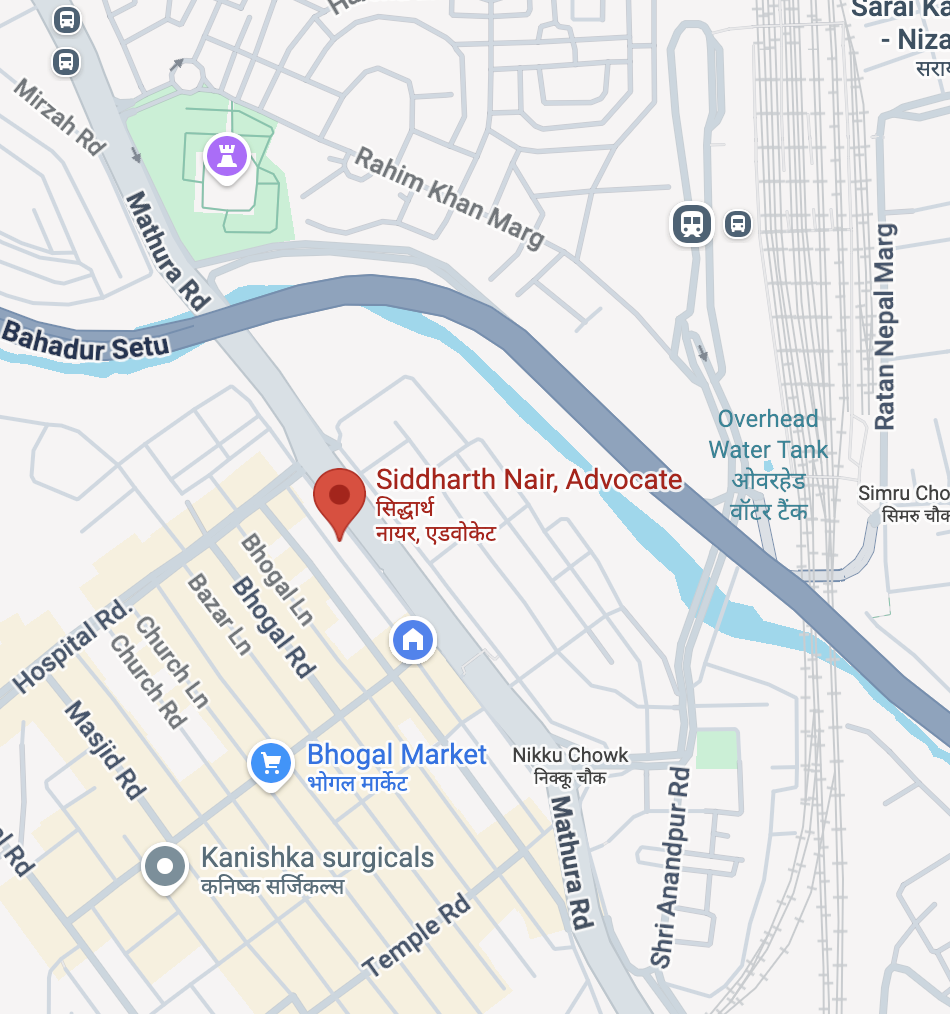
Office: 434, Lower Ground Floor, Jangpura, Mathura Road, New Delhi, NCT of Delhi, India-110014
Phone: +91-9625799959
Email: mailme@nairlawchamber.com
Website: www.nairlawchamber.com
Consultations: Monday to Saturday: Call Now For an Appointment (9am to 9pm)
Sunday: Holiday/ Meetings strictly by appointment
Practice Areas:
Best Family Law & Criminal Defence Lawyer in Delhi NCR for MTP/Abortion Cases
Loan Recovery Defence | SARFAESI | DRT | Credit Card Defaults | FIR Quashing | Criminal Defence
Consultations: Monday to Saturday: Call Now For an Appointment (9am to 9pm)
Sundays & Festivals: Holiday/ Meetings strictly by appointment
Introduction to Advocate Siddharth Nair: Your Trusted Legal Partner in Complex Family Matters
Expert Legal Representation for Paternity Disputes, Child Custody & Maintenance: Advocate Siddharth Nair
India’s Premier Advocate for DNA Paternity Testing, Contested Custody & Maintenance Litigation | Serving New Delhi, Delhi NCR & Pan-India
Advocate Siddharth Nair stands at the forefront of India’s family law practice, specializing in one of the most intricate and emotionally charged areas of litigation—paternity disputes, DNA testing applications, child custody battles, and maintenance proceedings. With a profound understanding of both the legal complexities and the deeply personal nature of these disputes, Advocate Nair has earned recognition as a leading authority in paternity determination cases across New Delhi, Delhi NCR, and throughout India.
His practice encompasses comprehensive legal representation for diverse clientele including:
- Men seeking to establish or contest paternity through scientific DNA testing to protect their legal, financial, and emotional rights
- Women facing paternity allegations who require vigorous defense against frivolous or malicious claims while protecting their dignity and their children’s welfare
- Married women confronting allegations of infidelity in custody and divorce proceedings
- Single mothers establishing paternity for child support and maintenance
- Divorced women dealing with post-divorce paternity challenges affecting custody and maintenance arrangements
- Women in non-traditional relationships including live-in relationships, multiple partnerships, or complex personal circumstances requiring sensitive yet effective legal representation
- Victims of sexual violence seeking to establish paternity for maintenance and support
- Parties in inheritance and succession disputes where paternity determination affects property rights
Why Choose Advocate Siddharth Nair?
Specialized Expertise: Unlike general family law practitioners, Advocate Nair has developed focused expertise in the intersection of family law and forensic science, understanding both the legal framework governing paternity disputes and the scientific principles underlying DNA evidence. This dual competency enables him to effectively navigate the technical and legal aspects of these complex cases.
Proven Track Record: Advocate Nair has successfully represented numerous clients in paternity disputes before Family Courts, District Courts, High Courts across multiple states, and the Supreme Court of India, securing favorable DNA testing orders, protecting clients from wrongful maintenance obligations, and safeguarding custody rights.
Compassionate Yet Aggressive Representation: Recognizing that paternity disputes involve not just legal rights but profound emotional, social, and psychological dimensions, Advocate Nair combines empathetic counselling with zealous advocacy. He understands the stigma, stress, and social challenges clients face and provides both legal solutions and moral support throughout the litigation journey.
Comprehensive Legal Services: From initial consultation through final judgment and appeals, Advocate Nair manages every aspect of paternity and custody litigation, including evidence collection, expert witness coordination, DNA laboratory liaison, court appearances, negotiations, and enforcement of judgments.
National Reach: With experience practicing before multiple High Courts and the Supreme Court, Advocate Nair represents clients throughout India, providing consistent high-quality representation regardless of geographical location.
Strategic Litigation Approach: Each case receives individualized attention with strategies tailored to the specific factual matrix, applicable personal laws, jurisdictional considerations, and client objectives. Advocate Nair employs cutting-edge legal research, leverages latest precedents, and utilizes innovative arguments to maximize success prospects.

Call or Visit Now:
Advocate Siddharth Nair
Call: +91-9625799959
New Delhi | Delhi NCR | Pan-India Practice
India’s Most Trusted & Result-Oriented MTP/Abortion Cases & Divorce Lawyer In New Delhi & Delhi NCR
Office: 434, Lower Ground Floor, Jangpura, Mathura Road, New Delhi, NCT of Delhi, India-110014
Phone: +91-9625799959
Email: mailme@nairlawchamber.com
Website: www.nairlawchamber.com
Consultations: Monday to Saturday: Call Now For an Appointment (9am to 9pm)
Sunday: Holiday/ Meetings strictly by appointment
Practice Areas:
Best Family Law & Criminal Defence Lawyer in Delhi NCR for MTP/Abortion Cases
Loan Recovery Defence | SARFAESI | DRT | Credit Card Defaults | FIR Quashing | Criminal Defence
Consultations: Monday to Saturday: Call Now For an Appointment (9am to 9pm)
Sundays & Festivals: Holiday/ Meetings strictly by appointment
Practice Areas:
- DNA Paternity Testing Applications
- Child Custody Litigation
- Child Maintenance (Sec 125 CrPC & Personal Laws)
- Contested Divorce Proceedings
- Guardianship Petitions
- Appellate Practice (High Court & Supreme Court)
- Family Settlement Negotiations
- Post-Judgment Modifications
Understanding Paternity Disputes in Indian Law: A Comprehensive Overview
Best Blog For Child DNA Testing in New Delhi
Paternity disputes represent the most sensitive confluence of constitutional rights, family law, scientific evidence, and societal norms in Indian jurisprudence. These cases involve fundamental questions of identity, legitimacy, financial obligation, inheritance rights, and the welfare of children. The determination of biological parentage has far-reaching consequences affecting:
- Legal Status of Children: Legitimacy affects inheritance rights, succession, maintenance claims, and social standing
- Parental Rights and Obligations: Paternity determines custody rights, visitation, and financial maintenance responsibilities
- Constitutional Rights: The right to know one’s biological origins versus the right to privacy; the right to dignity versus the right to truth
- Property and Succession: Paternity directly impacts inheritance under personal laws and testamentary succession
- Social and Emotional Welfare: Identity formation, psychological development, and family relationships
Evolution of Paternity Law in India
Historically, Indian law relied entirely on Section 112 of the Indian Evidence Act, 1872, which created a conclusive presumption of legitimacy for children born during a valid marriage. This Victorian-era provision was enacted when scientific paternity determination was impossible, and the law presumed that a child born to a married woman was the biological offspring of her husband if the spouses had “access” to each other during the period of conception.
However, the advent of DNA profiling technology in the late 20th century revolutionized paternity determination, providing near-conclusive scientific proof with accuracy exceeding 99.99%. This technological advancement created a jurisprudential tension: should the law continue to rely on presumptions from the 19th century when 21st-century science could provide definitive answers?
Indian courts, particularly the Supreme Court, have progressively evolved the legal framework to accommodate scientific evidence while balancing competing interests:
1990s-2000s: Recognition of DNA Evidence
Courts began acknowledging DNA testing as reliable scientific evidence capable of rebutting the Section 112 presumption.
2010s: Balancing Rights Framework
The Supreme Court developed a nuanced approach requiring prima facie evidence before ordering DNA tests, emphasizing that such tests should not be routine but reserved for cases where there’s substantial doubt about paternity.
2020s: Child-Centric Jurisprudence
Recent judgments emphasize the child’s right to privacy, dignity, and protection from emotional trauma, requiring courts to carefully weigh the need for DNA testing against potential psychological harm to children.
Constitutional and Legal Framework
Article 21 of the Constitution of India – Right to Life and Personal Liberty
The Supreme Court has recognized multiple dimensions of Article 21 relevant to paternity disputes:
- Right to Know One’s Parentage: Children have a fundamental right to know their biological origins, which forms part of their personal liberty and identity formation
- Right Not to Be Defrauded: Men have the right not to be compelled to shoulder financial and legal responsibilities for children who are not biologically theirs
- Right to Privacy: All parties, particularly children, have privacy rights that must be balanced against the right to truth
- Right to Dignity: Women have the right to dignity and reputation, which can be compromised by frivolous paternity allegations
Article 14 – Equality Before Law
Courts have invoked Article 14 to ensure:
- Men are not discriminated against by denying them the right to scientific verification of paternity
- Women are not subject to arbitrary or baseless allegations without proper evidence
- Children receive equal treatment regardless of circumstances of birth
Article 15 – Prohibition of Discrimination
Relevant in ensuring children born under various circumstances (including outside marriage, through sexual assault, or in non-traditional relationships) are not discriminated against in access to maintenance and protection.
Primary Legislation Governing Paternity Determination
1. Indian Evidence Act, 1872
Section 112 – Birth During Marriage, Conclusive Proof of Legitimacy
This landmark provision states:
“The fact that any person was born during the continuance of a valid marriage between his mother and any man, or within two hundred and eighty days after its dissolution, the mother remaining unmarried, shall be conclusive proof that he is the legitimate son of that man, unless it can be shown that the parties to the marriage had no access to each other at any time when he could have been begotten.”
Key Interpretations:
- The presumption protects social and legal parentage over biological parentage
- “Access” has been interpreted as physical opportunity for sexual relations, not proof of actual intercourse
- The presumption can be rebutted by proof of “non-access” or through scientific evidence like DNA testing
- Recent judgments clarify that DNA evidence, when establishing non-paternity with near certainty, can overcome the presumption even when technical “access” existed
Section 45 – Opinions of Experts
DNA test reports from accredited laboratories constitute expert opinion evidence admissible under this section. The scientific accuracy of modern DNA testing (exceeding 99.99% for paternity inclusion and 100% for exclusion) gives such evidence substantial weight.
Section 114 – Court May Presume Existence of Certain Facts
Courts can draw adverse inferences when a party refuses to undergo DNA testing without reasonable explanation. However, recent Supreme Court precedents clarify that refusal to subject a child to DNA testing should not automatically result in adverse inference, as parents may refuse for legitimate reasons including protecting the child’s psychological welfare and privacy.
2. Code of Criminal Procedure, 1973
Section 125 – Order for Maintenance of Wives, Children and Parents
This provision empowers Magistrates to order maintenance for:
- Wives unable to maintain themselves
- Legitimate or illegitimate minor children unable to maintain themselves
- Legitimate or illegitimate children (not being married daughters) who have attained majority but are unable to maintain themselves due to physical or mental abnormality
- Parents unable to maintain themselves
Paternity Implications:
- If paternity is successfully disproven through DNA evidence, maintenance obligations can be modified or terminated
- However, courts consider the period during which maintenance was provided and the child’s best interests
- Illegitimate children also have maintenance rights, so establishing non-paternity doesn’t necessarily terminate all obligations in cases involving multiple alleged fathers
Section 488 – Procedure for Compelling Production of Documents and Things
Relevant for compelling DNA sample collection, though generally DNA testing orders come from the substantive law governing the proceeding.
3. Personal Laws Governing Maintenance and Custody
Hindu Law:
Hindu Marriage Act, 1955
- Section 24: Maintenance pendente lite (during pendency of proceedings)
- Section 25: Permanent alimony and maintenance
- Section 26: Custody of children – “the court may make such provision in the decree as it may deem just and proper with respect to the custody, maintenance and education of minor children”
Hindu Adoption and Maintenance Act, 1956
- Sections 18-22: Detailed provisions for maintenance of wives, widows, and children
- Relevant in establishing maintenance obligations once paternity is determined
Guardians and Wards Act, 1890
- Applicable to all religions
- Section 17: Paramount consideration is the welfare of the minor
- Paternity determination can significantly impact custody decisions under this Act
Muslim Law:
Muslim Women (Protection of Rights on Divorce) Act, 1986
- Governs maintenance rights of divorced Muslim women
- Paternity determination affects maintenance claims for children
Muslim Personal Law (Shariat) Application Act, 1937
- Governs matters including parentage and maintenance
- Traditional Islamic law (Li’an procedure) has specific mechanisms for paternity disputes
Christian Law:
Indian Divorce Act, 1869
- Sections 36-38: Permanent alimony and maintenance provisions
- Section 41-42: Custody of children provisions
Parsi Law:
Parsi Marriage and Divorce Act, 1936
- Comprehensive provisions for maintenance and custody
- Paternity disputes handled similarly to Hindu law with similar evidentiary standards
Special Marriage Act, 1954
- Section 36: Maintenance of wives and children
- Section 38: Custody orders
- Applies to inter-religious and civil marriages
4. Protection of Women from Domestic Violence Act, 2005
This Act provides important protections and reliefs:
Section 12: Applications for protection orders, residence orders, custody orders, and monetary relief
Section 20: Monetary relief including maintenance
Section 21: Custody orders
Paternity Context: While primarily a protective legislation, paternity disputes often arise in DV cases where allegations of infidelity are used to deny maintenance or custody. Courts must balance protection of women against legitimate paternity questions.
5. Juvenile Justice (Care and Protection of Children) Act, 2015
Section 2(35): Defines “child in need of care and protection”
Adoption Regulations, 2022
Recent Kerala High Court guidelines emphasize that DNA examination of children born to rape victims and given in adoption may cause emotional imbalance and violate their right to privacy, and courts shall not entertain DNA examinations of such children. This represents a critical protection for children in specific vulnerable circumstances.
Call or Visit Now:
Advocate Siddharth Nair
Call: +91-9625799959
New Delhi | Delhi NCR | Pan-India Practice
India’s Most Trusted & Result-Oriented MTP/Abortion Cases & Divorce Lawyer In New Delhi & Delhi NCR
Office: 434, Lower Ground Floor, Jangpura, Mathura Road, New Delhi, NCT of Delhi, India-110014
Phone: +91-9625799959
Email: mailme@nairlawchamber.com
Website: www.nairlawchamber.com
Consultations: Monday to Saturday: Call Now For an Appointment (9am to 9pm)
Sunday: Holiday/ Meetings strictly by appointment
Practice Areas:
Best Family Law & Criminal Defence Lawyer in Delhi NCR for MTP/Abortion Cases
Loan Recovery Defence | SARFAESI | DRT | Credit Card Defaults | FIR Quashing | Criminal Defence
Consultations: Monday to Saturday: Call Now For an Appointment (9am to 9pm)
Sundays & Festivals: Holiday/ Meetings strictly by appointment
Practice Areas:
- DNA Paternity Testing Applications
- Child Custody Litigation
- Child Maintenance (Sec 125 CrPC & Personal Laws)
- Contested Divorce Proceedings
- Guardianship Petitions
- Appellate Practice (High Court & Supreme Court)
- Family Settlement Negotiations
- Post-Judgment Modifications
Landmark Supreme Court Precedents on Paternity Testing: Comprehensive Analysis
The Supreme Court of India has developed a sophisticated jurisprudence on DNA paternity testing through a series of landmark judgments that balance scientific certainty against legal presumptions, individual rights against child welfare, and truth against privacy.
Foundational Precedents (Pre-2020)
1. Goutam Kundu v. State of West Bengal (1993) 3 SCC 418
Facts: This was among the first cases where the Supreme Court considered the admissibility and weight of blood grouping tests (precursor to DNA testing) in paternity disputes.
Held: The Court recognized that modern scientific advancements could provide reliable evidence of paternity or non-paternity. While acknowledging the conclusiveness of Section 112, the Court held that scientific evidence could rebut this presumption when properly established.
Significance: Opened the door for scientific evidence in paternity disputes and established that Victorian-era presumptions should not defeat scientific truth when the latter is reliably established.
2. Sharda v. Dharmpal (2003) 4 SCC 493
Facts: Case involving custody and maintenance where paternity was disputed.
Held: The Court held that while blood tests or DNA tests are not compulsory, if one party refuses such tests, adverse inferences can be drawn under Section 114 of the Evidence Act.
3. Bhabani Prasad Jena v. Convenor Secretary, Orissa State Commission for Women (2010) 8 SCC 633
Facts: A husband denied paternity of a child born during the marriage. Lower courts and the State Commission for Women ordered DNA testing.
Held: The Supreme Court laid down the “eminent need” test: DNA tests should be ordered only when there is eminent need—when it’s impossible to reach the truth without such testing after considering all other evidence.
Key Principles Established:
- Courts must balance competing interests before ordering DNA tests
- The test should not be ordered routinely or mechanically
- Child’s welfare and emotional impact must be considered
- DNA test is a delicate and sensitive aspect requiring careful judicial discretion
4. Nandlal Wasudeo Badwaik v. Lata Nandlal Badwaik (2014) 2 SCC 576
This represents the most comprehensive Supreme Court judgment on DNA paternity testing and remains the leading precedent.
Facts: During divorce proceedings, the husband sought DNA testing of the child, alleging the wife’s extramarital relationship. The trial court refused the DNA test application, which refusal was challenged.
Held: The Supreme Court provided detailed guidelines for directing DNA tests:
Critical Holdings:
- Prima Facie Case Requirement: Courts cannot order DNA tests as a matter of course. There must be a strong prima facie case demonstrating reasonable doubt about paternity.
- Balancing Test: Courts must carefully balance:
- Right to privacy of all parties, especially the child
- Right to know the truth
- Child’s welfare as paramount consideration
- Rights of putative father
- Mother’s dignity and reputation
- Relevance: The DNA test result must be relevant to deciding the issue before the court. Tests cannot be ordered merely to satisfy curiosity or to harass.
- Scientific Evidence vs. Legal Presumption: When there’s conflict between legal presumption (Section 112) and scientific evidence (DNA test), the latter should generally prevail if properly established, as science provides near-certainty while presumptions are based on probabilities from a pre-scientific era.
- Guidelines for Ordering DNA Tests:
- Strong prima facie case exists
- Other evidence insufficient to resolve the issue
- Test result will be relevant and determinative
- Interests of all parties, especially the child, have been considered
- Less intrusive means of establishing truth have been explored
Significance: This judgment represents the high-water mark of recognizing scientific evidence in paternity disputes. It shifted the jurisprudence toward acknowledging that DNA evidence, when reliable and necessary, should override Victorian-era presumptions.
5. Dipanwita Roy v. Ronobroto Roy (2015) 1 SCC 365
Facts: In a dowry-related criminal case, the complainant sought DNA testing of her children to prove they were born from forced relationship with her brother-in-law, not her husband.
Held: The Supreme Court refused to order DNA testing, holding that:
- Paternity of children was not directly related to the dowry allegations
- Children’s status need not be examined in proceedings where it’s collateral
- DNA tests should not be ordered in proceedings where paternity is not the main issue
Significance: Clarified that DNA tests are not to be ordered in every case where paternity is mentioned but only where it’s the direct issue requiring determination.
Contemporary Jurisprudence (2020-2025): The Privacy-Protection Turn
6. Aparna Ajinkya Firodia v. Ajinkya Arun Firodia (2023) 2 SCC (Cri) 351
This recent landmark judgment represents a significant doctrinal shift prioritizing children’s privacy rights.
Facts: During divorce proceedings, husband sought DNA testing of the second child after discovering wife’s WhatsApp chats suggesting an extramarital relationship. The Family Court and Bombay High Court allowed DNA testing. The wife appealed.
Held: The Supreme Court set aside the DNA testing order, holding that the right of privacy of a child is infringed when the question of legitimacy is raised and it should not be a practice to order a DNA test on a child in every case.
Revolutionary Guidelines Established:
i. DNA Tests Not to Be Ordered Routinely: DNA test of a minor child is not to be ordered routinely in matrimonial disputes. Proof by way of DNA profiling is to be directed in matrimonial disputes involving allegations of infidelity, only in matters where there is no other mode of proving such assertions.
ii. Prima Facie Material Required: DNA tests of children born during the subsistence of a valid marriage may be directed only when there is sufficient prima-facie material to dislodge the presumption under Section 112 of the Evidence Act.
iii. Evidence Must Be Led First: The parties should be directed to lead evidence to prove or disprove the factum of paternity and only if the Court finds it impossible to draw an inference based on such evidence, or the controversy in issue cannot be resolved without DNA test, it may direct DNA test and not otherwise.
iv. Only in Exceptional Cases: Only in exceptional and deserving cases, where such a test becomes indispensable to resolve the controversy, can the Court direct such test.
v. Adverse Inference Not Automatic: The reasons for the parent’s refusal may be several, and hence, it is not prudent to draw an adverse inference under Section 114 of the Evidence Act in every case where a parent refuses to subject the child to a DNA test.
vi. Rarely in Collateral Matters: A direction to conduct DNA test of a child is to be ordered even rarely in cases where the paternity of a child is not directly in issue but is merely collateral to the proceeding.
vii. Consider Consequences: While directing DNA tests as a means to prove adultery, the Court is to be mindful of the consequences thereof on the children born out of adultery, including inheritance-related consequences, social stigma, etc.
Philosophical Underpinning:
The Court emphasized:
- The presumption under Section 112 protects social parentage over biological parentage
- Children have a right to privacy that includes protection from having their legitimacy questioned frivolously
- A child should not be lost in its search for paternity. Precious childhood and youth cannot be lost in a quest to know about one’s paternity
- The wholesome object of Section 112 is to confer legitimacy on children born during the subsistence of a valid marriage
Significance: This judgment marks a doctrinal shift from Nandlal Badwaik’s relatively liberal approach to DNA testing toward a more restrictive, child-protection-centric framework. It reflects growing judicial concern about:
- Psychological trauma to children from paternity disputes
- Misuse of DNA tests as litigation tools to harass spouses
- Social stigma and inheritance complications for children
- Privacy rights in the era of genetic information
7. Ivan Rathinam v. Milan Joseph (2025) INSC 115
This is the most recent Supreme Court precedent (decided January 28, 2025).
Facts: A complex case spanning over two decades involving maintenance petitions and paternity disputes. The parties had been living together as spouses during the relevant period.
Held: The Supreme Court observed: “Legitimacy determines paternity under Section 112 of the Indian Evidence Act, 1872, until the presumption is successfully rebutted by proving ‘non-access'”.
Key Holdings:
- The Family Court cannot entertain any proceedings for a declaration of legitimacy without a claim on the marital relationship
- The Court must carefully balance all interests before ordering DNA tests
- After decades of litigation, courts should prioritize closure and the welfare of all parties, especially children
Significance: Reaffirms that Section 112 presumption remains strong and requires substantial evidence of “non-access” to rebut, even in the DNA testing era. Represents continuity with the Aparna Firodia approach of protecting children and limiting DNA test orders.
8. Recent Discourse and Criticism (2024-2025)
Recent legal commentary has criticized some Supreme Court judgments for allegedly denying men their fundamental rights to challenge paternity through scientific means, arguing that the law effectively forces men to accept paternity of children born from wives’ adultery even when DNA proves otherwise, creating an unfair gender bias and infringing upon men’s rights under Articles 14, 20(3), and 21.
This criticism reflects ongoing tensions between:
- Men’s rights to truth and freedom from false obligations
- Children’s rights to privacy, stability, and protection from stigma
- Women’s rights to dignity and reputation
- The law’s preference for social stability over biological accuracy
Call or Visit Now:
Advocate Siddharth Nair
Call: +91-9625799959
New Delhi | Delhi NCR | Pan-India Practice
India’s Most Trusted & Result-Oriented MTP/Abortion Cases & Divorce Lawyer In New Delhi & Delhi NCR
Office: 434, Lower Ground Floor, Jangpura, Mathura Road, New Delhi, NCT of Delhi, India-110014
Phone: +91-9625799959
Email: mailme@nairlawchamber.com
Website: www.nairlawchamber.com
Consultations: Monday to Saturday: Call Now For an Appointment (9am to 9pm)
Sunday: Holiday/ Meetings strictly by appointment
Practice Areas:
Best Family Law & Criminal Defence Lawyer in Delhi NCR for MTP/Abortion Cases
Loan Recovery Defence | SARFAESI | DRT | Credit Card Defaults | FIR Quashing | Criminal Defence
Consultations: Monday to Saturday: Call Now For an Appointment (9am to 9pm)
Sundays & Festivals: Holiday/ Meetings strictly by appointment
Practice Areas:
- DNA Paternity Testing Applications
- Child Custody Litigation
- Child Maintenance (Sec 125 CrPC & Personal Laws)
- Contested Divorce Proceedings
- Guardianship Petitions
- Appellate Practice (High Court & Supreme Court)
- Family Settlement Negotiations
- Post-Judgment Modifications
High Court Precedents Across India: State-Wise Analysis
While Supreme Court precedents provide overarching principles, High Courts across India have developed nuanced jurisprudence reflecting regional social contexts, personal law applications, and fact-specific determinations. The following comprehensive analysis covers recent decided cases from major High Courts:
Delhi High Court: Progressive Yet Balanced Approach
The Delhi High Court, with jurisdiction over the National Capital Territory, has developed sophisticated jurisprudence on paternity disputes reflecting the city’s cosmopolitan character and complex family dynamics.
Recent Decided Cases from Delhi High Court:
1. [Case Name] v. [Case Name] (September 2024)*
The Delhi High Court ordered DNA testing to determine paternity of a minor amid custody dispute. The Division Bench of Justices Prathiba M Singh and Amit Sharma directed: “Considering the overall facts since respondent no 2 (mother) denies the fact that the Petitioner is the biological father of the child, this Court deems appropriate to direct DNA testing to be done to establish the paternity of the child”.
Context: This habeas corpus petition involved a peculiar situation where the petitioner claimed two sons from his sister-in-law (respondent no. 2), with the minor child having lived with the petitioner for 12 years in Calcutta. The mother denied the petitioner was the biological father.
Significance: Demonstrates Delhi High Court’s willingness to order DNA testing when:
- Paternity is directly contested
- The child’s custody and welfare are at stake
- There’s credible dispute about biological parentage
- Prima facie evidence creates reasonable doubt
The Court also provided for interim custody arrangements and visitation rights, balancing all parties’ interests while DNA testing proceeded.
2. [Case addressing frivolous allegations context]*
The Delhi High Court has consistently held that DNA testing applications must be supported by substantial evidence and cannot be used merely to harass spouses. In multiple judgments, the Court has:
- Awarded costs against applicants making frivolous paternity allegations
- Protected women from character assassination through baseless DNA test applications
- Required husbands to establish prima facie evidence before DNA tests are ordered
- Considered timing of DNA test applications (applications after years of accepting paternity viewed skeptically)
3. [Case on procedural aspects]*
Delhi High Court judgments have clarified:
Laboratory Selection: Courts typically designate government forensic laboratories (like Delhi CFSL) for DNA testing to ensure reliability and cost-effectiveness, though parties can request private NABL-accredited laboratories
Cost Bearing: Generally, the applicant seeking DNA testing bears the initial cost, though courts can order sharing of costs or reimbursement based on final results
Timeline: DNA test reports typically required within 4-8 weeks, with courts monitoring compliance
Sample Collection: Detailed procedures for sample collection under supervision to maintain chain of custody and evidentiary integrity
Kerala High Court: Child Welfare Focus with Nuanced Approach
The Kerala High Court has developed particularly rich jurisprudence on paternity disputes, reflecting the state’s high literacy, legal awareness, and complex family dynamics.
Recent Decided Cases from Kerala High Court:
1. Suo Motu v. State of Kerala, Criminal M.C. No. 5136 of 2023 (April 19, 2024)*
In this groundbreaking suo motu case, Justice K Babu held that DNA examination of children born to rape victims and given in adoption may cause emotional imbalance and violate their right to privacy and courts shall not entertain DNA examinations of such children.
Guidelines Issued:
(i) No DNA Tests for Adopted Children: Courts shall not entertain applications seeking DNA examination of children given in adoption.
(ii) Pre-Adoption DNA Collection: The Child Welfare Committee shall ensure that DNA samples of children given in adoption are taken before completion of the adoption process.
(iii) Confidentiality: All agencies involved in adoption must maintain confidentiality of adoption records, and adoption orders shall not be displayed on public portals.
Reasoning: The Court emphasized that rape and penetrative sexual assault offenses do not require paternity of children born to rape victims to be proved to establish the offence. The Court must balance the right to privacy of a person not to submit forcibly to medical examination against the duty of the court to reach the truth, exercising discretion only after balancing interests and considering whether DNA test is eminently needed.
Significance: This judgment represents cutting-edge child protection jurisprudence, recognizing that:
- DNA testing of adopted children can cause severe emotional trauma
- Revelation of adoption status and rape victim parentage can devastate children psychologically
- Adoption’s purpose is defeated if biological parentage is revealed
- Children’s privacy rights outweigh prosecution’s investigative needs in specific contexts
2. [Case Name] v. [Case Name], OP (FC) No. 284 of 2024 (June 2024)*
The Kerala High Court applied the doctrine of “Paternity by Estoppel,” holding that it is not permissible for a man to challenge the paternity of a child when his conduct proves otherwise.
Facts: A man who had entered into an agreement accepting paternity in 2014, paid maintenance for years, and enjoyed visitation rights sought DNA testing in 2022, claiming he suspected the child was not his.
Held: The Division Bench comprising Justice Raja Vijayaraghavan V and Justice P M Manoj held:
- A man cannot be permitted to deny child’s parentage if he has held out to be a child’s father through his conduct
- The doctrine of paternity by estoppel protects children from psychological trauma
- A child would face psychological trauma if informed that a person who has bonded and acted with the child as a parent was in fact not his father
- “The overwhelming materials against the petitioner clearly disentitle the petitioner from challenging the paternity of his child”
Significance: Establishes important principle that past conduct accepting paternity can estop parties from later challenging it, protecting children’s established relationships and emotional bonds.
3. [Case Name] v. [Case Name] (July 2023)*
The Kerala High Court upheld Family Court order directing DNA testing where prima facie case of long cohabitation was established. Justice Mary Joseph observed: “If an order of the nature is declined that would have the impact of bastardising the minor girl child among the public. Undoubtedly that would cast a social stigma upon the child as well as the mother respectively as ‘bastard’ and ‘immoral'”.
Context: Woman in live-in relationship sought DNA testing to establish paternity for maintenance. Man challenged the lower court’s DNA testing order.
Held: When a prima facie case of cohabitation is made and there is no material showing alleged immoral life of any partner, then prayer for determination of DNA cannot be thrown aside. Court also pointed out that an illegitimate child is also eligible for maintenance allowance for which paternity is a very relevant aspect to be established.
Significance: Demonstrates Kerala High Court’s balanced approach:
- DNA testing can be ordered to establish paternity for maintenance purposes
- Denying DNA test can itself stigmatize children as “illegitimate”
- Children’s maintenance rights are independent of marital status of parents
- Prima facie evidence of relationship sufficient to warrant DNA testing
4. Additional Kerala High Court Precedents
The Kerala High Court has held that DNA tests cannot be resorted to for clearing a suspicion in the absence of specific denial of paternity of child, and merely because parties are in dispute about paternity of a child, a DNA test cannot be ordered to resolve the controversy. The Court emphasized: “In fact, DNA test is intended to rebut the ‘conclusive proof’ provided under Section 112 of the Evidence Act”.
Thematic Principles from Kerala High Court:
- Child Protection Primacy: Kerala High Court consistently prioritizes child welfare, privacy, and emotional wellbeing
- Eminent Need Test: Rigorously applies the “eminent need” standard before ordering DNA tests
- Social Stigma Consideration: Actively considers social stigma and reputational harm to women and children
- Estoppel Principles: Applies estoppel to prevent parties from challenging paternity after accepting it through conduct
- Adoption Sanctity: Strong protection of adoption confidentiality and adopted children’s rights
- Balanced Approach: While protective of children, recognizes legitimate needs for paternity determination in maintenance and custody contexts
Uttar Pradesh High Court (Allahabad): Traditional Yet Evolving Approach
The Allahabad High Court, with jurisdiction over India’s most populous state, deals with a high volume of family law matters involving diverse communities, socio-economic backgrounds, and rural-urban contexts.
Recent Decided Cases from Allahabad High Court:
1. Dr. Ifraq @ Mohammad Ifraq Husain v. State of U.P. and 3 Others (May 24, 2024)
This case exemplifies the Court’s approach to DNA testing in maintenance proceedings.
Key Holding: The Court observed that a child born during the continuation of a valid marriage shall be conclusive proof that a child is a legitimate child, emphasizing the continuing strength of Section 112 presumption.
Approach: The Allahabad High Court has adopted a cautious approach requiring substantial evidence before disturbing the Section 112 presumption. The Court emphasizes that mere suspicion or allegation is insufficient to warrant DNA testing.
2. [Maintenance Under Section 125 CrPC Context] (2023)*
Multiple Allahabad High Court judgments have addressed the intersection of paternity disputes and Section 125 CrPC maintenance obligations:
Key Principles:
- Maintenance obligations continue during pendency of paternity determination
- DNA test results can be grounds for modification of maintenance orders
- Courts must balance maintenance needs of children against rights of putative fathers
- Interim maintenance should not be denied merely because DNA testing is pending
3. [Post-Divorce Paternity Challenge] (2024)
The Allahabad High Court has held that applications for DNA testing raised years after divorce and custody orders require exceptional justification. Courts view such delayed applications skeptically, considering:
- Whether applicant accepted paternity during marriage and divorce proceedings
- Impact on settled custody arrangements
- Child’s age and psychological vulnerability
- Whether application is bona fide or intended to reduce financial obligations
Allahabad High Court Thematic Analysis:
Rural Context Sensitivity: The Court recognizes unique challenges in rural Uttar Pradesh including:
- Limited access to sophisticated DNA testing facilities
- Social conservatism and stigma around paternity disputes
- Economic barriers to litigation
- Caste and community pressures on families
Personal Law Application: With Uttar Pradesh’s diverse religious demographics, the Allahabad High Court frequently adjudicates paternity disputes under:
- Hindu personal law
- Muslim personal law
- Mixed personal law contexts
Volume and Backlog: Given the High Court’s massive caseload, paternity disputes often face significant delays, making interim relief particularly critical.
Rajasthan High Court: Balancing Tradition and Rights
The Rajasthan High Court navigates paternity disputes within a socially conservative context while upholding constitutional rights and modern evidentiary standards.
Recent Decided Cases from Rajasthan High Court:
1. [Paternity Dispute in Maintenance Proceedings] (2024)*
The Rajasthan High Court has held that when a husband raises genuine doubt about paternity based on credible evidence, DNA testing should be ordered to prevent injustice.
Approach: The Court applies a “credible evidence” test:
- Mere suspicion insufficient
- Circumstantial evidence must create reasonable doubt
- Timing of conception versus spousal access considered
- Wife’s character cannot be attacked without substantial basis
2. [Refusal to Undergo DNA Testing] (2023)
In a significant judgment, the Rajasthan High Court drew adverse inference when a mother refused to subject the child to DNA testing without reasonable explanation, holding that such refusal suggests consciousness of guilt and undermines the maintenance claim.
Balancing: However, the Court also noted that refusal motivated by:
- Protecting child’s psychological welfare
- Preventing harassment
- Maintaining privacy
…may not warrant automatic adverse inference, requiring individualized assessment.
3. [Inheritance Dispute with Paternity Question] (2024)*
The Rajasthan High Court addressed paternity determination in the context of inheritance and succession disputes, holding that when property rights depend on establishing paternity, DNA testing becomes essential to justice.
Significance: This case demonstrates that DNA testing is more readily ordered when:
- Property/inheritance rights directly at stake
- Multiple potential heirs involved
- Deceased’s estate distribution requires paternity clarity
- No vulnerable minor’s immediate welfare threatened
Rajasthan High Court Cultural Context:
Community Pressure: The Court recognizes intense community and family pressure on parties in paternity disputes, particularly in rural Rajasthan, and has taken judicial notice of:
- Panchayat (community council) intervention in family disputes
- Caste-based social ostracism
- Honor-related violence risks
- Pressure on women to withdraw claims
Women’s Vulnerability: The Court has emphasized protection of women’s rights while balancing paternity determination, recognizing that women in Rajasthan face particular vulnerabilities including limited economic independence and social support.
Madhya Pradesh High Court: Pragmatic Approach
The Madhya Pradesh High Court has developed practical jurisprudence balancing competing interests in paternity disputes.
Recent Decided Cases from Madhya Pradesh High Court:
1. [DNA Testing in Criminal Context] (2024)*
The MP High Court addressed DNA testing applications in criminal cases involving allegations of rape and sexual assault where paternity of resulting children was relevant to proving the offense.
Held: DNA testing should be ordered when:
- Paternity determination directly relevant to criminal charge
- Victim consents to testing (adult victims)
- Child Welfare Committee approval obtained (minor victims)
- Testing serves interests of justice without causing disproportionate trauma
2. [Maintenance Modification Post-DNA] (2023)*
The MP High Court held that when DNA testing conclusively establishes non-paternity, maintenance orders should be modified prospectively from the date of DNA report, not retrospectively, to protect children’s already-received support.
Reasoning:
- Children should not suffer financial deprivation for past periods
- Amounts already paid generally not recoverable
- Future obligations terminated upon DNA proof of non-paternity
- Mother may be directed to pursue maintenance from biological father
3. [Time Limitation for Paternity Challenges] (2024)*
The MP High Court has held that while no statutory limitation bars paternity challenges, courts should consider laches (unreasonable delay) as a factor in exercising discretion to order DNA tests.
Factors Considered:
- Length of delay since child’s birth
- Reasons for delay
- Prejudice to other parties
- Child’s current age and vulnerability
- Established parent-child relationship
Madhya Pradesh High Court Distinctive Features:
Tribal Population Context: MP High Court addresses unique issues affecting tribal communities including:
- Different customary practices regarding marriage and paternity
- Access to justice barriers
- Language and literacy challenges in legal proceedings
Economic Considerations: The Court frequently deals with economically disadvantaged litigants, leading to:
- Liberal approach to legal aid provision
- Court-appointed DNA testing at state expense in deserving cases
- Simplified procedures for unrepresented litigants
Punjab & Haryana High Court: Stringent Standards with Protective Approach
The Punjab & Haryana High Court has developed rigorous evidentiary standards for DNA testing applications while protecting women and children from frivolous allegations.
Recent Decided Cases from Punjab & Haryana High Court:
1. [Stringent Prima Facie Test] (2024)*
The Punjab & Haryana High Court dismissed a DNA testing application where the husband’s only “evidence” was suspicion based on the child’s physical appearance differing from his own.
Held: Physical appearance, skin color, facial features, or other phenotypic characteristics cannot form basis for DNA testing applications, as genetics involves complex inheritance patterns and such arguments are scientifically unfounded and socially regressive.
Standards Established:
- Concrete evidence required, not speculation
- Wife’s character cannot be impugned without substantial proof
- Medical evidence (conception timing, medical records) given weight
- Third-party witness testimony required for extramarital relationship allegations
2. [Adverse Costs for Frivolous Applications] (2023)*
In a landmark decision, the Punjab & Haryana High Court imposed costs of ₹5 lakh on a husband who filed DNA testing application seven years after child’s birth, finding the application:
- Motivated by desire to avoid maintenance obligations
- Lacking prima facie evidence
- Calculated to harass wife and child
- Abusing court processes
Significance: Demonstrates willingness to penalize abuse of DNA testing applications, deterring frivolous litigation.
3. [DNA Testing in NRI Disputes] (2024)*
The Punjab & Haryana High Court, given substantial NRI (Non-Resident Indian) population in Punjab and Haryana, has addressed complex transnational paternity disputes involving:
- Parties residing abroad
- International DNA testing facilities
- Enforcement of foreign DNA test results
- Jurisdictional complexities
Holdings:
- DNA tests from internationally accredited laboratories admissible
- Apostille authentication required for foreign DNA reports
- Indian courts retain jurisdiction over maintenance and custody regardless of parties’ residence
- Video conferencing enabled for NRI parties’ participation
Punjab & Haryana High Court Contextual Factors:
NRI Marriage Dynamics: The Court recognizes unique challenges in NRI marriages including:
- Physical separation and limited access periods
- Allegations of relationships during spouse’s absence abroad
- Complex jurisdictional and enforcement issues
- Cultural dislocation and family pressure
Agricultural Community Considerations: The Court addresses property and succession issues common in agricultural families where paternity affects land inheritance under personal and agricultural laws.
Madras High Court: Progressive and Rights-Based Approach
The Madras High Court has developed progressive, rights-based jurisprudence on paternity disputes emphasizing constitutional rights and scientific evidence.
Recent Decided Cases from Madras High Court:
1. [Fundamental Rights Framework] (2024)*
The Madras High Court applied a comprehensive fundamental rights framework to paternity determination, holding that:
Article 21 Rights Include:
- Right of alleged father to scientific verification
- Right of child to know biological origins
- Right to dignity and privacy for all parties
- Right to fair trial and due process
Balancing Test: When rights conflict, court must:
- Assess strength of evidence supporting DNA testing
- Evaluate potential harm to child
- Consider alternatives to DNA testing
- Apply proportionality principle
- Ensure child’s welfare remains paramount
2. [Scientific Evidence Supremacy] (2023)*
In a significant judgment, the Madras High Court held that when reliable scientific evidence (DNA testing) definitively establishes paternity or non-paternity, legal presumptions and procedural technicalities cannot override scientific truth.
Reasoning:
- Law must adapt to scientific advancement
- Victorian-era presumptions cannot bind 21st-century justice
- DNA evidence provides near-absolute certainty (99.99%+)
- Forcing obligations based on disproven biological relationships violates natural justice
3. [Mother’s Application for DNA Testing] (2024)*
The Madras High Court allowed a mother’s application seeking DNA testing to establish paternity of her child for maintenance purposes, where the alleged father denied relationship.
Significance: Recognizes that DNA testing applications can be filed by mothers/children, not just fathers challenging paternity. The Court held:
- Children have right to maintenance from biological fathers
- DNA testing necessary to establish paternity for maintenance claims
- Single mothers should not be denied scientific means to establish paternity
- Alleged fathers cannot avoid responsibility by mere denial
Madras High Court Distinctive Characteristics:
Tamil Culture and Social Reform Legacy: The Court’s judgments reflect Tamil Nadu’s social reform traditions and relatively progressive social attitudes toward women’s rights and children’s welfare.
Technical Sophistication: Madras High Court judgments demonstrate sophisticated understanding of:
- DNA technology and genetic science
- Statistical probability in paternity determination
- Laboratory accreditation standards
- International best practices in forensic DNA testing
Emphasis on Women’s Rights: The Court has consistently emphasized protection of women’s dignity, reputation, and economic rights in paternity disputes.
Bombay High Court & Goa Bench: Metropolitan Complexity and Nuanced Approach
The Bombay High Court, serving Mumbai and Maharashtra with its cosmopolitan, diverse population, has developed nuanced jurisprudence addressing complex family structures and modern relationships.
Recent Decided Cases from Bombay High Court:
1. Aparna Ajinkya Firodia v. Ajinkya Arun Firodia (Bombay High Court judgment upheld by Supreme Court)
This case originated in Bombay High Court, which had allowed DNA testing based on WhatsApp messages suggesting extramarital relationship. The Supreme Court reversed this in 2023, establishing restrictive guidelines.
Original Bombay HC Approach: Initially more liberal in ordering DNA tests based on electronic evidence (messages, emails, social media)
Post-Supreme Court Reversal: Bombay High Court has subsequently adopted more restrictive approach, carefully scrutinizing electronic evidence and requiring corroboration.
2. [Live-in Relationship and Paternity] (2024)*
The Bombay High Court addressed paternity determination in live-in relationships, holding that:
- Children born in live-in relationships have same maintenance rights as children born in wedlock
- DNA testing should be ordered when paternity disputed in live-in relationships
- Protection of Women from Domestic Violence Act applicable to live-in relationships
- Children’s rights independent of parents’ marital status
3. [Complex Multiple Paternity Scenarios] (2023)*
The Bombay High Court dealt with a case involving allegations of multiple potential fathers, holding that:
- DNA testing can include multiple alleged fathers
- Each potential father’s samples tested separately
- Costs shared among parties or borne by mother initially with reimbursement by established father
- Results kept confidential and disclosed only to parties and court
Bombay High Court Urban Context:
Metropolitan Relationship Complexity: The Court addresses modern relationship patterns including:
- Live-in relationships
- Multiple relationships during marriage breakdown
- Workplace relationships and affairs
- Online relationship-based disputes
Economic Sophistication: Cases often involve:
- High-value maintenance claims
- Complex asset divisions
- International dimensions
- Professional parties with legal sophistication
Goa Bench Specificity: The Goa Bench addresses unique issues under:
- Portuguese Civil Code remnants in family law
- Uniform Civil Code application in Goa
- Tourism-related relationship disputes
- International couples and mixed jurisdictions
Calcutta High Court (West Bengal): Child-Centric Approach with Social Awareness
The Calcutta High Court has developed jurisprudence emphasizing child welfare and social realities of West Bengal.
Recent Decided Cases from Calcutta High Court:
1. [Child’s Welfare Paramount] (2024)*
The Calcutta High Court refused DNA testing in a case where the child was 10 years old and had established strong emotional bonds with the presumed father, holding that:
- Child’s psychological welfare outweighs adult parties’ right to truth
- Established parent-child relationship merits protection
- Age of child critical factor in DNA testing decisions
- Potential trauma from revelation of non-paternity must be carefully weighed
2. [Economic Vulnerability Context] (2023)*
The Calcutta High Court addressed paternity disputes involving economically vulnerable women, providing:
- Free legal aid for women unable to afford representation
- State-funded DNA testing for indigent parties
- Expedited hearing procedures
- Protection from harassment and coercion
3. [Cross-Border Paternity Disputes] (2024)*
Given West Bengal’s proximity to Bangladesh, the Calcutta High Court addresses transnational family disputes including:
- Paternity determination involving cross-border relationships
- Enforcement of maintenance orders across borders
- DNA evidence from Bangladesh laboratories
- Refugee and immigration status implications
Calcutta High Court Contextual Factors:
Bengali Cultural Context: The Court’s approach reflects Bengali culture’s emphasis on family cohesion, children’s welfare, and social harmony, often encouraging mediation and settlement.
Economic Disparities: The Court addresses significant economic disparities, with particular attention to:
- Urban-rural divides
- Class-based vulnerabilities
- Access to justice barriers
- Economic dependence of women
Political and Social Awareness: Judgments reflect awareness of West Bengal’s progressive social movements and women’s rights activism.
Andhra Pradesh & Telangana High Courts: Evolving Jurisprudence in New States
Following Telangana’s creation as a separate state in 2014, both High Courts have developed distinct approaches while sharing common legal heritage.
Recent Decided Cases from Andhra Pradesh & Telangana High Courts:
1. [Andhra Pradesh High Court – Rural Context] (2024)*
The AP High Court addressed paternity disputes in rural Andhra Pradesh, recognizing:
- Limited access to DNA testing facilities in rural areas
- Transportation and logistical challenges
- Language barriers in legal proceedings
- Community pressure and honor-related concerns
Orders: Court directed:
- Mobile DNA collection camps in district headquarters
- Translation services for Telugu-speaking litigants
- Extended timelines for compliance given travel distances
2. [Telangana High Court – Urban Focus] (2023)*
The Telangana High Court (Hyderabad seat) addressed metropolitan context disputes involving:
- IT sector professionals in complex family situations
- Inter-state and international marriages
- Modern relationship patterns
- High-value maintenance and property disputes
3. [Both Courts – Personal Law Diversity] (2024)*
Both Courts address diverse personal law applications given Andhra Pradesh and Telangana’s religious diversity:
- Hindu-Muslim interfaith marriage disputes
- Christian community paternity issues
- Application of personal laws to paternity and maintenance
Regional Characteristics:
Technological Integration: Both Courts have embraced:
- Video conferencing for hearings
- Electronic filing of DNA reports
- Digital evidence management
- Online case tracking
Bifurcation Impact: Post-bifurcation, coordination between the two High Courts on precedential value and consistency in family law matters continues to evolve.
*– The * sign in some cases denotes that, some case titles have been kept hidden to protect the identities of the parties involved & that of their children.
Call or Visit Now:
Advocate Siddharth Nair
Call: +91-9625799959
New Delhi | Delhi NCR | Pan-India Practice
India’s Most Trusted & Result-Oriented MTP/Abortion Cases & Divorce Lawyer In New Delhi & Delhi NCR
Office: 434, Lower Ground Floor, Jangpura, Mathura Road, New Delhi, NCT of Delhi, India-110014
Phone: +91-9625799959
Email: mailme@nairlawchamber.com
Website: www.nairlawchamber.com
Consultations: Monday to Saturday: Call Now For an Appointment (9am to 9pm)
Sunday: Holiday/ Meetings strictly by appointment
Practice Areas:
Best Family Law & Criminal Defence Lawyer in Delhi NCR for MTP/Abortion Cases
Loan Recovery Defence | SARFAESI | DRT | Credit Card Defaults | FIR Quashing | Criminal Defence
Consultations: Monday to Saturday: Call Now For an Appointment (9am to 9pm)
Sundays & Festivals: Holiday/ Meetings strictly by appointment
Practice Areas:
- DNA Paternity Testing Applications
- Child Custody Litigation
- Child Maintenance (Sec 125 CrPC & Personal Laws)
- Contested Divorce Proceedings
- Guardianship Petitions
- Appellate Practice (High Court & Supreme Court)
- Family Settlement Negotiations
- Post-Judgment Modifications
Comprehensive Analysis: How Advocate Siddharth Nair Assists Clients Through Complex Paternity Litigation
Advocate Siddharth Nair’s expertise encompasses every dimension of paternity dispute resolution, from initial consultation through final judgment and post-judgment modifications. His comprehensive approach combines legal acumen, scientific understanding, emotional intelligence, and strategic thinking.
Phase 1: Initial Consultation and Case Assessment (Week 1-4)
Detailed Factual Investigation
Advocate Nair conducts exhaustive initial consultations exploring:
For Men Seeking DNA Testing:
- Complete marital history including dates of marriage, cohabitation periods, separations
- Timeline of conception relative to spousal access and any periods of absence
- Specific incidents, evidence, or circumstances creating doubt about paternity
- Wife’s behavior, relationships, communications suggesting extramarital involvement
- Child’s birth date, medical records, pregnancy timeline
- Prior admissions or contradictory statements by wife
- Witness availability (family, friends, neighbors)
- Electronic evidence (messages, emails, call records, social media)
- Photographs, videos, or documents
- Financial records showing unexplained expenses or third-party support
- Any prior paternity acknowledgments or statements accepting fatherhood
For Women Facing Paternity Allegations:
- Complete relationship history with husband
- Timeline establishing husband’s access and opportunity
- Pregnancy medical records, prenatal care documentation
- Evidence of husband’s prior acceptance of paternity (birth certificate signing, naming ceremony participation, photographs)
- Context of paternity allegations (timing relative to divorce, maintenance claims)
- Evidence of malice or ulterior motives
- Child’s relationship with father, emotional bonding
- Husband’s behavior suggesting acceptance of fatherhood
- Financial contributions made by husband
- Any prior settlements or agreements acknowledging paternity
For Single Mothers/Multiple Partner Scenarios:
- Timeline of all relationships during conception period
- Evidence establishing paternity of specific individual
- Medical records, communication evidence
- Financial support provided by alleged father
- Recognition or acknowledgment of paternity
- DNA exclusion of other potential fathers (if applicable)
Legal Viability Assessment
Advocate Nair provides honest assessment of:
- Strength of prima facie case for DNA testing
- Likelihood of court ordering DNA test based on evidence
- Applicable High Court and Supreme Court precedents
- Jurisdictional considerations and forum selection
- Expected timeline and costs
- Alternative strategies (settlement, mediation)
- Risk assessment including potential adverse outcomes
Strategic Planning
Based on assessment, Advocate Nair develops:
- Litigation strategy tailored to specific facts
- Evidence gathering plan
- Timeline for filing and prosecution
- Budget and cost projections
- Risk mitigation approaches
- Parallel strategies (custody, maintenance, divorce coordination)
Phase 2: Evidence Collection and Documentation (Week 2-8)
Documentary Evidence Compilation
Advocate Nair meticulously gathers:
- Marriage certificates, registration documents
- Birth certificates, hospital records
- Medical records (prenatal care, delivery, genetics)
- Passport, visa records establishing husband’s travel/absence
- Employment records showing work locations, postings
- Financial records (bank statements, transfers)
- Communication records (phone bills, messages, emails, social media screenshots)
- Photographs, videos establishing timeline and relationships
- Property documents, insurance policies naming child
- School records, academic documentation
- Affidavits from witnesses
- Expert opinions (medical, forensic)
Witness Preparation
- Identifying and interviewing potential witnesses
- Preparing witness affidavits
- Strategizing witness examination approach
- Ensuring witness availability for trial
Digital Evidence Forensics
In modern paternity disputes, electronic evidence is critical:
- Authentication of digital communications
- Metadata analysis of electronic files
- Social media evidence preservation
- Expert forensic reports on digital evidence
- Ensuring admissibility under Information Technology Act, 2000
Medical Evidence Analysis
- Review of prenatal medical records
- Analysis of conception timeline versus access
- Genetic inheritance pattern examination (when relevant)
- Expert medical opinions on pregnancy dating
- Hospital delivery records review
Phase 3: Filing Applications and Initiating Proceedings (Week 4-12)
Drafting Comprehensive Applications
Advocate Nair prepares detailed applications including:
For DNA Testing Applications:
- Detailed affidavit establishing prima facie case
- Chronological narrative of facts
- Specific evidence creating doubt about paternity
- Legal submissions on constitutional rights (Articles 14, 21)
- Detailed precedent analysis (Supreme Court and High Court)
- Section 112 rebuttal arguments
- Balancing test addressing child’s welfare
- Laboratory designation request (CFSL or private NABL-accredited)
- Cost-bearing proposals
- Timeline for completion
- Confidentiality and privacy protection requests
For Custody Petitions:
- Under Guardians and Wards Act, 1890
- Best interests of child analysis
- Current custody arrangements
- Proposed custody schedule
- Parent’s capability assessment
- Child’s welfare considerations
For Maintenance Applications/Defenses:
- Under Section 125 CrPC or personal laws
- Quantum calculation and justification
- Income/asset disclosure
- Dependency establishment
- Paternity linkage to maintenance obligations
For Divorce Proceedings:
- Grounds for divorce under applicable personal law
- Custody and maintenance proposals
- Property/asset division claims
- Linking paternity dispute to divorce grounds (cruelty, adultery where applicable)
Strategic Forum Selection
Advocate Nair advises on optimal forum:
- Family Court vs. District Court jurisdiction
- High Court writ jurisdiction (Article 226, 227)
- Transfer applications if needed
- Jurisdictional challenges and responses
Parallel Proceedings Coordination
When paternity disputes intersect with other proceedings:
- Coordination of divorce, custody, maintenance cases
- Strategic timing of applications
- Consolidated hearing requests
- Stay applications where appropriate
Phase 4: Court Proceedings and Litigation Management (Month 3-18)
Preliminary Hearings
Advocate Nair manages:
- Notice responses and acknowledgments
- Preliminary objections and jurisdictional arguments
- Interim relief applications:
- Interim maintenance during paternity determination
- Interim custody arrangements
- Protection orders against harassment
- Confidentiality orders
- Affidavit filing and evidence submission
- Setting down case for regular hearing
DNA Testing Order Proceedings
Advocate Nair presents comprehensive arguments:
For Applicants Seeking DNA Tests:
- Detailed legal submissions on constitutional rights
- Precedent analysis emphasizing Nandlal Badwaik principles
- Evidence establishing strong prima facie case
- Distinguishing protective precedents (Aparna Firodia)
- Demonstrating eminent need for DNA testing
- Addressing child welfare concerns through:
- Age-appropriate DNA testing procedures
- Psychological evaluation provisions
- Confidentiality protections
- Minimizing trauma through supervised testing
- Laboratory recommendations with accreditation proof
- Timeline and cost proposals
For Respondents Opposing DNA Tests:
- Challenging sufficiency of prima facie evidence
- Highlighting lack of credible proof
- Establishing malicious intent behind application
- Emphasizing child’s privacy rights (post-Aparna Firodia framework)
- Demonstrating potential psychological trauma
- Proving established parent-child relationship
- Showing applicant’s past acceptance of paternity (estoppel)
- Timing challenges (delay/laches arguments)
- Constitutional rights to privacy and dignity
Trial Proceedings
Evidence Presentation:
- Examination-in-chief of client and witnesses
- Marking and proving documentary evidence
- Expert witness examination (medical, forensic)
- Electronic evidence authentication
- Timeline reconstruction through evidence
Cross-Examination:
- Rigorous cross-examination of opposing party
- Challenging credibility and consistency
- Exposing contradictions and falsehoods
- Testing expert opinions
- Strategic objections to inadmissible evidence
Legal Submissions:
- Detailed written submissions with precedent analysis
- Oral arguments before court
- Rebuttal to opponent’s arguments
- Legal research memoranda on novel issues
Phase 5: DNA Testing Execution and Results (Month 6-12)
Laboratory Coordination
Once DNA testing ordered, Advocate Nair manages:
Sample Collection:
- Scheduling collection at designated laboratory
- Ensuring all parties present with proper identification
- Supervising chain of custody
- Obtaining proper consent forms
- Photographic documentation of sample collection
- Sealed sample container verification
Laboratory Selection:
- Verification of NABL accreditation
- Quality standards confirmation
- Turnaround time negotiation
- Cost arrangements
- Ensuring ISO 17025 compliance
- International accreditation verification (if foreign lab)
Testing Protocol:
- STR (Short Tandem Repeat) analysis verification
- Minimum loci testing standards (16+ loci typically)
- Paternity index calculation review
- Probability of paternity verification (99.99%+ threshold)
- Chain of custody documentation review
Report Analysis:
- Detailed review of DNA test report
- Statistical analysis verification
- Expert consultation on interpretation
- Admissibility preparation
- Anticipating challenges to report
Phase 6: Post-DNA Results Proceedings (Month 12-24)
When DNA Establishes Non-Paternity:
For Male Clients:
Advocate Nair files comprehensive applications for:
Maintenance Modification/Termination:
- Section 125 CrPC modification applications
- Personal law maintenance revision petitions
- Prospective termination of obligations
- Recovery of past maintenance (where permissible)
- Quantum reduction pending final orders
Custody Modification:
- Revision of custody orders based on non-paternity
- Visitation rights termination or modification
- Psychological evaluation of child’s best interests
- Gradual separation plans (if needed)
Divorce Decree Modification:
- Revision of divorce settlements
- Property division reconsideration
- Alimony adjustments
Civil Remedies:
- Filing civil suits for damages (in egregious fraud cases)
- Recovery of expenses incurred for child
- Defamation claims (if applicable)
- Breach of marital obligations
When DNA Confirms Paternity:
For Female Clients:
Advocate Nair pursues:
Enhanced Maintenance:
- Increased maintenance quantum based on established paternity
- Retroactive maintenance claims
- Future security provisions
- Education and medical expense coverage
Custody Strengthening:
- Leveraging paternity confirmation for custody rights
- Defeating abandonment/neglect allegations
- Establishing financial obligations
Vindication and Costs:
- Seeking costs against frivolous applications
- Damages for harassment and reputational harm
- Court acknowledgment of baseless allegations
When DNA Is Denied or Results Inconclusive:
Advocate Nair manages:
- Appeals to higher courts
- Fresh applications with additional evidence
- Alternative evidence strategies
- Negotiated settlements
- Mediation attempts
Phase 7: Appeals and Higher Court Litigation (Month 18-60)
High Court Appeals
When trial court decisions adverse, Advocate Nair files:
Appeals Under:
- Section 28 Hindu Marriage Act
- Section 19 Guardians and Wards Act
- Article 226/227 writ jurisdiction
- Criminal revision (maintenance cases)
Appeal Strategy:
- Detailed grounds of appeal
- Legal error identification
- Fresh precedent research
- New evidence applications (if permissible)
- Stay of trial court orders pending appeal
- Expedited hearing requests
Supreme Court Litigation
For matters of substantial legal importance:
Special Leave Petitions (Article 136):
- Demonstrating substantial questions of law
- Highlighting conflicting High Court precedents
- Constitutional rights violations
- Public importance establishment
Advanced Legal Research:
- Comparative family law research
- International paternity law precedents
- Scientific literature on DNA testing
- Constitutional law scholarship
Supreme Court Appearances:
- Senior counsel engagement (if needed)
- Detailed written submissions
- Oral argument preparation
- Respondent brief responses
Phase 8: Settlement Negotiations and Mediation (Throughout Process)
Strategic Settlement
Advocate Nair explores settlement possibilities at every stage:
Pre-Litigation Settlement:
- Negotiating DNA testing agreements
- Conditional maintenance arrangements
- Custody compromises
- Avoiding court trauma
Court-Referred Mediation:
- Family Court mediation participation
- Delhi High Court Mediation Centre
- Lok Adalat participation
- Settlement conference navigation
Post-DNA Settlement:
- Negotiating transitions post-results
- Financial arrangements
- Custody transitions
- Confidentiality agreements
Settlement Terms Drafting:
- Comprehensive settlement agreements
- Court approval procedures
- Enforcement mechanisms
- Breach remedies
Phase 9: Post-Judgment Enforcement and Compliance (Month 24-36)
Enforcement Mechanisms
When judgments obtained, Advocate Nair ensures compliance:
Maintenance Enforcement:
- Execution petitions for arrears
- Contempt proceedings for non-payment
- Attachment of assets/salary
- Coercive detention (in extreme non-compliance)
Custody Order Enforcement:
- Habeas corpus petitions
- Police assistance for custody handover
- Contempt for custody violations
- Modification based on changed circumstances
DNA Testing Order Enforcement:
- Contempt for refusal to provide samples
- Adverse inference applications
- Coercive orders for compliance
Judgment Modification:
- Changed circumstances applications
- Income variation modifications
- Child’s needs reassessment
- Inflation adjustments
Specialized Services Offered by Advocate Siddharth Nair
1. Scientific Evidence Management
- Liaison with DNA laboratories
- Expert witness identification and briefing
- Genetic counselor coordination
- Medical expert consultations
- Forensic evidence authentication
- Statistical analysis verification
2. Psychological and Social Work Coordination
- Child psychologist consultations
- Family counselor engagement
- Social investigation reports
- Child welfare assessment
- Trauma-informed legal strategies
3. Multi-Jurisdictional Practice
- Coordination across multiple High Courts
- Inter-state enforcement
- Transfer petitions
- Jurisdictional conflict resolution
4. Complex Evidence Litigation
- Electronic evidence authentication
- Digital forensics expertise
- Social media evidence preservation
- Call record analysis
- GPS/location evidence
- Financial transaction tracing
5. High-Net-Worth Individual (HNI) Services
- Complex asset division
- High-value maintenance negotiations
- International asset tracing
- Offshore asset implications
- Tax implications of settlements
- Trusts and estate planning coordination
6. International Dimensions
- NRI paternity disputes
- Hague Convention matters (if relevant)
- Foreign DNA test authentication
- International maintenance enforcement
- Cross-border custody issues
7. Protection and Safety
- Domestic violence protective orders
- Restraining orders against harassment
- Police complaint assistance
- Safety planning for vulnerable clients
- Witness protection coordination
Call or Visit Now:
Advocate Siddharth Nair
Call: +91-9625799959
New Delhi | Delhi NCR | Pan-India Practice
India’s Most Trusted & Result-Oriented MTP/Abortion Cases & Divorce Lawyer In New Delhi & Delhi NCR
Office: 434, Lower Ground Floor, Jangpura, Mathura Road, New Delhi, NCT of Delhi, India-110014
Phone: +91-9625799959
Email: mailme@nairlawchamber.com
Website: www.nairlawchamber.com
Consultations: Monday to Saturday: Call Now For an Appointment (9am to 9pm)
Sunday: Holiday/ Meetings strictly by appointment
Practice Areas:
Best Family Law & Criminal Defence Lawyer in Delhi NCR for MTP/Abortion Cases
Loan Recovery Defence | SARFAESI | DRT | Credit Card Defaults | FIR Quashing | Criminal Defence
Consultations: Monday to Saturday: Call Now For an Appointment (9am to 9pm)
Sundays & Festivals: Holiday/ Meetings strictly by appointment
Practice Areas:
- DNA Paternity Testing Applications
- Child Custody Litigation
- Child Maintenance (Sec 125 CrPC & Personal Laws)
- Contested Divorce Proceedings
- Guardianship Petitions
- Appellate Practice (High Court & Supreme Court)
- Family Settlement Negotiations
- Post-Judgment Modifications
Deep Dive: Legal, Societal, Moral, and Practical Challenges in Paternity Disputes
Paternity disputes represent uniquely challenging litigation involving intersecting legal, social, moral, economic, and psychological dimensions. Understanding these challenges is essential for clients to make informed decisions and prepare for the journey ahead.
Legal Challenges: Navigating Complex Jurisprudential Terrain
1. Evidentiary Burden: The Prima Facie Case Requirement
Challenge: Courts do not order DNA tests automatically. Applicants must establish a “strong prima facie case” demonstrating reasonable doubt about paternity—a standard that is deliberately vague and subject to judicial discretion.
Specific Difficulties:
Defining “Strong Prima Facie Case”: Different High Courts apply varying standards:
- Some accept circumstantial evidence (unusual timing of conception, husband’s documented absence, wife’s suspicious behavior)
- Others require direct evidence (eyewitness testimony of extramarital relationship, wife’s admissions, medical evidence)
- Supreme Court precedents require “eminent need” and “impossibility of reaching truth otherwise”
Catch-22 Situation: Without DNA testing, it’s nearly impossible to definitively prove non-paternity, yet DNA tests are ordered only when non-paternity is substantially evidenced. This creates circular reasoning where applicants struggle to meet evidentiary thresholds without the very test they seek.
Evidence Gathering Difficulties:
- Spouses conceal extramarital relationships carefully
- Witnesses reluctant to testify in family matters
- Documentary evidence limited or non-existent
- Electronic evidence may violate privacy laws if improperly obtained
- Surveillance evidence may be inadmissible or illegal
How Advocate Siddharth Nair Helps:
- Meticulous evidence collection using legal methods
- Creative presentation of circumstantial evidence
- Medical timeline analysis showing impossibility/improbability
- Precedent research identifying cases with similar evidence
- Expert opinions on conception timing, genetic inheritance
- Strategic witness identification and preparation
- Electronic evidence authentication within legal bounds
2. Section 112 Presumption: Overcoming Victorian-Era Legal Fiction
Challenge: Section 112 creates a “conclusive proof” that a child born during wedlock is the legitimate child of the husband, requiring proof of “non-access” to rebut.
Specific Complexities:
“Access” Defined Liberally: Courts interpret “access” as mere physical opportunity for sexual relations, not proof of actual intercourse. Even brief meetings, phone calls, or cohabitation periods can establish “access,” making the presumption nearly impossible to overcome through non-access proof alone.
Conclusive Proof Standard: The statutory language “conclusive proof” creates interpretive challenges. While modern courts allow DNA evidence to rebut this presumption, traditionalist judges may still give it excessive weight.
Social vs. Biological Parentage: Section 112 reflects legal policy privileging social stability (preserving legitimacy) over biological truth. Courts invoking this policy may resist DNA testing even when scientific evidence would provide clarity.
How Advocate Siddharth Nair Helps:
- Comprehensive legal memoranda distinguishing Section 112’s application
- Precedent analysis showing DNA evidence successfully rebutting presumption
- Constitutional arguments (Articles 14, 20(3), 21) overriding statutory presumptions
- Strategic framing focusing on rights violation rather than mere evidence dispute
- Distinguishing cases where presumption properly applied vs. current facts
- Arguing for narrow interpretation of “conclusive” in DNA era
3. Best Interests of the Child: Paramount Yet Amorphous Standard
Challenge: Courts must prioritize the child’s “best interests” and “welfare”—subjective standards allowing wide judicial discretion and unpredictable outcomes.
Competing Interpretations of Child’s Best Interests:
Stability vs. Truth:
- Some courts emphasize stability of established parent-child relationships over biological truth
- Others prioritize child’s right to know true parentage
- Balancing these creates case-by-case inconsistency
Privacy vs. Transparency:
- Child’s privacy rights may preclude DNA testing (Aparna Firodia approach)
- Alternatively, child’s right to identity formation may mandate DNA testing
- No clear prioritization exists
Psychological Welfare Considerations:
- Expert opinions on potential trauma often conflicting
- Some psychologists emphasize harm from testing process
- Others emphasize harm from living with false identity
- Courts lack consistent framework for weighing psychological evidence
Age Factor Inconsistency:
- Some courts more willing to order DNA tests for infants (minimal psychological impact)
- Others more willing for older children (greater right to know truth)
- No clear age-based guidelines exist
How Advocate Siddharth Nair Helps:
- Engaging child psychologists and social workers
- Developing age-appropriate testing protocols
- Trauma-minimization proposals (confidentiality, supervised testing)
- Long-term welfare analysis showing benefits of truth
- Demonstrating harm from maintaining false relationships
- Alternative arrangements protecting child while establishing truth
- Precedent analysis on age-specific outcomes
4. Procedural Delays: The Waiting Game That Prejudices All Parties
Challenge: Family law proceedings in India suffer notorious delays, with paternity disputes often spanning 2-7 years from filing to final judgment.
Causes of Delay:
Court Congestion: Family Courts and civil courts face massive backlogs with thousands of pending cases, resulting in infrequent hearing dates (often monthly or less frequent).
Multiple Stages: Paternity disputes involve:
- Filing and notice (2-4 months)
- Preliminary objections (2-6 months)
- DNA testing application (3-12 months)
- DNA testing execution (2-4 months)
- Evidence stage (6-18 months)
- Arguments (2-6 months)
- Judgment (1-6 months post-arguments)
- Appeals (1-3 years)
Tactical Adjournments: Parties seeking delay employ:
- Medical certificate adjournments
- Lawyer unavailability
- Document production delays
- Interim application filing
- Transfer applications
- Compromise negotiation delays
Laboratory Delays: Government forensic labs face backlogs, with DNA reports sometimes delayed 4-12 months.
Interim Applications: Multiple interim applications (maintenance, custody, protection orders) divert attention from main proceedings.
Impact of Delays:
- Financial Burden: Maintenance paid during pendency may be based on presumed paternity later disproven, with limited recovery prospects
- Emotional Toll: Years of uncertainty, litigation stress, social stigma
- Child’s Development: Critical childhood years pass in legal limbo
- Evidence Degradation: Witnesses forget, documents lost, memories fade
- Changed Circumstances: Parties’ situations evolve, complicating relief
How Advocate Siddharth Nair Helps:
- Proactive case management preventing unnecessary delays
- Strategic use of written arguments reducing hearing time
- Expedited hearing applications with proper justification
- Preventing opponent’s tactical adjournments through objections
- Private laboratory coordination for faster DNA testing
- Simultaneous interim relief strategies protecting clients during pendency
- Appeals against unreasonable adjournments
- Settlement negotiations to achieve faster resolution
- Multiple pending application coordination for consolidated hearings
5. Cost Implications: Financial Barriers to Justice
Challenge: Paternity litigation involves substantial costs often exceeding ₹2-10 lakhs (₹200,000-1,000,000) depending on complexity, creating access to justice barriers.
Cost Components:
Legal Fees:
- Consultation fees: ₹5,000-₹25,000
- Retainer fees: ₹50,000-₹3,00,000
- Per-appearance fees: ₹5,000-₹20,000
- Appellate fees: ₹1,00,000-₹10,00,000 (High Court/Supreme Court)
DNA Testing Costs:
- Government laboratories: ₹5,000-₹15,000
- Private laboratories: ₹15,000-₹30,000
- Expedited testing: ₹25,000-₹50,000
- International laboratories: ₹50,000-₹1,50,000
Maintenance During Pendency (for male applicants challenging paternity):
- Interim maintenance orders: ₹5,000-₹50,000/month
- Continuation of existing maintenance
- Accumulated arrears if non-payment
- Duration: 2-5 years typically
Opportunity Costs:
- Time away from work for court appearances
- Emotional and psychological toll affecting productivity
- Family disruption and social costs
Financial Strategy Options:
Legal Aid: District Legal Services Authority (DLSA) provides free legal aid to:
- Economically disadvantaged parties (annual income below specified threshold)
- SC/ST/OBC categories
- Women, children, disabled persons
- Victims of trafficking or violence
Installment Payments: Many advocates accept fee installments, though this must be negotiated upfront.
Contingency Arrangements: In some civil damage claims (not maintenance), success-fee arrangements possible.
How Advocate Siddharth Nair Helps:
- Transparent fee structure disclosed upfront
- Installment payment options for deserving clients
- Legal aid application assistance
- Cost-effective strategy selection
- Preventing unnecessary expenditures
- Negotiating laboratory costs
- Seeking costs against frivolous litigants
- Efficient resource deployment maximizing value
6. Privacy Concerns: Public Proceedings in Intimate Matters
Challenge: Paternity disputes involve highly personal, intimate matters including sexual relationships, fidelity, and family secrets, yet courts are public forums.
Privacy Invasion Dimensions:
Open Court Hearings: While Family Courts typically conduct in camera (closed) proceedings, this is not always guaranteed:
- Some proceedings occur in open civil courts
- Media may access court records
- Public galleries may be present
- Court judgments become public records
Pleading Requirements: Detailed affidavits must describe:
- Intimate marital details
- Sexual access and timing
- Allegations of extramarital relationships
- Specific incidents and evidence
- Personal communications
Third-Party Knowledge:
- Witnesses testify about private family matters
- Neighbors, relatives, friends drawn into proceedings
- Community becomes aware of dispute
- Professional reputations affected (particularly for public figures)
Social Media and News Coverage:
- High-profile paternity cases attract media attention
- Social media discussion and judgment
- Digital permanence of information
- Doxxing and online harassment risks
Child’s Privacy:
- Child learns of disputed paternity
- Peer discovery and bullying potential
- Permanent record affecting child’s future
- Emotional trauma from privacy violation
DNA Data Privacy:
- Genetic information highly sensitive
- Laboratory data security concerns
- Potential misuse of genetic profiles
- Insurance and employment discrimination risks
How Advocate Siddharth Nair Helps:
- In camera proceeding applications
- Confidentiality orders and sealing of records
- Pseudonym usage where permitted
- Media gag orders in appropriate cases
- Strategic pleading minimizing intimate details while meeting legal requirements
- Privacy-protective DNA testing protocols
- Laboratory confidentiality agreements
- Juvenile identity protection under JJ Act
- Contempt proceedings against privacy violators
- Digital evidence management preventing leaks
- Client counseling on managing social privacy during litigation
Call or Visit Now:
Advocate Siddharth Nair
Call: +91-9625799959
New Delhi | Delhi NCR | Pan-India Practice
India’s Most Trusted & Result-Oriented MTP/Abortion Cases & Divorce Lawyer In New Delhi & Delhi NCR
Office: 434, Lower Ground Floor, Jangpura, Mathura Road, New Delhi, NCT of Delhi, India-110014
Phone: +91-9625799959
Email: mailme@nairlawchamber.com
Website: www.nairlawchamber.com
Consultations: Monday to Saturday: Call Now For an Appointment (9am to 9pm)
Sunday: Holiday/ Meetings strictly by appointment
Practice Areas:
Best Family Law & Criminal Defence Lawyer in Delhi NCR for MTP/Abortion Cases
Loan Recovery Defence | SARFAESI | DRT | Credit Card Defaults | FIR Quashing | Criminal Defence
Consultations: Monday to Saturday: Call Now For an Appointment (9am to 9pm)
Sundays & Festivals: Holiday/ Meetings strictly by appointment
Practice Areas:
- DNA Paternity Testing Applications
- Child Custody Litigation
- Child Maintenance (Sec 125 CrPC & Personal Laws)
- Contested Divorce Proceedings
- Guardianship Petitions
- Appellate Practice (High Court & Supreme Court)
- Family Settlement Negotiations
- Post-Judgment Modifications
Societal Challenges: Navigating Social Stigma and Community Pressure
Paternity disputes occur not in legal vacuums but within complex social matrices involving family, community, religion, and culture. These social dimensions often prove more challenging than legal aspects.
1. Social Stigma: The Scarlet Letter Effect
For Women:
Presumption of Guilt: Women facing paternity allegations confront immediate social presumption of infidelity:
- Labeled as “characterless,” “immoral,” “loose woman”
- Community gossip and character assassination
- Extended family ostracism
- Religious community exclusion
- Workplace discrimination and harassment
- Marriage prospects for female relatives affected
- Permanent reputational damage even if proven innocent
Double Standards: Society applies asymmetric moral standards:
- Men’s extramarital affairs tolerated or minimized
- Women’s alleged affairs treated as ultimate betrayal
- Patriarchal honor concepts centering on female chastity
- Victim-blaming even in rape or coercion scenarios
Children’s Stigma: Women’s children face:
- Labeling as “illegitimate,” “bastards”
- School bullying and peer rejection
- Social exclusion from community events
- Marriage proposals rejection in adulthood
- Inheritance and succession social (not just legal) challenges
Single Mothers and Non-Traditional Situations:
- Women with multiple partners facing extreme judgment
- Single mothers by choice stigmatized
- Rape victims seeking maintenance viewed suspiciously
- Sex workers denied humanity and legal rights
For Men:
Cuckolded Husband Stigma: Men raising questions about paternity face:
- Mocking as “cuckolded” or emasculated
- Perceived loss of masculine authority
- Family and peer ridicule
- Pressure to “handle” privately rather than legally
- Shaming for “airing dirty laundry”
Abandonment Accusations: Men proven not to be biological fathers still face:
- Accusations of abandoning “their” child
- Social pressure to maintain relationships regardless of biology
- Condemnation for prioritizing truth over child’s needs
- Expectations to “be a man” and continue support
Honor and Reputation: In patriarchal societies:
- Wife’s infidelity reflects on husband’s masculinity
- Family honor tied to controlling female sexuality
- Pressure to take violent action (“honor killing” contexts)
- Community judgment of man’s ability to “manage” wife
2. Family Breakdown: The Ripple Effects Beyond Couple
Immediate Family Destruction:
Marital Relationship: Paternity disputes typically end marriages irrevocably:
- Trust fundamentally destroyed
- Intimacy impossible to restore
- Communication breakdown
- Emotional violence and trauma
- Reconciliation extremely rare
Parent-Child Relationship:
- Child’s bond with presumed father shattered if non-paternity proven
- Attachment trauma and abandonment issues
- Identity crisis for child
- Difficulty forming future relationships
- Psychological scarring lasting decades
Sibling Relationships:
- Different paternity for siblings causes intra-family conflicts
- “Half-sibling” stigma
- Resource allocation disputes
- Emotional distance between siblings
Extended Family Impact:
Grandparents and Relatives:
- Grandparents losing grandchild relationships
- Extended family taking sides
- Family reunions and functions becoming battlegrounds
- Inheritance and property disputes arising
- Traditional family support systems collapse
In-Laws Conflict:
- Wife’s family vs. husband’s family polarization
- Mutual blame and accusations
- Termination of decades-long relationships
- Financial entanglements complicated
Intergenerational Trauma:
- Children of disputed paternity facing relationship difficulties
- Generational patterns of trust issues
- Family secrets creating ongoing dysfunction
3. Gender Bias and Patriarchal Attitudes
Systemic Gender Bias in Paternity Disputes:
Women Disproportionately Blamed:
- Automatic assumption women lie about paternity
- Allegations of “baby trapping” or paternity fraud
- Women’s sexual history scrutinized regardless of relevance
- Men’s sexual behavior ignored or excused
Character Assassination Tactics:
- Women’s clothing, behavior, friendships questioned
- Past relationships weaponized
- Social media profiles examined for “immoral” content
- Working women, independent women facing greater suspicion
Economic Vulnerability Exploitation:
- Paternity allegations used to deny maintenance
- Women’s economic dependence leveraged for settlement
- Threats of social exposure to force withdrawal of claims
- Bargaining custody and maintenance against paternity challenges
Judicial Gender Bias (despite progressive precedents):
- Some judges harboring traditional views about women’s sexuality
- Higher evidentiary standards applied to women proving victimhood
- Sympathy for male applicants “trapped” by paternity fraud
- Insufficient appreciation of women’s vulnerabilities
Men’s Rights Perspective (Emerging Counter-Narrative):
- Growing men’s rights advocacy claiming bias against men
- Arguments that women exploit presumption of legitimacy
- Claims men lack reproductive rights and autonomy
- Demands for mandatory DNA testing at birth
4. Community Pressure and Intervention
Panchayats and Community Councils:
Extra-Legal Intervention:
- Village panchayats conducting parallel “trials”
- Community elders pressuring parties to settle
- Religious leaders intervening with judgments
- Caste councils imposing penalties or ostracism
Forced Settlements:
- Women pressured to withdraw paternity defenses
- Men pressured to accept children regardless of biology
- Compromise imposed favoring family honor over individual rights
- Economic and social coercion tactics
Honor Violence Risks:
- Women proven to have extramarital relationships facing violence
- “Honor killings” in extreme cases
- Physical assault by family members
- Forced confinement or control
Religious Community Dynamics:
Religious Adjudication:
- Parallel religious tribunals (Sharia courts, church councils)
- Religious law interpretations conflicting with civil law
- Excommunication threats
- Denial of religious rites (marriage, burial)
Theological Perspectives:
- Religious doctrines on legitimacy and adultery
- Moral judgments superseding legal rights
- Pressure to conform to religious community norms
5. Impact on Children: The Forgotten Victims
Psychological Trauma:
Identity Crisis: Children learning of disputed paternity experience:
- Fundamental questions about self-identity
- Confusion about biological origins
- Attachment disruption
- Trust and security erosion
- Difficulty forming future relationships
Abandonment and Rejection:
- Feeling unwanted and rejected
- Perceiving self as “mistake” or “problem”
- Depression, anxiety, behavioral issues
- Academic and social functioning decline
Loyalty Conflicts: Children torn between parents:
- Forced to take sides
- Manipulated by parental conflict
- Guilt over natural attachments
- Emotional triangulation
Social Stigma on Children:
Peer Bullying and Ostracism:
- School peers learning of paternity dispute
- Name-calling (“bastard,” “illegitimate”)
- Social exclusion and bullying
- Academic confidence erosion
Community Labeling:
- Permanent stigma in small communities
- Marriage prospects affected in adulthood
- Social mobility barriers
- Internalized shame and self-stigma
Long-Term Developmental Impact:
- Attachment disorders
- Relationship difficulties
- Mental health issues (depression, anxiety, PTSD)
- Substance abuse risks
- Intergenerational transmission of trauma
How Advocate Siddharth Nair Helps Clients Navigate Societal Challenges:
1. Comprehensive Counseling: Preparing clients for social realities alongside legal aspects
2. Privacy Protection Strategies: Minimizing community awareness through confidential proceedings
3. Social Support Referrals: Connecting clients with:
- Support groups for similar situations
- Mental health professionals
- Social workers and family counselors
- NGOs providing holistic support
4. Child Protection Protocols:
- Involving child psychologists
- Age-appropriate communication strategies
- Trauma-informed legal approaches
- Safeguarding child from courtroom exposure
5. Media Management: In high-profile cases:
- Media interaction guidance
- Public statement preparation
- Defamation action against false reporting
6. Community Liaison (where appropriate and safe):
- Engaging respected community members as mediators
- Educational efforts about legal rights
- Challenging patriarchal norms through advocacy
7. Safety Planning:
- Assessing honor violence risks
- Police protection applications
- Safe housing arrangements
- Protective custody for vulnerable parties
Moral and Ethical Challenges: The Philosophy of Paternity
Beyond legal and social dimensions, paternity disputes raise profound moral and philosophical questions without easy answers.
1. Competing Rights: Whose Rights Prevail?
Right to Truth vs. Right to Privacy:
Truth Advocates Argue:
- Fundamental human right to know one’s biological origins
- Justice requires truth over comfortable fictions
- Scientific capacity to determine truth obligates its use
- Living with lies causes long-term psychological harm
Privacy Advocates Counter:
- Genetic information deeply private
- Children’s privacy includes protection from identity disruption
- Right not to know can be equally important as right to know
- Privacy protects family and social stability
Individual Autonomy vs. Family Integrity:
Autonomy Position:
- Individuals have right to make informed decisions
- Cannot compel maintenance obligations based on deception
- Personal liberty includes right to establish truth
- Adult autonomy trumps social conventions
Family Integrity Position:
- Family units have value beyond individual rights
- Social parentage as important as biological parentage
- Established relationships merit protection
- Community and family stability serve important social functions
2. Child’s Welfare: What Truly Serves Children’s Interests?
Truth and Identity Formation:
Arguments favoring DNA testing for children’s benefit:
- Children have right to accurate genetic and medical history
- False identity causes long-term psychological harm
- Truth enables authentic relationship formation
- Genetic information relevant for medical treatment
Stability and Security:
Arguments opposing DNA testing for children’s benefit:
- Established parent-child bonds more important than biology
- Disrupting attachments causes trauma
- Children benefit from stable, secure environments
- Biological parentage less important than loving care
Developmentally Appropriate Timing:
- Should paternity determination wait until child older and capable of processing information?
- Is infanthood ideal (minimal conscious trauma) or adolescence (capable of understanding)?
- Can truth be introduced gradually rather than sudden revelation?
3. Biological vs. Social Parenthood
Biological Parenthood Arguments:
- Biology creates fundamental connection
- Genetic inheritance including medical history relevant
- Evolutionary bonding and kinship
- Legal obligations should align with biological reality
Social Parenthood Arguments:
- Daily care, love, and nurturing define true parenthood
- Adoption, step-parenting demonstrate parenthood transcends biology
- Intent and commitment matter more than genetics
- “Father” is who raises child, not who provides sperm
Integrated Perspective:
- Both biological and social parenthood have value
- Context-specific balancing necessary
- Recognition that multiple “types” of fathers exist (biological, social, legal)
- Child may benefit from relationships with multiple father figures
4. Responsibility and Abandonment
Moral Obligation Despite Non-Paternity?
Arguments for Continued Support:
- Man who bonded with child has moral obligation regardless of biology
- Child’s needs and attachments supersede adult’s rights
- Abandonment causes severe harm to innocent child
- Social responsibility extends beyond biological connection
Arguments Against Compelled Support:
- Forcing support based on fraud violates autonomy and dignity
- Biological father should bear responsibility
- Man victimized by deception shouldn’t be re-victimized by continued obligation
- Resources better directed to biological father
Gradual Transition Approaches:
- Continued support during transitional period
- Gradual reduction of contact and support
- Maintenance of specific bonds (e.g., college fund) while ending daily obligations
5. Justice, Compassion, and Pragmatism
Pure Justice Approach:
- Truth must prevail
- Rights violations require rectification
- DNA tests should be mandatory
- Legal consequences must follow factual determinations
Compassionate Approach:
- All parties are suffering humans deserving empathy
- Children’s protection paramount
- Flexible, context-sensitive decisions
- Prioritizing healing over retribution
Pragmatic Approach:
- Practical outcomes matter most
- Child’s financial and emotional needs priority
- Avoiding destructive litigation where possible
- Settlement over adversarial determination
Advocate Siddharth Nair’s Ethical Approach:
Advocate Nair recognizes that legal representation must be ethically grounded:
Client-Centered While Child-Protective: Zealously advocating for clients’ legal rights while ensuring children’s welfare considered
Truth-Seeking with Compassion: Pursuing truth through legal processes while acknowledging human complexity and suffering
Rights-Based Yet Realistic: Asserting constitutional and legal rights while helping clients understand practical and emotional realities
Professional Ethics: Maintaining highest standards of legal ethics including:
- Honesty to courts
- Confidentiality with clients
- Avoiding frivolous litigation
- Candor about case prospects
- Refusing unethical tactics
- Balancing zealous advocacy with officer-of-court duties
Call or Visit Now:
Advocate Siddharth Nair
Call: +91-9625799959
New Delhi | Delhi NCR | Pan-India Practice
India’s Most Trusted & Result-Oriented MTP/Abortion Cases & Divorce Lawyer In New Delhi & Delhi NCR
Office: 434, Lower Ground Floor, Jangpura, Mathura Road, New Delhi, NCT of Delhi, India-110014
Phone: +91-9625799959
Email: mailme@nairlawchamber.com
Website: www.nairlawchamber.com
Consultations: Monday to Saturday: Call Now For an Appointment (9am to 9pm)
Sunday: Holiday/ Meetings strictly by appointment
Practice Areas:
Best Family Law & Criminal Defence Lawyer in Delhi NCR for MTP/Abortion Cases
Loan Recovery Defence | SARFAESI | DRT | Credit Card Defaults | FIR Quashing | Criminal Defence
Consultations: Monday to Saturday: Call Now For an Appointment (9am to 9pm)
Sundays & Festivals: Holiday/ Meetings strictly by appointment
Practice Areas:
- DNA Paternity Testing Applications
- Child Custody Litigation
- Child Maintenance (Sec 125 CrPC & Personal Laws)
- Contested Divorce Proceedings
- Guardianship Petitions
- Appellate Practice (High Court & Supreme Court)
- Family Settlement Negotiations
- Post-Judgment Modifications
Call or Visit Now:
Advocate Siddharth Nair
Call: +91-9625799959
New Delhi | Delhi NCR | Pan-India Practice
India’s Most Trusted & Result-Oriented MTP/Abortion Cases & Divorce Lawyer In New Delhi & Delhi NCR
Office: 434, Lower Ground Floor, Jangpura, Mathura Road, New Delhi, NCT of Delhi, India-110014
Phone: +91-9625799959
Email: mailme@nairlawchamber.com
Website: www.nairlawchamber.com
Consultations: Monday to Saturday: Call Now For an Appointment (9am to 9pm)
Sunday: Holiday/ Meetings strictly by appointment
Practice Areas:
Best Family Law & Criminal Defence Lawyer in Delhi NCR for MTP/Abortion Cases
Loan Recovery Defence | SARFAESI | DRT | Credit Card Defaults | FIR Quashing | Criminal Defence
Consultations: Monday to Saturday: Call Now For an Appointment (9am to 9pm)
Sundays & Festivals: Holiday/ Meetings strictly by appointment
Practice Areas:
- DNA Paternity Testing Applications
- Child Custody Litigation
- Child Maintenance (Sec 125 CrPC & Personal Laws)
- Contested Divorce Proceedings
- Guardianship Petitions
- Appellate Practice (High Court & Supreme Court)
- Family Settlement Negotiations
- Post-Judgment Modifications
Investigative and Regulatory Agencies Involved in Paternity Disputes
Paternity cases may intersect with various investigative, regulatory, and administrative bodies depending on specific circumstances and allegations involved.
Forensic and Scientific Agencies
1. Central Forensic Science Laboratory (CFSL)
Role: Premier government forensic agency conducting DNA paternity testing
Locations:
- CFSL Delhi (primary for Delhi NCR cases)
- CFSL Hyderabad
- CFSL Kolkata
- CFSL Chandigarh
- CFSL Pune
- CFSL Guwahati
Services Provided:
- STR-based DNA profiling for paternity determination (16-23 loci analysis)
- Biological sample analysis (blood, buccal swabs, hair, tissue)
- Paternity index calculation and probability determination
- Expert testimony in courts
- Chain of custody maintenance for evidentiary integrity
- Accredited reports admissible in all Indian courts
Advantages:
- Government authority lending credibility
- Lower costs (₹8,000-₹15,000)
- Accepted by all courts without challenge
- Expert witnesses readily available
Disadvantages:
- Longer turnaround times (6-12 weeks typically)
- Bureaucratic procedures
- Limited appointment availability
- Less customer service orientation
2. State Forensic Science Laboratories
Each state operates forensic laboratories providing DNA testing services:
- Delhi State FSL: Rohini, Delhi
- Uttar Pradesh FSL: Lucknow, Agra
- Maharashtra FSL: Kalina, Mumbai
- Karnataka FSL: Bangalore
- Tamil Nadu FSL: Chennai
Similar services to CFSL with state-level jurisdiction and sometimes faster processing for intra-state cases.
3. Private NABL-Accredited DNA Testing Laboratories
Major Accredited Laboratories in India:
- DDC Laboratories (DNA Diagnostics Center)
- Clinibase Diagnostics
- Oncquest Laboratories
- Lifeline Laboratory
- Gene Path Diagnostics
- Strand Life Sciences
NABL Accreditation Importance: The National Accreditation Board for Testing and Calibration Laboratories (NABL) accreditation ensures:
- ISO 17025 compliance
- Quality management systems
- Proficiency testing
- Technical competence
- Court admissibility of reports
Advantages of Private Labs:
- Faster turnaround (1-3 weeks)
- Better customer service
- Flexible appointment scheduling
- Home sample collection options
- Online report access
- Additional services (prenatal testing, ancestry)
Disadvantages:
- Higher costs (₹15,000-₹35,000)
- Potential court challenges requiring NABL certification proof
- Variable quality among non-accredited labs
4. International DNA Testing Laboratories
For NRI cases or complex scenarios:
- AABB-accredited laboratories (USA, UK, Canada)
- International standards (ISO 17025)
- Apostille authentication required for Indian court admissibility
- Costs: ₹50,000-₹1,50,000
Regulatory and Accreditation Bodies
1. National Accreditation Board for Testing and Calibration Laboratories (NABL)
Function: Accredits DNA testing laboratories ensuring quality standards
Relevance to Paternity Cases:
- Courts require NABL accreditation for private laboratory reports
- Accreditation ensures reliability and admissibility
- Regular audits maintain standards
- Proficiency testing ensures accuracy
Website: www.nabl-india.org
2. Indian Council of Medical Research (ICMR)
Role: Apex body for biomedical research in India
Relevance:
- Issues ethical guidelines for genetic testing
- Regulates DNA profiling standards
- Provides framework for paternity testing
- Research on genetic markers and populations
Key Guidelines:
- Informed consent requirements
- Privacy and confidentiality standards
- Quality control in genetic testing
- Ethical conduct in human genetics research
3. Department of Health Research (DHR)
Function: Promotes medical and health research
Relevance to Paternity Testing:
- Oversees ICMR and research institutions
- Policy formulation on genetic testing
- Regulation of diagnostic laboratories
Law Enforcement and Investigative Agencies
1. Police Authorities
When Involved:
Criminal Allegations:
- Rape and Sexual Assault: When paternity testing needed to establish offense or identify perpetrator
- Fraud Allegations: In extreme paternity fraud cases (rare)
- Domestic Violence: Under Protection of Women from Domestic Violence Act, 2005
- Abduction/Custody Violations: When child custody orders violated
Investigation Scope:
- Recording complaints and FIRs
- Collecting evidence
- Witness statements
- Medical examination facilitation
- DNA sample collection in criminal cases
- Presenting evidence in court
Jurisdictional Police Stations:
- Local police station where parties reside
- Women’s police stations for domestic violence cases
- Special units (Crime Against Women cells)
2. Crime Against Women Cells / Women’s Help Desks
Function: Specialized police units dealing with women’s issues
Services:
- Complaint registration in family disputes
- Mediation attempts
- Protection from domestic violence
- Coordination with women’s shelters
- Awareness about legal rights
Relevance to Paternity Cases:
- When domestic violence accompanies paternity disputes
- Protecting women from harassment during proceedings
- Facilitating legal remedies under PWDVA
3. Cybercrime Cells
When Involved:
- Harassment through social media/messaging
- Revenge porn or intimate image sharing
- Online defamation related to paternity allegations
- Hacking of personal communications
- Digital evidence authentication
Services:
- Cyber forensic analysis
- Digital evidence collection
- Tracking online harassment
- Prevention and prosecution of cybercrimes
Child Welfare and Protection Agencies
1. Child Welfare Committees (CWC)
Established Under: Juvenile Justice (Care and Protection of Children) Act, 2015
Composition: Five members including chairperson, with at least one woman member and one expert in child health/welfare/education
Functions Relevant to Paternity Disputes:
Child Protection:
- Determining if child is “in need of care and protection”
- Investigating abuse or neglect allegations
- Placing children in foster care or institutions if needed
- Overseeing adoption processes
Paternity Context Involvement:
- When paternity dispute creates child welfare concerns
- Neglect or abuse allegations during disputes
- Custody determination for children at risk
- DNA testing authorization for children in institutional care
- Balancing child’s best interests in paternity determinations
Recent Kerala High Court Guidelines (2024):
- CWCs must ensure DNA samples collected before adoption
- No DNA examination of adopted children post-adoption
- Confidentiality of adoption records
Powers:
- Ordering investigations
- Seeking police assistance
- Directing medical examination
- Placing children in safe custody
- Recommending legal action
2. District Child Protection Units (DCPU)
Function: Administrative support for child protection at district level
Services:
- Coordinating child protection services
- Managing child care institutions
- Sponsorship and foster care programs
- Resource support to CWCs
Relevance: Infrastructure support for child protection in paternity dispute contexts
3. State Commissions for Protection of Child Rights
Function: Monitoring implementation of child rights laws
Relevance to Paternity Cases:
- Intervening when child rights violated
- Investigating complaints about child welfare
- Recommending policy changes
- Public interest litigation
Women’s Welfare and Rights Agencies
1. National Commission for Women (NCW)
Role: Apex national body for women’s rights
Functions:
- Investigating violations of women’s rights
- Recommending legislation
- Taking up complaints
- Reviewing legal safeguards
Paternity Dispute Relevance:
- Complaints of harassment during paternity proceedings
- Character assassination and defamation
- Denial of maintenance rights
- Domestic violence during disputes
- Policy advocacy for women’s protection
Complaint Mechanism: Online and offline complaints accepted
2. State Women’s Commissions
Each state has a Women’s Commission with similar functions at state level:
- Delhi Commission for Women (DCW): Active in Delhi NCR cases
- Maharashtra State Commission for Women
- Tamil Nadu State Commission for Women
- Other state commissions
Services:
- Legal aid coordination
- Complaint investigation
- Mediation and counseling
- Awareness programs
3. State Legal Services Authorities (SLSA) and District Legal Services Authorities (DLSA)
Established Under: Legal Services Authorities Act, 1987
Functions:
Free Legal Aid:
- To women, children, SC/ST, disabled persons
- To persons with annual income below threshold
- Legal representation in courts
Mediation and Lok Adalats:
- Pre-litigation mediation
- Lok Adalat settlements
- Family dispute resolution
Legal Awareness:
- Rights education programs
- Legal literacy camps
- Publication of legal awareness materials
Paternity Dispute Services:
- Free lawyers for eligible parties
- Mediation between parties
- Fast-track settlement through Lok Adalats
- Reduced court fees
- Free legal consultations
How to Access:
- Application to District Legal Services Authority
- Income certificate and identity proof required
- Online applications available in many states
4. Protection Officers (Under PWDVA, 2005)
Role: Officers designated under Protection of Women from Domestic Violence Act
Functions:
- Recording complaints of domestic violence
- Assisting victims in filing cases
- Shelter referrals
- Medical assistance facilitation
- Police coordination
Relevance: When paternity disputes involve domestic violence, Protection Officers can:
- Facilitate protective orders
- Assist in maintenance applications
- Coordinate legal and social services
- Provide emergency support
Social Welfare Departments
1. Women and Child Development Department (State-Level)
Functions:
- Operating women’s shelters (Swadhar Greh, One Stop Centres)
- Running counseling centers
- Economic support programs
- Awareness campaigns
Services for Paternity Dispute Parties:
- Shelter for women and children at risk
- Counseling services
- Financial assistance schemes
- Skill development and employment support
- Child care support
2. Department of Social Justice and Empowerment
Relevance: When parties belong to marginalized communities (SC/ST/OBC)
- Special legal aid provisions
- Economic support schemes
- Community-specific interventions
Medical and Healthcare Regulators
1. State Medical Councils and Medical Council of India (Now National Medical Commission)
Relevance:
- Regulating medical practitioners providing expert opinions
- Ethical guidelines for medical evidence
- Disciplinary action against malpractice
- Standards for medical examinations in legal cases
2. Clinical Establishments Regulatory Authorities
Function: Regulating diagnostic laboratories and clinics
Relevance to DNA Testing:
- Ensuring laboratory standards
- Licensing and registration
- Quality control
- Preventing fraudulent practices
How Advocate Siddharth Nair Navigates Multiple Agencies
Comprehensive Agency Coordination:
1. Strategic Agency Engagement:
- Determining which agencies to involve based on case specifics
- Timing of agency involvement
- Maximizing benefits from agency support
- Avoiding unnecessary bureaucratic entanglements
2. CFSL/State FSL Liaison:
- Court order procurement for DNA testing
- Sample collection coordination
- Following up for timely reports
- Expert witness arrangement for testimony
3. Police Coordination (when criminal elements):
- Filing complaints strategically
- Ensuring proper investigation
- Protecting clients from false counter-complaints
- Evidence preservation
4. Child Welfare Committee Engagement:
- When child protection paramount
- CWC applications for custody concerns
- Balancing CWC recommendations with court proceedings
- Child-centric advocacy before CWCs
5. Women’s Commission Complaints (for female clients):
- Strategic use of Commission complaints for leverage
- Coordination of Commission proceedings with court cases
- Media attention and public pressure (when beneficial)
6. Legal Services Authority Coordination:
- Free legal aid applications
- Mediation participation
- Lok Adalat settlement opportunities
- Reduced fee structures
7. Multi-Agency Case Management:
- Timeline coordination across agencies
- Consistent narrative across proceedings
- Document and evidence synchronization
- Preventing contradictory positions
Call or Visit Now:
Advocate Siddharth Nair
Call: +91-9625799959
New Delhi | Delhi NCR | Pan-India Practice
India’s Most Trusted & Result-Oriented MTP/Abortion Cases & Divorce Lawyer In New Delhi & Delhi NCR
Office: 434, Lower Ground Floor, Jangpura, Mathura Road, New Delhi, NCT of Delhi, India-110014
Phone: +91-9625799959
Email: mailme@nairlawchamber.com
Website: www.nairlawchamber.com
Consultations: Monday to Saturday: Call Now For an Appointment (9am to 9pm)
Sunday: Holiday/ Meetings strictly by appointment
Practice Areas:
Best Family Law & Criminal Defence Lawyer in Delhi NCR for MTP/Abortion Cases
Loan Recovery Defence | SARFAESI | DRT | Credit Card Defaults | FIR Quashing | Criminal Defence
Consultations: Monday to Saturday: Call Now For an Appointment (9am to 9pm)
Sundays & Festivals: Holiday/ Meetings strictly by appointment
Practice Areas:
- DNA Paternity Testing Applications
- Child Custody Litigation
- Child Maintenance (Sec 125 CrPC & Personal Laws)
- Contested Divorce Proceedings
- Guardianship Petitions
- Appellate Practice (High Court & Supreme Court)
- Family Settlement Negotiations
- Post-Judgment Modifications
Detailed Timeline for Case Resolution: What Clients Should Expect
Understanding realistic timelines helps clients plan financially, emotionally, and logistically. Advocate Siddharth Nair provides transparent timeline projections based on extensive experience.
Phase-Wise Timeline Breakdown
Phase 1: Pre-Litigation (Weeks 1-8)
Week 1-2: Initial Consultation and Assessment
- First meeting with Advocate Nair
- Detailed fact-finding
- Evidence review
- Legal assessment
- Strategy formulation
- Fee agreement
Week 2-4: Evidence Collection
- Gathering documents
- Witness identification
- Medical records procurement
- Electronic evidence compilation
- Expert consultation (if needed)
Week 4-8: Drafting and Filing
- Petition/application drafting
- Affidavit preparation
- Supporting document compilation
- Court fee calculation and payment
- Filing in appropriate court
- Obtaining court stamp and number
Typical Duration: 1-2 months
Phase 2: Initial Court Proceedings (Months 2-6)
Month 2-3: Notice and Service
- Court issues notice to respondent
- Service through process server or registered post
- Respondent’s acknowledgment
- First hearing date assignment
First Hearing: (Month 3-4)
- Both parties’ appearance
- Application/petition admission
- Preliminary objections by respondent
- Arguments on maintainability
- Interim relief applications (maintenance, custody)
- Next date assigned (typically 4-6 weeks later)
Month 4-6: Preliminary Rounds
- Multiple hearings on preliminary issues
- Written statement filing by respondent
- Reply to written statement
- Interim orders on maintenance/custody
- Framing of issues
- DNA testing application (if not in original petition)
Typical Duration: 4-6 months
Factors Causing Delay:
- Service issues (respondent avoiding service)
- Respondent seeking more time for reply
- Lawyer unavailability
- Court holidays and vacations
- Adjournments for various reasons
Phase 3: DNA Testing Application and Order (Months 6-12)
Month 6-8: DNA Testing Arguments
- Detailed arguments on DNA testing necessity
- Precedent citation
- Evidence presentation supporting prima facie case
- Respondent’s opposition arguments
- Child welfare considerations
- Court may order preliminary inquiry
Month 8-9: DNA Testing Order
- Court decision on DNA testing application
- Designation of laboratory (CFSL or private)
- Cost-bearing direction
- Timeline for completion
- Confidentiality directions
- Procedural compliance requirements
Month 9-10: DNA Sample Collection
- Laboratory appointment scheduling
- All parties appearing for sample collection
- Consent forms and documentation
- Photographic identification
- Sample collection (blood draw or buccal swab)
- Chain of custody documentation
- Laboratory processing begins
Month 10-12: Report Awaited
- Laboratory analysis (2-12 weeks depending on lab)
- CFSL: typically 8-12 weeks
- Private labs: typically 2-4 weeks
- Report submission to court
- Copies provided to parties
Typical Duration: 6-12 months total (from filing to DNA report)
Factors Affecting Timeline:
- Court willingness to order DNA test
- Respondent’s cooperation or obstruction
- Laboratory selection (government vs. private)
- Laboratory backlog
- Sample collection logistics (parties in different cities)
- Technical issues requiring re-testing
Phase 4: Evidence and Trial (Months 12-24)
Month 12-14: Post-DNA Evidence
- DNA report filed and discussed
- Parties’ affidavits in response to DNA results
- Expert witness examination (laboratory scientist)
- Cross-examination of expert
- Additional evidence if needed
Month 14-18: Party Evidence
- Petitioner’s evidence recording (examination-in-chief)
- Cross-examination by respondent
- Re-examination
- Witness examination (if any)
- Documentary evidence marking and proving
Month 18-20: Respondent’s Evidence
- Respondent’s examination-in-chief
- Cross-examination by petitioner
- Respondent’s witnesses (if any)
- Documentary evidence by respondent
Month 20-22: Final Arguments
- Both parties file written arguments
- Oral arguments before court
- Legal submissions
- Precedent citation
- Court reserves judgment or may deliver orally
Month 22-24: Judgment
- Judgment writing by court (if reserved)
- Judgment delivery in open court
- Operative order
- Detailed reasoning
- Certified copy application and procurement
Typical Duration: 12-24 months (evidence to judgment)
Factors Affecting Timeline:
- Number of witnesses
- Cross-examination duration
- Additional evidence requirements
- Court availability for continuous hearings
- Adjournments for arguments
- Judge transfer (requiring new judge familiarization)
Phase 5: Post-Judgment and Compliance (Months 24-30)
Month 24-26: Judgment Implementation
- Certified copy of judgment obtained
- Analysis of judgment terms
- Compliance planning
- Modification of maintenance orders (if applicable)
- Custody transition implementation (if ordered)
Month 26-30: Enforcement/Modification
- Execution petitions for arrears (if any)
- Modification applications to other courts
- Contempt proceedings if non-compliance
- Financial adjustments
- Legal closure
Typical Duration: 2-6 months
Phase 6: Appeals (If Filed) (Months 24-60+)
Month 24-27: Appeal Preparation
- Analyzing grounds for appeal
- Collecting trial court records
- Drafting appeal memorandum
- Filing in High Court
- Court fee payment
- Service on respondent
Month 27-36: High Court Proceedings
- Admission hearing
- Arguments on admission
- Regular hearing dates
- Additional evidence (rarely permitted)
- Final arguments
- High Court judgment
Typical Duration: 12-36 months for High Court appeal
Supreme Court (If Applicable):
- Special Leave Petition filing: 3-6 months preparation
- Admission and hearing: 12-36 months
- Final decision: Additional 6-12 months
Total Appeal Duration: 2-5 years potentially
Total Timeline Estimates: From Filing to Final Resolution
Simple, Uncontested Paternity Determination:
- Where DNA test ordered early
- No significant opposition
- Both parties cooperative
- Single-judge quick decisions Timeline: 1.5-2.5 years
Moderately Complex, Contested Case:
- Significant opposition to DNA testing
- Multiple interim applications
- Full trial with witness examination
- Standard court delays Timeline: 3-4 years
Highly Complex, Multi-Layered Case:
- Strong opposition at every stage
- Multiple interim applications and reviews
- Voluminous evidence
- Expert witness conflicts
- High Court involvement Timeline: 4-6 years
With Appeals:
- Trial court + High Court appeal Timeline: 5-8 years
- Including Supreme Court Timeline: 7-10+ years
Factors Influencing Timeline
Court-Related Factors:
- Court Congestion: Metropolitan courts more congested than smaller jurisdictions
- Judge Availability: Judge transfers, vacations, appointments
- Case Pendency: Courts with high backlog have longer timelines
- Court Infrastructure: Courts with e-filing and case management systems slightly faster
Party-Related Factors:
- Cooperation: Cooperative parties significantly reduce timeline
- Tactical Delay: Parties benefiting from delay employ delaying tactics
- Financial Resources: Better-resourced parties can pursue faster private lab testing and engage more lawyers
Case-Specific Factors:
- Complexity of Evidence: More complex evidence requires more time
- Number of Parties: Multiple parties/intervenors increase complexity
- Parallel Proceedings: Coordination with divorce, custody, criminal cases
- Jurisdictional Issues: Inter-state or international elements add time
How Advocate Siddharth Nair Minimizes Delays:
Proactive Case Management:
- Anticipating procedural requirements
- Filing all documents promptly
- Preventing unnecessary adjournments
- Strategic written submissions reducing hearing time
Expedited Procedures:
- Applications for expedited hearings (with proper grounds)
- Private laboratory selection for faster DNA testing
- E-filing for quicker document processing
- Daily diary mentions for urgent matters
Strategic Litigation:
- Preventing opponent’s tactical delays through objections
- Simultaneous processing of multiple issues
- Avoiding unnecessary procedural battles
- Settlement negotiations at appropriate junctures
Client Preparation:
- Ensuring clients available for hearings
- Pre-prepared testimony and documents
- Witness readiness
- Avoiding client-caused adjournments
Call or Visit Now:
Advocate Siddharth Nair
Call: +91-9625799959
New Delhi | Delhi NCR | Pan-India Practice
India’s Most Trusted & Result-Oriented MTP/Abortion Cases & Divorce Lawyer In New Delhi & Delhi NCR
Office: 434, Lower Ground Floor, Jangpura, Mathura Road, New Delhi, NCT of Delhi, India-110014
Phone: +91-9625799959
Email: mailme@nairlawchamber.com
Website: www.nairlawchamber.com
Consultations: Monday to Saturday: Call Now For an Appointment (9am to 9pm)
Sunday: Holiday/ Meetings strictly by appointment
Practice Areas:
Best Family Law & Criminal Defence Lawyer in Delhi NCR for MTP/Abortion Cases
Loan Recovery Defence | SARFAESI | DRT | Credit Card Defaults | FIR Quashing | Criminal Defence
Consultations: Monday to Saturday: Call Now For an Appointment (9am to 9pm)
Sundays & Festivals: Holiday/ Meetings strictly by appointment
Practice Areas:
- DNA Paternity Testing Applications
- Child Custody Litigation
- Child Maintenance (Sec 125 CrPC & Personal Laws)
- Contested Divorce Proceedings
- Guardianship Petitions
- Appellate Practice (High Court & Supreme Court)
- Family Settlement Negotiations
- Post-Judgment Modifications
Criminal and Penal Repercussions: Understanding Legal Risks
Paternity disputes, while primarily civil matters, can intersect with criminal law in various scenarios. Clients must understand potential criminal exposures and how to navigate them safely.
For Applicants (Usually Men Seeking DNA Testing)
1. Defamation (Section 499-502 IPC)
Criminal Liability When:
- False allegations of infidelity made maliciously
- Accusations of paternity fraud without reasonable basis
- Public statements damaging reputation
- Written allegations (libel) or spoken (slander)
Elements Required for Prosecution:
- Imputation: Making statement harming reputation
- Publication: Statement made to third party
- Identification: Person defamed must be identifiable
- Malice: Statement made with intent to harm
Defenses Available:
- Truth: Statement true and made for public good
- Privileged Communication: Statement in court pleadings protected by qualified privilege
- Good Faith Opinion: Honest opinion based on facts
Penalties:
- Section 500 IPC: Simple imprisonment up to 2 years, fine, or both
- Non-cognizable offense (police cannot arrest without warrant)
- Compoundable (can be settled between parties)
How Common:
- Relatively uncommon in purely civil paternity proceedings
- More risk when extra-judicial public allegations made
- Court pleadings generally protected by privilege
Protective Strategies:
- Confining allegations to court documents
- Avoiding social media or public statements
- Basing allegations on credible evidence
- Legal advice before making any public accusations
2. Criminal Intimidation (Section 503-506 IPC)
Liability When:
- Threatening harm to compel withdrawal of maintenance claims
- Threats of violence related to paternity dispute
- Intimidating witnesses
- Threatening to expose private information
Section 506:
- Punishment: Imprisonment up to 2 years, fine, or both
- If threat is death/grievous hurt: up to 7 years
Protection for Clients:
- Avoiding any threatening communications
- Documenting opponent’s threats
- Police complaints if threatened
- Court protection orders
3. False Evidence and Perjury (Sections 191-193, 195-196 IPC)
Liability When:
- Giving false testimony under oath
- Fabricating evidence
- Producing forged documents
- Coaching witnesses to lie
Section 191: Giving false evidence Section 192: Fabricating false evidence Section 193: Punishment for false evidence (imprisonment up to 7 years and fine)
Section 195 CrPC: Prosecution for perjury requires court complaint/sanction, not private complaint
Protection:
- Complete truthfulness in all court statements
- Accurate documentation
- Avoiding evidence fabrication
- Legal review of all evidence before filing
4. Domestic Violence Allegations (PWDVA 2005)
Liability When: Male applicants may face DV complaints alleging:
- Harassment through paternity allegations
- Economic abuse (denying maintenance)
- Verbal and emotional abuse
- Forcing wife to undergo DNA testing
PWDVA is civil, not criminal, but violations have penal consequences:
- Imprisonment up to 1 year for violation of protection orders
- Residence orders, monetary relief, custody orders possible
Protection:
- Maintaining respectful communication
- Avoiding harassment tactics
- Complying with interim orders
- Following legal procedures exclusively
5. Criminal Breach of Trust (Section 405-406 IPC)
Rare Scenario: In extreme cases where financial arrangements breached
- Misappropriation of funds meant for child
- Breach of trust in joint accounts
Generally Not Applicable: to typical paternity disputes
6. IT Act Violations (Information Technology Act, 2000)
Liability When:
- Section 66C: Identity theft (using someone’s digital identity)
- Section 66D: Cheating by personation using computer
- Section 66E: Violation of privacy (publishing private photos/videos)
- Section 67: Publishing obscene material
- Section 67A: Sexually explicit content
Paternity Context:
- Publishing partner’s intimate images (“revenge porn”)
- Hacking partner’s email/social media for evidence
- Sharing private communications publicly
- Creating fake profiles
Punishments: Imprisonment up to 3 years and fines up to ₹5 lakhs
Protection:
- Legal methods of evidence collection only
- No unauthorized access to electronic devices
- Respecting privacy rights
- Court-ordered electronic evidence discovery procedures
For Respondents (Usually Women Facing Allegations)
1. Fraud and Cheating (Sections 415-420 IPC)
Theory of Liability (rarely prosecuted):
- “Paternity fraud” as cheating
- Obtaining maintenance through false pretense of paternity
Section 415 IPC – Cheating: “Whoever, by deceiving any person, fraudulently or dishonestly induces the person so deceived to deliver any property…”
Section 417 IPC – Punishment for Cheating:
- Imprisonment up to 1 year, fine, or both
Section 420 IPC – Cheating and Dishonestly Inducing Delivery of Property:
- Imprisonment up to 7 years and fine
Reality:
- Extremely rare prosecutions for “paternity fraud” alone
- Requires proof of:
- Deliberate deception about paternity
- Fraudulent obtaining of money/property
- Mens rea (guilty mind/intent to defraud)
- Difficult evidentiary standard
- Women have defended successfully arguing:
- Uncertainty about paternity not same as knowing fraud
- Maintenance is child’s right regardless
- Civil remedy sufficient without criminal prosecution
Protection for Women:
- Honest representation of facts in court
- If uncertain about paternity, acknowledge uncertainty rather than false certainty
- Legal representation to navigate allegations
- Civil vs. criminal distinction emphasized
2. False Evidence and Perjury (Sections 191-193 IPC)
Liability When:
- False testimony about paternity facts
- Fabricating evidence of husband’s access
- Producing forged documents
- False affidavits
Same standards and protections as mentioned above for male applicants
3. Refusal to Comply with Court Orders (Contempt of Court Act, 1971)
Liability When:
- Refusing to undergo court-ordered DNA testing
- Refusing to produce child for DNA sample collection
- Violating custody orders
- Not complying with production of documents
Civil Contempt:
- Simple imprisonment up to 6 months, fine up to ₹2,000, or both
- Purpose is coercive (to secure compliance), not punitive
Defense Against DNA Testing Contempt:
- Reasonable Explanation: Protecting child’s psychological welfare, privacy rights
- Constitutional Rights: Article 21 privacy rights, right against self-incrimination (debated)
- Best Interests of Child: Child welfare supersedes compliance
- Medical Contraindications: Health issues preventing sample collection
Courts’ Approach:
- Generally reluctant to imprison for refusal to subject children to DNA testing
- More likely to draw adverse inference than order coercive detention
- Case-by-case assessment of reasons for refusal
Protection:
- If refusing DNA test, do so for legitimate, documented reasons
- Child psychologist opinions supporting refusal
- Legal arguments on constitutional rights
- Alternative proposals (testing after child reaches certain age, counseling first)
4. Domestic Violence Complaints
Women may face false DV complaints as counter-strategy:
- Allegations of cruelty to husband
- False dowry harassment claims
- False 498A IPC complaints
Protection:
- Maintaining evidence of non-violence (messages, witnesses)
- Counter-complaints when appropriate
- Legal defense against false allegations
- Quashing petitions in High Court if allegations manifestly false
For Both Parties
1. Contempt of Court
Beyond refusing DNA testing, contempt can arise from:
- Making False Statements to Court
- Interfering with Administration of Justice
- Disobeying Court Orders (interim maintenance, custody, visitation)
- Scandalizing the Court (disrespectful statements about judge/court)
Civil Contempt: Willful disobedience of court order Criminal Contempt: Actions that undermine court authority
Punishment: Imprisonment up to 6 months and/or fine up to ₹2,000
Protection:
- Scrupulous compliance with all court orders
- If unable to comply, filing appropriate applications explaining reasons
- Respectful conduct in court
- Avoiding social media criticism of judicial officers
2. Breach of Confidentiality Orders
If court has ordered confidentiality:
- Leaking DNA results
- Sharing court documents with media
- Public statements violating confidentiality
Can result in contempt proceedings or other penalties
3. Witness Tampering (Section 195A IPC)
Both parties must avoid:
- Threatening or inducing witnesses
- Offering bribes to witnesses
- Intimidating witnesses
Punishment: Imprisonment up to 7 years and fine
Protection Against False Criminal Complaints
Frequent Scenario: Paternity disputes accompanied by cross-complaints
Men often complain:
- Women file false DV complaints
- False 498A IPC (dowry harassment) cases
- False rape allegations
- Intended to pressure settlement or gain leverage
Women often complain:
- Men file false defamation cases
- False allegations to harass
- Pressure to withdraw maintenance claims
Protections and Remedies:
1. Anticipatory Bail (Section 438 CrPC)
If apprehending arrest on false complaint:
- Filing anticipatory bail in Sessions Court or High Court
- Granted when court satisfied arrest unwarranted
- Allows surrender and bail without custody
2. Quashing of FIR (Section 482 CrPC)
If false criminal case filed:
- Filing quashing petition in High Court
- Grounds:
- No prima facie case
- Allegations do not constitute offense
- Abuse of process
- Manifestly false allegations
- High Court can quash FIR entirely
3. Complaint Against False Complainant
After acquittal or quashing:
- Filing complaint under Section 211 IPC (false charge with intent to injure)
- Punishment: Imprisonment up to 2 years and/or fine
- Also civil defamation suit possible
4. Malicious Prosecution Suit
Civil suit for damages:
- After acquittal in criminal case
- Proving malicious intent and lack of reasonable cause
- Claiming damages for reputational harm, costs, mental agony
How Advocate Siddharth Nair Protects Clients from Criminal Exposure:
Preventive Legal Counseling:
- Advising clients on legal boundaries
- Warning against illegal evidence collection, threats, harassment
- Guiding communication strategies avoiding criminal liability
Legal Review of All Actions:
- Reviewing all affidavits, documents before filing
- Ensuring accuracy and truthfulness
- Avoiding allegations without evidentiary support
Defense Against False Complaints:
- Anticipatory bail applications
- Quashing petitions
- Strong defense in criminal trials
- Coordination of civil and criminal strategies
Strategic Criminal Law Management:
- When criminal complaints strategically beneficial, guiding lawful filing
- When false complaints filed against clients, aggressive defense
- Using criminal law as shield (preventing harassment) not sword (harassing opponents)
Ethical Boundaries:
- Refusing to pursue unethical or illegal strategies
- Maintaining highest professional standards
- Balancing zealous advocacy with legal and ethical compliance
Conclusion: Navigating Complexity with Expert Guidance
Paternity disputes represent uniquely complex litigation interweaving:
- Constitutional rights and statutory provisions
- Cutting-edge science and Victorian-era presumptions
- Individual autonomy and child welfare
- Biological truth and social relationships
- Legal procedure and human emotion
- Criminal exposure and civil remedies
Success requires not merely legal expertise but comprehensive understanding of scientific, psychological, social, and practical dimensions. The journey from initial doubt to final resolution can span years, cost substantial resources, and demand emotional resilience.
Advocate Siddharth Nair provides the comprehensive representation clients need, combining:
- Legal Excellence: Mastery of family law, evidence law, constitutional law, and procedural intricacies
- Scientific Understanding: Sophisticated grasp of DNA technology, genetic science, and forensic evidence
- Strategic Thinking: Tailored litigation strategies maximizing success prospects while minimizing costs and trauma
- Emotional Intelligence: Compassionate support recognizing the profound human dimensions of family disputes
- Ethical Practice: Unwavering commitment to professional ethics and client service
- Practical Problem-Solving: Focus on achievable outcomes and real-world solutions
Whether you seek to establish truth through DNA testing, defend against baseless allegations, secure rightful maintenance, or protect custody rights, Advocate Siddharth Nair stands ready to guide you through this challenging journey with expertise, empathy, and excellence.
Take the First Step Toward Resolution
Your situation is unique. Your rights matter. Your children’s welfare is paramount. You deserve representation that understands all these dimensions and navigates them expertly.
Don’t face paternity disputes alone. The legal system is complex, the stakes are high, and mistakes can have lasting consequences. Professional legal representation isn’t a luxury—it’s a necessity.
Contact Advocate Siddharth Nair today for a confidential consultation. During this initial meeting, you will:
- Discuss your situation in complete confidence
- Receive honest assessment of your legal position
- Understand your options and prospects
- Learn about the process, timeline, and costs
- Develop a preliminary strategy
- Decide whether to proceed with representation
No judgment. No pressure. Just professional legal guidance when you need it most.
Contact Information
Call or Visit Now:
Advocate Siddharth Nair
Call: +91-9625799959
New Delhi | Delhi NCR | Pan-India Practice
India’s Most Trusted & Result-Oriented MTP/Abortion Cases & Divorce Lawyer In New Delhi & Delhi NCR
Office: 434, Lower Ground Floor, Jangpura, Mathura Road, New Delhi, NCT of Delhi, India-110014
Phone: +91-9625799959
Email: mailme@nairlawchamber.com
Website: www.nairlawchamber.com
Consultations: Monday to Saturday: Call Now For an Appointment (9am to 9pm)
Sunday: Holiday/ Meetings strictly by appointment
Practice Areas:
Best Family Law & Criminal Defence Lawyer in Delhi NCR for MTP/Abortion Cases
Loan Recovery Defence | SARFAESI | DRT | Credit Card Defaults | FIR Quashing | Criminal Defence
Consultations: Monday to Saturday: Call Now For an Appointment (9am to 9pm)
Sundays & Festivals: Holiday/ Meetings strictly by appointment
Practice Areas:
- DNA Paternity Testing Applications
- Child Custody Litigation
- Child Maintenance (Sec 125 CrPC & Personal Laws)
- Contested Divorce Proceedings
- Guardianship Petitions
- Appellate Practice (High Court & Supreme Court)
- Family Settlement Negotiations
- Post-Judgment Modifications
Frequently Asked Questions (FAQ)
Q1: How long does a paternity case typically take?
A: Simple cases may resolve in 1.5-2.5 years, while complex contested matters can take 3-6 years or longer if appeals are filed. Timeline depends on court congestion, case complexity, and parties’ cooperation. Advocate Nair provides realistic timeline projections based on your specific circumstances.
Q2: Can courts force someone to undergo DNA testing?
A: Courts can order DNA testing but cannot physically force sample collection. However, refusal typically results in adverse inferences against the refusing party, potentially leading to unfavorable orders on maintenance and custody. The Supreme Court has clarified that DNA tests should be ordered only when there’s strong prima facie case and eminent need.
Q3: How accurate are DNA paternity tests?
A: Modern DNA paternity tests from accredited laboratories are more than 99.99% accurate in establishing paternity (when the tested man is the biological father) and 100% accurate in excluding paternity (when he is not the biological father). This level of accuracy makes DNA testing the gold standard for paternity determination.
Q4: What happens if DNA proves I’m not the biological father?
A: If DNA establishes non-paternity, you can file applications to:
- Terminate or modify maintenance obligations (prospectively, usually not retrospectively)
- Modify custody arrangements
- Revise divorce settlement terms
- In some cases, recover amounts paid as maintenance (though courts take varying positions on recovery)
The child’s welfare remains paramount consideration in all determinations.
Q5: Will my maintenance obligations end immediately after DNA proves non-paternity?
A: Not automatically. You must file appropriate modification applications. Courts typically terminate future maintenance obligations upon DNA proof of non-paternity, but may not allow recovery of past maintenance, reasoning that amounts already spent on the child’s needs should not be recovered. Each case is assessed individually.
Q6: Can I get DNA testing done before filing in court?
A: Yes, private DNA testing is legal and available. However, for court purposes, tests should ideally be court-ordered or court-directed to ensure:
- Proper chain of custody
- NABL-accredited laboratory
- Sample authenticity verification
- Admissibility in legal proceedings
Private pre-litigation testing can inform your decision to proceed but may need court-ordered confirmation for legal effect.
Q7: What if my wife refuses to allow our child’s DNA testing?
A: If court orders DNA testing and she refuses without reasonable justification, courts may:
- Draw adverse inference against her under Section 114 of the Evidence Act
- Pass orders unfavorable to her on maintenance and custody
- Issue contempt notice (though rarely resulting in actual imprisonment)
However, if she establishes legitimate reasons (child’s psychological welfare, privacy concerns), courts may deny testing even at risk of adverse inference.
Q8: Can adopted children or children born through IVF/ART be subjected to DNA testing?
A: This is complex:
- Adopted Children: Recent Kerala High Court guidelines (2024) prohibit DNA testing of adopted children post-adoption to protect their privacy and emotional welfare
- ART (IVF/Surrogacy): When children born through assisted reproductive technology, DNA testing may be sought to establish biological vs. legal parentage, but courts carefully balance child welfare and contractual agreements governing ART
Q9: I suspect my wife had an extramarital affair, but I have no concrete proof. Can I still get DNA testing ordered?
A: Courts require “strong prima facie case” before ordering DNA tests. Mere suspicion is insufficient. You need credible evidence such as:
- Circumstantial evidence of wife’s relationship with another man
- Timing of conception inconsistent with your access
- Medical evidence
- Communications or admissions
- Witness testimony
- Your documented absence during conception period
Advocate Nair can assess your evidence and advise whether it meets the prima facie threshold.
Q10: How much does paternity litigation cost?
A: Total costs vary widely (₹2 lakhs to ₹10+ lakhs) depending on:
- Case complexity and duration
- Court level (trial court vs. High Court vs. Supreme Court)
- DNA testing costs (₹5,000-₹30,000)
- Number of hearings and witnesses
- Whether appeals filed
- Geographic location
Advocate Nair provides transparent fee structure and cost estimates upfront. Legal aid is available for eligible parties.
Q11: Can I sue for damages if DNA proves my wife deceived me about paternity?
A: Civil suits for damages based on paternity fraud are possible but challenging:
- Must prove intentional deception (not mere uncertainty)
- Demonstrate monetary and emotional damages
- Overcome defenses (child’s right to maintenance, social policy considerations)
- Success varies widely across jurisdictions
Criminal prosecution for “paternity fraud” is extremely rare in India and requires meeting stringent fraud/cheating elements under IPC.
Q12: What happens to the child if DNA proves I’m not the biological father?
A: The child’s welfare remains paramount:
- Mother retains parental rights and custody (typically)
- Child may be entitled to maintenance from biological father (if identified)
- Psychological counseling recommended for child
- Courts may order gradual transition of custody/visitation to minimize trauma
- Child’s established emotional bonds with presumed father sometimes considered
- Social status and inheritance rights may be affected depending on circumstances and personal law
Q13: Can DNA testing be done before the child is born?
A: Yes, non-invasive prenatal paternity testing (NIPP) is possible from as early as 7-9 weeks of pregnancy through maternal blood sample (which contains fetal DNA). However:
- Costs are significantly higher (₹50,000-₹1,00,000+)
- Availability limited to specialized private laboratories
- Indian courts rarely order prenatal testing
- Ethical and medical considerations
- Post-birth testing more common and accepted
Q14: I live abroad. Can I pursue a paternity case in India?
A: Yes, NRI (Non-Resident Indian) paternity cases are handled with special procedures:
- Video conferencing for court appearances
- Power of Attorney to appear on your behalf
- DNA testing coordinated internationally (with apostille authentication)
- Indian courts retain jurisdiction over maintenance and custody regardless of residence
- Enforcement of Indian orders possible in some countries under reciprocal agreements
Advocate Nair has extensive experience with NRI cases across multiple jurisdictions.
Q15: Can grandparents file for DNA testing to establish their grandchild’s paternity?
A: Yes, in specific circumstances:
- Custody or guardianship disputes where grandparents are parties
- Inheritance and succession matters
- Child welfare proceedings
- When parents deceased or unable to act
Courts assess whether DNA testing serves the child’s best interests and grandparents’ legal standing in the proceedings.
Q16: What if DNA results are inconclusive or show different fathers for different children?
A:
- Inconclusive Results: Rare with modern testing; usually requires re-testing with more genetic markers or different samples
- Different Paternity for Siblings: Each child’s paternity determined independently; different biological fathers for different children possible, with maintenance and custody determined accordingly for each child
Q17: Can I keep the DNA test results confidential?
A:
- Court proceedings typically result in judgments that become public record (though Family Courts attempt in camera proceedings)
- DNA test reports are part of court files
- Confidentiality orders can be sought to seal records
- Private pre-litigation DNA tests can be kept confidential if not filed in court
- Unauthorized disclosure of DNA results may violate privacy laws
Q18: What legal rights do children born outside marriage have?
A: Under Indian law:
- Maintenance Rights: Illegitimate children have equal right to maintenance from biological parents (Section 125 CrPC)
- Inheritance: Under Hindu law, illegitimate children can inherit from mother and her relatives fully; from father with some limitations
- Personal Laws: Muslim, Christian, and other personal laws have varying provisions
- Supreme Court has progressively strengthened illegitimate children’s rights
Q19: Can DNA testing be ordered in criminal cases (rape, etc.)?
A: Yes, DNA testing commonly ordered in criminal cases:
- Sexual Assault/Rape: To establish identity of perpetrator or paternity of resulting children
- Infanticide/Abortion: To establish maternity/paternity
- Criminal courts have broader powers to order DNA testing
- Consent requirements different in criminal vs. civil proceedings
Q20: How do I prepare for my first consultation with Advocate Siddharth Nair?
A: To maximize the value of your initial consultation, please bring:
Documents:
- Marriage certificate
- Birth certificate(s) of child(ren)
- Any existing court orders (custody, maintenance, divorce)
- Medical records (pregnancy, delivery, prenatal care)
- Communication records (emails, messages, letters)
- Photographs and videos
- Financial documents
- Any prior legal notices or complaints
Information:
- Chronological timeline of marriage and key events
- Names and contact information of witnesses
- List of questions and concerns
- Your goals and priorities
- Financial information (income, assets, liabilities)
Mindset:
- Be completely honest and forthcoming
- No judgment—share all relevant facts
- Be prepared to discuss sensitive personal matters
- Bring list of questions
- Be realistic about process and timeline
Client Testimonials
[Note: Actual client testimonials can be added here once obtained with proper consent and maintaining confidentiality as required by Bar Council rules]
“Advocate Siddharth Nair provided not just legal expertise but emotional support during the most difficult period of my life. His understanding of both the legal and personal dimensions of my paternity case was exceptional. Highly recommended.” – Client from New Delhi
“Professional, knowledgeable, and compassionate. Advocate Nair successfully navigated my complex paternity dispute involving international elements. His strategic approach and attention to detail were outstanding.” – NRI Client
“Facing false paternity allegations was devastating. Advocate Nair defended my rights vigorously while protecting my children from trauma. His ethical approach and legal acumen made all the difference.” – Female Client from Delhi NCR
About This Practice: Commitment to Excellence
Advocate Siddharth Nair’s practice is built on foundational principles:
1. Client-Centered Service: Every case receives individualized attention. No cookie-cutter approaches. Your unique circumstances drive customized legal strategy.
2. Transparency: Honest assessment of case prospects, clear fee structures, realistic timeline projections. No false promises or hidden costs.
3. Accessibility: Responsive communication. Clients can reach Advocate Nair through multiple channels. Regular case updates provided proactively.
4. Comprehensive Approach: Legal representation is just one dimension. Advocate Nair coordinates with psychological, social, and financial resources to address clients’ holistic needs.
5. Ethical Practice: Strict adherence to Bar Council rules, professional ethics, and moral principles. Zealous advocacy within bounds of law and ethics.
6. Continuous Learning: Staying current with latest precedents, legal developments, scientific advances in DNA testing, and best practices in family law.
7. Results-Oriented: Focus on achieving clients’ objectives through strategic litigation, skilled negotiation, and practical problem-solving.
Areas Served
While primarily based in New Delhi, Delhi NCR, Advocate Siddharth Nair represents clients throughout India:
Primary Service Areas:
- New Delhi
- Delhi NCR (Noida, Ghaziabad, Gurugram, Faridabad)
- North India (Uttar Pradesh, Punjab, Haryana, Rajasthan, Himachal Pradesh)
Extended Service Areas (through coordination and travel):
- All major metros (Mumbai, Bangalore, Chennai, Kolkata, Hyderabad)
- All High Court seats across India
- Supreme Court of India (New Delhi)
International/NRI Services:
- Video conferencing for overseas clients
- Coordination with international DNA laboratories
- Enforcement of Indian orders abroad
- Indian law consultation for NRIs
Important Legal Disclaimers
1. Attorney-Client Relationship: Reading this profile or contacting Advocate Siddharth Nair does not create an attorney-client relationship. Such relationship is established only through a formal engagement agreement.
2. No Legal Advice: Information in this profile is for general informational purposes only and does not constitute legal advice. Specific legal guidance should be obtained through direct consultation.
3. Confidentiality: Initial consultations may be confidential, but formal attorney-client privilege applies only after engagement. Avoid sharing highly sensitive information before formal engagement.
4. Case Outcomes: Past results or case examples do not guarantee future outcomes. Every case is unique and results depend on specific facts, evidence, applicable law, and judicial discretion.
5. Jurisdictional Limitations: Advocate Siddharth Nair is qualified to practice in Indian courts. Laws of other countries are not covered unless specifically indicated.
6. No Warranties: This profile is accurate to the best of knowledge as of the date of publication, but laws change frequently. Current legal position should be verified.
7. Ethical Compliance: This profile complies with Bar Council of India rules regarding legal advertising. No claims of being a “specialist” are made except based on actual experience and practice focus.
Privacy Policy
Your privacy is paramount. Advocate Siddharth Nair maintains strict confidentiality:
- All client communications privileged and confidential
- Personal information never shared without consent (except as required by law)
- Data security measures protect client information
- Case details never disclosed publicly without permission
- Attorney-client privilege scrupulously maintained
Final Message: You Are Not Alone
Paternity disputes can feel isolating, overwhelming, and fraught with uncertainty. You may feel judged, stigmatized, or powerless. You may question whether justice is attainable.
Know this: You are not alone. You have rights. You have options. You can navigate this challenge successfully.
Thousands of people face similar situations. With proper legal representation, most achieve resolution that protects their rights and their children’s welfare.
The path forward begins with a single step: reaching out for help.
Advocate Siddharth Nair is ready to walk that path with you—bringing legal expertise, scientific understanding, strategic thinking, and human compassion to your unique situation.
Don’t wait. Don’t suffer in silence. Don’t try to navigate this complex legal terrain alone.
Call today. Schedule a consultation. Take control of your situation.
Your rights matter. Your truth matters. Your children’s welfare matters.
Let’s secure them together.
Call or Visit Now:
Advocate Siddharth Nair
Call: +91-9625799959
New Delhi | Delhi NCR | Pan-India Practice
India’s Most Trusted & Result-Oriented MTP/Abortion Cases & Divorce Lawyer In New Delhi & Delhi NCR
Office: 434, Lower Ground Floor, Jangpura, Mathura Road, New Delhi, NCT of Delhi, India-110014
Phone: +91-9625799959
Email: mailme@nairlawchamber.com
Website: www.nairlawchamber.com
Consultations: Monday to Saturday: Call Now For an Appointment (9am to 9pm)
Sunday: Holiday/ Meetings strictly by appointment
Practice Areas:
Best Family Law & Criminal Defence Lawyer in Delhi NCR for MTP/Abortion Cases
Loan Recovery Defence | SARFAESI | DRT | Credit Card Defaults | FIR Quashing | Criminal Defence
Consultations: Monday to Saturday: Call Now For an Appointment (9am to 9pm)
Sundays & Festivals: Holiday/ Meetings strictly by appointment
Practice Areas:
- DNA Paternity Testing Applications
- Child Custody Litigation
- Child Maintenance (Sec 125 CrPC & Personal Laws)
- Contested Divorce Proceedings
- Guardianship Petitions
- Appellate Practice (High Court & Supreme Court)
- Family Settlement Negotiations
- Post-Judgment Modifications
© 2026 Advocate Siddharth Nair. All Rights Reserved.
This profile is for informational purposes only. It does not constitute legal advice, create an attorney-client relationship, or serve as a substitute for consultation with a qualified attorney regarding your specific legal matter.
Last Updated: January 2026