

Advocate Siddharth Nair
For Urgent Legal Help, Call Now: +91-9625799959
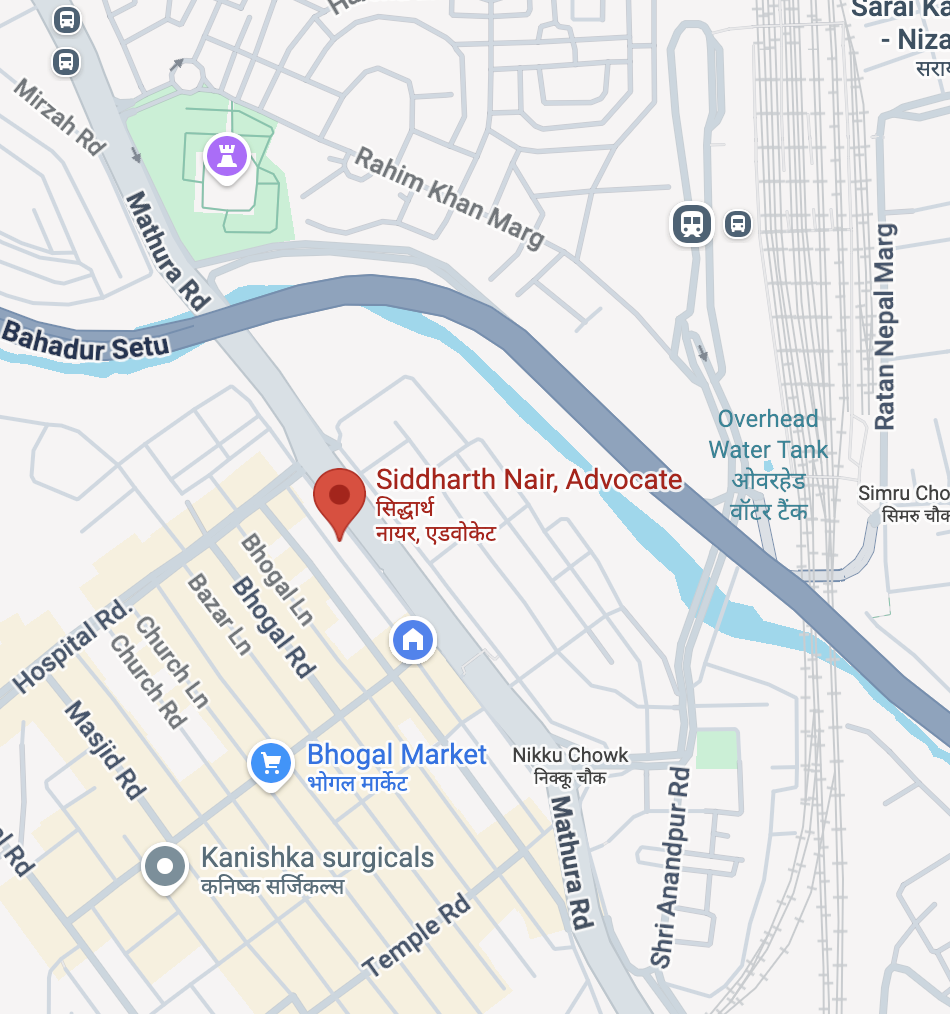
Office: 434, Lower Ground Floor, Jangpura, Mathura Road, New Delhi, NCT of Delhi-110014
Best NDPS Lawyer in New Delhi & Delhi NCR
Advocate Siddharth Nair: Delhi’s Leading Criminal Lawyer for Drug-Related Cases | Expert NDPS Act Defense Attorney
Premier Criminal Defense Counsel for Drug Cases in New Delhi & Delhi NCR
When your freedom, reputation, and future are at stake in a drug-related criminal case, you need more than just a lawyer—you need a dedicated legal warrior who understands the intricate complexities of the Narcotic Drugs and Psychotropic Substances (NDPS) Act, 1985. Advocate Siddharth Nair stands as New Delhi and Delhi NCR’s most accomplished and sought-after criminal defense attorney specializing exclusively in drug-related criminal trials, NDPS prosecutions, narcotics raids, arrests, pre-trial investigations, regular bail applications, and anticipatory bail matters.
With an exceptional track record of securing favorable outcomes for clients facing the most serious drug charges—from possession of small quantities to commercial quantity trafficking allegations—Advocate Siddharth Nair brings unparalleled expertise, strategic acumen, and an unwavering commitment to protecting your constitutional rights and personal liberty.
Why Choose Advocate Siddharth Nair for Your NDPS Defense?
Specialized Expertise in Drug-Related Criminal Defense
Advocate Siddharth Nair has dedicated his entire legal career to mastering the nuances of the NDPS Act, 1985, and related criminal jurisprudence. His deep understanding of drug laws, forensic procedures, search and seizure protocols, and bail jurisprudence makes him the go-to advocate for anyone facing drug-related charges in Delhi, Gurgaon, Noida, Faridabad, Ghaziabad, and across the National Capital Region.
Proven Success in High-Stakes NDPS Cases
From securing bail in cases involving commercial quantities of narcotics to successfully challenging illegal searches, procedural violations, and false implications, Advocate Nair’s courtroom victories speak for themselves. His strategic approach combines:
- Meticulous case analysis – Identifying procedural lapses and legal defenses
- Aggressive litigation – Challenging prosecution evidence and witness testimony
- Expert legal research – Leveraging landmark judgments and constitutional principles
- Client-focused advocacy – Prioritizing your liberty and reputation at every stage
Comprehensive Legal Services for Drug Cases
Advocate Siddharth Nair provides end-to-end legal representation across all stages of NDPS prosecutions:
Pre-Arrest Stage
- Anticipatory Bail Applications – Securing pre-arrest protection under Section 438 CrPC
- Legal Consultation – Advising on rights during investigation and interrogation
- Preventive Legal Strategy – Proactive measures to avoid wrongful arrest
Post-Arrest Stage
- Regular Bail Applications – Navigating the stringent twin conditions under Section 37 NDPS Act
- Custody Representation – Appearing before Special NDPS Courts and Magistrates
- Bail Appeals – Challenging bail rejection orders in High Courts
Trial Stage
- Defense Strategy Development – Building comprehensive defense based on facts and law
- Cross-Examination – Effectively challenging prosecution witnesses and investigating officers
- Legal Arguments – Presenting persuasive submissions on law and evidence
- Acquittal Advocacy – Securing not guilty verdicts through rigorous trial defense
Appellate Stage
- Appeals Against Conviction – Challenging trial court convictions in High Courts and Supreme Court
- Sentence Reduction – Arguing for reduced sentences and suspension of sentences
- Bail Pending Appeal – Securing release during pendency of appeals
Understanding the NDPS Act, 1985: A Comprehensive Legal Framework
What is the NDPS Act?
The Narcotic Drugs and Psychotropic Substances Act, 1985, is India’s primary legislation for controlling and regulating operations relating to narcotic drugs and psychotropic substances. The Act aims to combat drug abuse and illicit trafficking while implementing India’s international treaty obligations under the Single Convention on Narcotic Drugs (1961), Convention on Psychotropic Substances (1971), and the UN Convention Against Illicit Traffic in Narcotic Drugs and Psychotropic Substances (1988).
Key Provisions of the NDPS Act
Section 8: Prohibition of Certain Operations
Section 8 prohibits cultivation, production, manufacture, possession, sale, purchase, transport, warehousing, use, consumption, import, export, and transhipment of narcotic drugs and psychotropic substances except for medical and scientific purposes under license.
Section 15: Punishment for Contravention in Relation to Poppy Straw
This section prescribes punishments based on quantity:
- Small Quantity: Rigorous imprisonment up to 1 year and/or fine up to Rs. 10,000
- Intermediate Quantity: Rigorous imprisonment up to 10 years and fine up to Rs. 1 lakh
- Commercial Quantity: Rigorous imprisonment of 10-20 years and fine of Rs. 1-2 lakhs
Section 20: Punishment for Contravention in Relation to Cannabis
Punishments for cannabis-related offenses (ganja, charas, hashish):
- Small Quantity: Rigorous imprisonment up to 6 months and/or fine up to Rs. 10,000
- Intermediate Quantity: Rigorous imprisonment up to 10 years and fine up to Rs. 1 lakh
- Commercial Quantity: Rigorous imprisonment of 10-20 years and fine of Rs. 1-2 lakhs
Section 21: Punishment for Contravention in Relation to Cocaine, Morphine, Heroin, etc.
The most serious drug offenses with severe penalties:
- Small Quantity: Rigorous imprisonment up to 1 year and/or fine up to Rs. 10,000
- Intermediate Quantity: Rigorous imprisonment up to 10 years and fine up to Rs. 1 lakh
- Commercial Quantity: Rigorous imprisonment of 10-20 years (may extend to 30 years in exceptional cases) and fine of Rs. 1-3 lakhs
Section 22: Punishment for Illegal Import/Export of Drugs
Punishments for cross-border drug trafficking with enhanced penalties for commercial quantities.
Section 27: Punishment for Consumption of Drugs
Voluntary consumption of narcotic drugs or psychotropic substances punishable with rigorous imprisonment up to 1 year and/or fine up to Rs. 20,000 (for first offense).
Section 27A: Punishment for Financing Drug Trafficking
Special provision targeting financial operations related to drug trafficking with rigorous imprisonment of 10-20 years.
Section 29: Abetment and Criminal Conspiracy
Penalizes abetment and conspiracy to commit NDPS offenses with the same punishment as the principal offense.
Critical Procedural Provisions
Section 37: Offences to be Cognizable and Non-Bailable
This is perhaps the most significant provision affecting bail in NDPS cases. Section 37 establishes the “twin conditions” for bail:
- Public Prosecutor must be given opportunity to oppose the bail application
- Court must be satisfied that there are reasonable grounds for believing that:
- The accused is not guilty of the alleged offense
- The accused is not likely to commit any offense while on bail
These stringent conditions make bail extremely difficult to obtain in NDPS cases, particularly those involving commercial quantities.
Section 42: Power of Entry, Search, Seizure, and Arrest
Empowers authorized officers to conduct searches and seizures based on prior information, with mandatory requirements:
- Information must be reduced to writing
- Information must be sent to immediate superior officer
- Officer must record reasons for belief that search is necessary
Non-compliance with Section 42 can vitiate the entire prosecution case.
Section 50: Conditions Under Which Search Shall Be Conducted
This critical safeguard provision requires:
- Accused must be informed of his right to be searched before a Gazetted Officer or Magistrate
- If accused requires search before Gazetted Officer/Magistrate, officer must take accused to such person without unnecessary delay
Violation of Section 50 is a fatal flaw that can lead to acquittal.
Section 52A: Disposal of Seized Narcotics
Mandates early disposal of seized contraband to prevent tampering and ensure chain of custody. Delay in compliance, however, is generally considered a procedural irregularity rather than a ground for acquittal.
Section 67: Power to Call for Information, Inspection, etc.
Authorizes officers to examine persons and record statements during investigation. However, confessional statements under Section 67 have been held inadmissible as evidence.
Click Here For Further Information.

Landmark Supreme Court Judgments on Bail in NDPS Cases
Advocate Siddharth Nair’s mastery of NDPS jurisprudence is built upon comprehensive knowledge of landmark judicial precedents that shape bail law in drug cases.
1. Tofan Singh vs. State of Tamil Nadu (2021) 4 SCC 1
Facts: Tofan Singh was accused in a major heroin trafficking case. The primary evidence against him was a confessional statement recorded under Section 67 of the NDPS Act by investigating officers. He was convicted by the trial court primarily based on this confession.
Legal Issue: Whether confessional statements recorded under Section 67 of the NDPS Act by officers empowered to investigate NDPS offenses are admissible in evidence?
Ratio Decidendi: The Supreme Court held that officers invested with powers to investigate offenses under the NDPS Act are “police officers” within the meaning of Section 25 of the Indian Evidence Act, 1872. Therefore, confessions made to such officers are inadmissible in evidence. The Court clarified that Section 67 statements cannot form the sole or primary basis for conviction.
Judgment: The Supreme Court acquitted Tofan Singh, holding that conviction based solely on inadmissible confessional statements recorded under Section 67 cannot be sustained.
Significance: This landmark judgment revolutionized NDPS defense strategy by rendering Section 67 statements inadmissible, significantly weakening prosecution cases that relied heavily on such confessions. Advocate Siddharth Nair expertly leverages this precedent to challenge weak prosecution cases.
2. State of Kerala vs. Rajesh (2020) 12 SCC 122
Facts: Rajesh was granted bail by the High Court in an NDPS case involving commercial quantity of narcotic drugs. The State challenged this bail order, arguing that the High Court failed to properly apply the twin conditions mandated under Section 37 of the NDPS Act.
Legal Issue: What is the correct interpretation and application of the twin conditions under Section 37(1)(b)(ii) of the NDPS Act for granting bail?
Ratio Decidendi: The Supreme Court emphatically reiterated that Section 37 prescribes mandatory twin conditions that must be satisfied before bail can be granted in NDPS cases:
- Reasonable grounds for believing the accused is not guilty of the offense
- Reasonable grounds for believing the accused will not commit any offense while on bail
The Court emphasized that these conditions must be applied strictly, especially in cases involving commercial quantities. The satisfaction of these conditions must be based on the material available on record and cannot be merely formal.
Judgment: The Supreme Court set aside the High Court’s order granting bail, holding that the High Court had not properly satisfied itself regarding the twin conditions.
Significance: This judgment reinforced the stringent approach to bail in NDPS cases and serves as the foundational precedent for all bail applications. Advocate Siddharth Nair navigates these stringent requirements with exceptional skill, identifying factual and legal grounds to satisfy the twin conditions.
3. Union of India vs. Shiv Shankar Kesari (2007) 7 SCC 798
Facts: Shiv Shankar Kesari was accused under Sections 8, 15, 27-A, and 29 of the NDPS Act for alleged possession of approximately 15 kg of opium. His bail application was rejected by the Special Judge (NDPS Act), but the High Court granted bail. The Union of India appealed to the Supreme Court.
Legal Issue: Whether bail granted without strict adherence to Section 37 conditions can be cancelled, and what factors should courts consider in NDPS bail matters?
Ratio Decidendi: The Supreme Court held that bail granted in NDPS cases must strictly comply with Section 37 requirements. If bail is granted without satisfying the twin conditions, it can be cancelled. However, the Court also recognized that courts must balance the stringent bail provisions with the constitutional right to liberty under Article 21.
Judgment: The Supreme Court cancelled the bail granted by the High Court, reaffirming that Section 37 mandates a stricter approach than ordinary bail applications.
Significance: This judgment establishes the principle that NDPS bail requires heightened scrutiny while simultaneously recognizing that procedural safeguards and constitutional rights cannot be ignored. Advocate Nair uses this balanced approach to argue for bail on constitutional grounds.
4. Union of India vs. Nawaz Khan (2021) 10 SCC 100
Facts: Nawaz Khan was arrested in connection with seizure of commercial quantity of contraband. The High Court granted him bail considering the long period of incarceration and slow trial progress.
Legal Issue: Can prolonged incarceration and delay in trial be grounds for granting bail in NDPS cases involving commercial quantities?
Ratio Decidendi: The Supreme Court held that while delay in trial and prolonged incarceration are relevant factors, they cannot by themselves justify granting bail if the twin conditions under Section 37 are not satisfied. The Court emphasized that the special nature of NDPS offenses requires strict adherence to statutory conditions.
Judgment: The bail was set aside with directions for expediting the trial.
Significance: While this judgment reiterates strict bail standards, Advocate Siddharth Nair uses it strategically by coupling arguments about delay with substantive satisfaction of twin conditions, creating compelling cases for bail.
5. Narcotic Control Bureau vs. Kishan Lal (1991) 4 SCC 449
Facts: This was one of the earliest challenges to the constitutionality and scope of Section 37 of the NDPS Act.
Legal Issue: Whether Section 37 of the NDPS Act restricts the inherent powers of High Courts under Section 439 CrPC to grant bail?
Ratio Decidendi: The Supreme Court held that Section 37 contains a non-obstante clause (“notwithstanding anything contained in the Code of Criminal Procedure”) which clearly indicates legislative intent to restrict bail powers. The limitations under Section 37 override the general bail provisions under CrPC Section 439.
Judgment: The Court upheld the constitutional validity of Section 37 and confirmed that High Courts’ bail powers are subject to the restrictions imposed by Section 37.
Significance: This foundational judgment establishes the legal framework within which all NDPS bail applications must be made. Advocate Nair’s expertise lies in working within this framework while identifying exceptional circumstances that warrant bail.
6. Kulwant Singh vs. State of Punjab (2025)
Facts: Kulwant Singh was denied anticipatory bail by the Punjab & Haryana High Court in a case involving recovery of 550 tablets of Tapentadol Hydrochloride from his car.
Legal Issue: Whether Tapentadol Hydrochloride is a psychotropic substance covered under the NDPS Act, and whether anticipatory bail can be granted if the alleged substance is not covered under the Act?
Ratio Decidendi: The Supreme Court examined whether Tapentadol Hydrochloride was listed in the Schedule to the NDPS Act. Finding that it was not a scheduled substance, the Court held that NDPS provisions would not apply.
Judgment: The Supreme Court granted anticipatory bail, holding that since the substance was not covered under the NDPS Act, the stringent bail restrictions did not apply.
Significance: This recent judgment demonstrates the importance of technical legal analysis of the substances involved. Advocate Siddharth Nair’s meticulous approach includes verification of whether alleged substances are actually covered under NDPS Schedules—a defense strategy that can lead to complete exoneration.
7. Narcotic Control Bureau vs. Lakhwinder Singh (2025)
Facts: Lakhwinder Singh had already served 4.5 years of a 10-year sentence when he filed an application for suspension of sentence and bail pending appeal.
Legal Issue: Whether Section 37 restrictions apply to bail pending appeal, and whether an accused must serve half the sentence before being eligible for bail pending appeal?
Ratio Decidendi: The Supreme Court held that while the judgment in Undertrial Prisoners vs. Union of India (1994) provides guidelines suggesting consideration of bail after serving half the sentence, these guidelines do not create rigid restrictions. Courts retain discretion to grant bail even if half the sentence has not been served, especially if the appeal is unlikely to be heard before the sentence is completed.
Judgment: Bail was granted, with the Court emphasizing that denying bail merely because half the sentence has not been served would violate Article 21 and defeat the right to appeal.
Significance: This progressive judgment provides hope for convicted persons seeking bail pending appeal. Advocate Nair uses this precedent to argue for bail in appeal matters, particularly when trials face significant delays.
8. Ratan Kumar Vishwas vs. State of UP (2008)
Facts: Ratan Kumar Vishwas sought suspension of sentence and bail after conviction under the NDPS Act.
Legal Issue: Whether convicted persons can be released on bail pending appeal in NDPS cases?
Ratio Decidendi: The Supreme Court reiterated that to deal with the menace of dangerous drugs, Parliament mandated that persons accused of NDPS offenses should not be released on bail during trial unless Section 37 conditions are satisfied. The same stringent conditions apply to suspension of sentence pending appeal.
Judgment: The bail/suspension application was rejected for failure to satisfy Section 37 twin conditions.
Significance: While this judgment imposes strict standards, Advocate Siddharth Nair prepares comprehensive applications addressing both prongs of the twin test, maximizing chances of success even in post-conviction bail matters.
Significant High Court Judgments Across India
Delhi High Court
State vs. Anchit Jain (December 19, 2025) – Delhi High Court
Facts: A massive drug seizure case involving 1,289 kg of cocaine/mephedrone and 39.706 kg of hydroponic marijuana across Delhi, Gujarat, Punjab, and Haryana. Multiple accused persons including Anchit Jain were arrested.
Ratio: The Delhi High Court examined compliance with NDPS procedural safeguards including Section 42 (prior information), Section 50 (search conditions), and Section 52A (disposal of contraband). The court emphasized that each procedural requirement serves as a safeguard against abuse of power.
Judgment: The case is ongoing with the court carefully scrutinizing procedural compliance by investigating agencies.
Significance: Demonstrates Delhi High Court’s vigilance in ensuring procedural propriety even in high-profile cases involving large quantities. Advocate Siddharth Nair leverages such precedents to challenge prosecutions marked by procedural irregularities.
Delhi High Court Grants Bail – Mismatch in Drug Identification (December 2025)
Facts: The accused was granted bail after a significant mismatch was discovered between the substance identified during field testing and the Forensic Science Laboratory (FSL) report.
Ratio: The Delhi High Court held that when there are material discrepancies between field test results and FSL analysis, the reliability of the prosecution case is seriously undermined, warranting grant of bail.
Judgment: Bail was granted due to the credibility issues arising from contradictory test results.
Significance: Highlights the importance of challenging forensic evidence and field test procedures. Advocate Nair’s defense strategy includes rigorous scrutiny of forensic reports and chain of custody documentation.
Rajasthan High Court
State of Rajasthan vs. Parmanand (2014)
Facts: The accused persons were tried under Section 8 read with Section 18 of the NDPS Act. The primary defense was that they were not individually informed of their rights under Section 50.
Ratio: The Rajasthan High Court held that each accused must be individually and separately informed of their right under Section 50(1) to be searched before a Gazetted Officer or Magistrate. Collective or general information does not satisfy the statutory requirement.
Judgment: The High Court acquitted the accused due to non-compliance with Section 50 mandates.
Significance: This judgment emphasizes the personal nature of Section 50 rights. Advocate Siddharth Nair meticulously examines whether each accused was individually informed of their rights, a common ground for challenging NDPS prosecutions.
Bhawani Pratap Singh vs. State of Rajasthan (June 18, 2025)
Facts: The accused faced charges under the NDPS Act for drug-related offenses and sought bail on humanitarian grounds, citing health issues and family circumstances.
Ratio: The Rajasthan High Court recognized that while Section 37 imposes stringent conditions, courts cannot ignore humanitarian considerations, especially when the accused suffers from serious health conditions and there are strong prima facie grounds questioning guilt.
Judgment: Bail was granted on humanitarian grounds after satisfying the twin conditions.
Significance: Demonstrates that even under strict NDPS bail regime, humanitarian factors can be considered when twin conditions are satisfied. Advocate Nair presents comprehensive medical and personal circumstance evidence to strengthen bail applications.
Punjab & Haryana High Court
Punjab & Haryana HC Grants Bail – Prosecution Negligence (July 14, 2025)
Facts: The accused had been in custody for nearly three years while the prosecution showed negligence in conducting the trial, with repeated adjournments and delays.
Ratio: The Punjab & Haryana High Court held that while Section 37 restrictions apply, the constitutional right to speedy trial under Article 21 cannot be negated. When prosecution negligence causes inordinate delay, bail may be granted even in cases involving commercial quantities, provided twin conditions can be satisfied.
Judgment: Bail was granted citing prosecution’s delay and the accused’s right to speedy trial.
Significance: Provides a constitutional avenue for bail in delayed trials. Advocate Siddharth Nair effectively combines statutory and constitutional arguments to secure bail in protracted cases.
Rashid vs. State of Punjab (2025)
Facts: Bail petition in a case governed by Section 37 of the NDPS Act involving commercial quantity allegations.
Ratio: The Punjab & Haryana High Court held that while dealing with bail petitions under the rigors of Section 37, courts must strike a judicious balance between the societal interest in curbing drug menace and the individual’s right to liberty. The twin conditions must be applied with careful consideration of facts.
Judgment: The court remanded the matter for fresh consideration with proper application of the twin test.
Significance: Emphasizes the need for balanced judicial approach. Advocate Nair’s representations before courts stress this balance while presenting factual matrices that satisfy statutory requirements.
Maharashtra & Goa High Court (Bombay High Court)
H.S. Arun Kumar vs. State of Goa (November 9, 2022)
Facts: This case involved the legal status of blotter paper impregnated with LSD for consumption, raising questions about its classification under the NDPS Act.
Ratio: The Bombay High Court (Goa Bench) examined whether LSD-impregnated blotter paper constitutes a narcotic drug under the NDPS Act and how quantity should be calculated—whether the entire weight of the blotter paper or only the actual LSD content.
Judgment: The Court referred specific questions to a larger bench regarding classification and quantification of such substances.
Significance: Highlights technical complexities in NDPS prosecutions regarding substance classification and quantity calculation. Advocate Siddharth Nair’s expertise includes technical challenges to quantity allegations, potentially reducing charges from commercial to intermediate or small quantities.
Shankar R. Bangolkar vs. State of Goa (1992)
Facts: The accused was convicted under the NDPS Act, but the prosecution case suffered from multiple procedural lapses including non-compliance with Sections 42, 50, and 52A.
Ratio: The Bombay High Court (Goa Bench) held that cumulative procedural lapses vitiate the prosecution case. While isolated minor procedural irregularities may not be fatal, substantial non-compliance with multiple mandatory provisions renders the prosecution unsustainable.
Judgment: Conviction was set aside and the accused was acquitted.
Significance: Establishes that multiple procedural violations, even if individually not fatal, cumulatively destroy prosecution credibility. Advocate Nair’s defense strategy involves comprehensive procedural audit of each case.
Allahabad High Court (Uttar Pradesh)
Allahabad High Court’s Landmark Ruling – Vimal Rajput (June 12, 2024)
Facts: Vimal Rajput was accused of possessing 7 kilograms of charas. The prosecution case had issues regarding the satisfaction of twin conditions under Section 37.
Ratio: The Allahabad High Court examined the application of Section 37 and held that courts must independently assess whether reasonable grounds exist for believing the accused is not guilty and will not commit further offenses. The court cannot rely solely on prosecution assertions.
Judgment: Bail was granted after the court found that based on the evidence, there were reasonable grounds to believe the accused might not be guilty, and no adverse inference could be drawn regarding future conduct.
Significance: Provides a pathway for bail by emphasizing independent judicial assessment rather than mechanical acceptance of prosecution contentions. Advocate Siddharth Nair excels at presenting alternative narratives and raising reasonable doubts that satisfy the first prong of the twin test.
Madhya Pradesh High Court
Jitendra Gupta vs. State of Madhya Pradesh (January 3, 2024)
Facts: Charges were framed under Sections 8(C) and 21 of the NDPS Act. The accused challenged the prosecution case on multiple grounds including procedural compliance and evidentiary deficiencies.
Ratio: The Madhya Pradesh High Court held that charges must be based on prima facie evidence showing all ingredients of the offense. Mere possession allegations without establishing conscious possession and knowledge are insufficient.
Judgment: The High Court directed the trial court to carefully examine whether prima facie evidence exists for all elements of the charged offenses.
Significance: Highlights the requirement of conscious possession and knowledge in NDPS cases. Advocate Nair effectively challenges prosecutions that fail to establish these mental elements beyond reasonable doubt.
How Advocate Siddharth Nair Can Help You
Immediate Legal Assistance When You Need It Most
If You Are Under Investigation
- Know Your Rights: Understanding your constitutional and statutory rights during search, seizure, and interrogation
- Anticipatory Bail: Filing timely applications for pre-arrest bail to prevent custodial harassment
- Legal Guidance: Advising on cooperation with investigating agencies while protecting your interests
- Documentation: Ensuring proper documentation of all interactions with law enforcement
If You Have Been Arrested
- Immediate Court Appearance: Swift representation before magistrates and special courts
- Regular Bail Applications: Preparing comprehensive bail applications addressing Section 37 twin conditions
- Custody Rights Protection: Ensuring you are not subjected to illegal interrogation or coercion
- Family Liaison: Keeping your family informed and providing guidance on legal procedures
If You Are Facing Trial
- Defense Strategy: Developing comprehensive defense based on facts, law, and forensic analysis
- Evidence Challenge: Cross-examining prosecution witnesses and challenging forensic reports
- Procedural Challenges: Identifying and raising procedural violations that can lead to acquittal
- Legal Arguments: Presenting persuasive submissions based on landmark judgments and constitutional principles
If You Have Been Convicted
- Appeals: Filing appeals in High Court and Supreme Court challenging conviction and sentence
- Bail Pending Appeal: Securing release during pendency of appeals
- Sentence Reduction: Arguing for reduced sentences based on mitigating factors
- Acquittal Pursuit: Achieving acquittals through appellate review
Common Defense Strategies in NDPS Cases
Advocate Siddharth Nair employs multiple defense strategies tailored to each case:
1. Challenging Search and Seizure
- Section 42 Non-Compliance: Establishing that prior information was not recorded or communicated properly
- Section 50 Violations: Proving that accused was not informed of the right to be searched before a Gazetted Officer or Magistrate
- Illegal Search: Demonstrating that search was conducted without legal authority or exceeded authorized scope
2. Questioning Forensic Evidence
- Chain of Custody: Identifying breaks in the chain of custody of seized contraband
- FSL Report Discrepancies: Highlighting contradictions between field tests and laboratory analysis
- Sampling Violations: Challenging improper sampling procedures under Section 52A
3. Establishing False Implication
- Motive for Implication: Demonstrating reasons why the accused might have been falsely implicated
- Lack of Corroboration: Showing absence of independent corroborative evidence
- Contradictory Evidence: Highlighting contradictions in prosecution witnesses’ testimonies
4. Proving Lack of Conscious Possession
- No Knowledge: Establishing that the accused had no knowledge of the contraband
- Planted Evidence: Arguing that contraband was planted by investigating agencies
- Shared Premises: In cases of recovery from shared spaces, proving lack of exclusive possession
5. Technical Legal Defenses
- Substance Not Scheduled: Verifying whether the alleged substance is actually covered under NDPS Act Schedules
- Quantity Miscalculation: Challenging prosecution’s calculation of quantity to reduce severity of charges
- Jurisdiction Issues: Raising questions about territorial and pecuniary jurisdiction
6. Constitutional Rights Violations
- Right to Fair Trial: Highlighting violations of due process
- Right Against Self-Incrimination: Challenging coerced statements and confessions
- Right to Legal Assistance: Establishing denial of legal counsel during critical stages
Understanding Bail in NDPS Cases
The Twin Conditions Under Section 37
The most significant challenge in NDPS bail applications is satisfying the twin conditions:
First Condition: Reasonable grounds for believing the accused is not guilty of the offense
To satisfy this condition, Advocate Siddharth Nair presents:
- Procedural violations that cast doubt on the prosecution case
- Evidentiary weaknesses including forensic discrepancies
- Alternative explanations for the circumstances
- Previous clean record and character evidence
- Prima facie defenses based on facts and law
Second Condition: Reasonable grounds for believing the accused will not commit any offense while on bail
To satisfy this condition, Advocate Nair demonstrates:
- Clean criminal record with no history of drug-related offenses
- Strong family ties and community roots
- Stable employment or business
- Cooperation with investigation and no attempts to abscond
- Willingness to surrender passport and comply with bail conditions
Factors Courts Consider in NDPS Bail Applications
Based on jurisprudential analysis, Advocate Siddharth Nair addresses these judicial considerations:
- Nature and Quantity of Contraband: Commercial vs. intermediate vs. small quantity
- Accused’s Role: Whether kingpin, financier, carrier, or small-time peddler
- Prior Criminal Record: Any history of drug-related or other offenses
- Stage of Investigation/Trial: Whether investigation complete, chargesheet filed, trial progressing
- Time in Custody: Period already spent in judicial custody
- Procedural Compliance: Whether investigating agencies followed NDPS Act mandates
- Evidence Strength: Prima facie strength or weakness of prosecution case
- Flight Risk: Whether accused is likely to abscond or flee from justice
- Tampering Risk: Possibility of evidence tampering or witness intimidation
- Socio-Economic Background: Family ties, employment, health conditions
Frequently Asked Questions About NDPS Cases
Can I get bail in an NDPS case involving commercial quantity?
While bail in commercial quantity cases is extremely difficult, it is not impossible. Advocate Siddharth Nair has successfully secured bail even in commercial quantity cases by demonstrating:
- Serious procedural violations by investigating agencies
- Evidentiary weaknesses and forensic discrepancies
- Constitutional violations and denial of fair trial rights
- Prolonged incarceration and trial delays
- Humanitarian grounds coupled with satisfaction of twin conditions
What if the drugs were planted or I was falsely implicated?
False implication is a recognized defense in NDPS cases. Advocate Nair builds this defense through:
- Demonstrating motive for false implication
- Proving lack of independent witnesses
- Establishing alibis and alternative explanations
- Challenging prosecution witnesses through effective cross-examination
- Highlighting procedural lapses that suggest fabrication
How long does it take to get bail in NDPS cases?
The timeline varies depending on:
- Regular bail: Typically 2-8 weeks from filing to final hearing in Sessions Court/Special Court
- Bail appeals: 4-12 weeks in High Court
- Anticipatory bail: Can be expedited in urgent circumstances, typically 1-4 weeks
Advocate Siddharth Nair prioritizes urgent matters and works tirelessly to minimize custody time.
What happens if I don’t get bail?
If bail is denied, Advocate Nair immediately:
- Files appeals in the High Court challenging the denial order
- Seeks interim bail pending appeal
- Continues to monitor trial progress and files fresh bail applications when circumstances change
- Pursues default bail if applicable statutory timelines are breached
Will I be acquitted if there were procedural violations?
Procedural violations can lead to acquittal, but it depends on the nature and extent of violations:
- Fatal violations: Non-compliance with Sections 42, 50 often leads to acquittal
- Curable defects: Minor procedural irregularities may not be fatal
- Cumulative effect: Multiple violations, even if individually not fatal, can together destroy prosecution case
Advocate Siddharth Nair’s meticulous case analysis identifies and effectively argues procedural violations.
Why Advocate Siddharth Nair is Your Best Choice for NDPS Defense in Delhi NCR
Unmatched Experience and Track Record
With years of focused practice in NDPS litigation, Advocate Siddharth Nair brings:
- Hundreds of bail applications successfully argued before Trial Courts, High Court, and Supreme Court
- Numerous acquittals achieved through rigorous trial defense
- Successful appeals overturning convictions and securing sentence reductions
- Landmark procedural victories challenging illegal searches, seizures, and arrests
Client-Centric Approach
Your freedom and future are paramount:
- 24/7 Availability: Immediate response during arrests and emergencies
- Personalized Attention: Every case receives dedicated focus and customized strategy
- Transparent Communication: Regular updates on case progress and clear explanation of legal processes
- Compassionate Counsel: Understanding the stress and anxiety you and your family face
Strategic Legal Excellence
Advocate Nair’s approach combines:
- Comprehensive Legal Research: Leveraging latest judgments and legal developments
- Forensic Understanding: Technical knowledge of drug testing and chain of custody
- Aggressive Litigation: Fearless courtroom advocacy protecting your rights
- Negotiation Skills: When appropriate, negotiating favorable outcomes with prosecution
Accessible Legal Services
Serving clients across:
- New Delhi: All District Courts, Patiala House Courts, Karkardooma Courts, Rohini Courts, Saket Courts, Dwarka Courts
- Delhi NCR: Gurgaon, Noida, Greater Noida, Faridabad, Ghaziabad
- High Court: Delhi High Court
- Supreme Court: Supreme Court of India
Contact Advocate Siddharth Nair Today
When your liberty is at stake, every moment counts. Don’t face NDPS charges alone or with inadequate legal representation. Advocate Siddharth Nair’s proven expertise, strategic acumen, and unwavering commitment to client defense make him the premier choice for drug-related criminal defense in Delhi and NCR.
- Office: 434, Lower Ground Floor, Jangpura, Mathura Road, New Delhi, NCT of Delhi-110014
- Phone: +91-9625799959
- Email: mailme@nairlawchamber.com
- Website: www.nairlawchamber.com
Schedule Your Confidential Consultation
Whether you are under investigation, have been arrested, are facing trial, or need to file an appeal, Advocate Siddharth Nair is ready to fight for your rights and freedom.
Remember: In NDPS cases, the right legal representation can mean the difference between years in prison and walking free. Choose experience, choose expertise, choose Advocate Siddharth Nair.
Disclaimer
The information provided on this website is for general informational purposes only and does not constitute legal advice. Every NDPS case is unique and outcomes depend on specific facts, evidence, and applicable law. Past results do not guarantee future outcomes. For specific legal advice regarding your case, please schedule a personal consultation with Advocate Siddharth Nair.
Keywords: Best criminal lawyer Delhi, NDPS Act lawyer, drug cases advocate, narcotics defense attorney Delhi, bail in NDPS cases, anticipatory bail drug cases, regular bail NDPS, criminal trial lawyer Delhi, drug raid lawyer, NCB cases lawyer, Section 37 NDPS bail, commercial quantity bail, drug possession lawyer, heroin case lawyer, cocaine case lawyer, cannabis case lawyer, marijuana possession lawyer, Delhi NCR criminal advocate, drug trafficking defense, NDPS Act defense strategies, false implication drug cases, Section 50 NDPS lawyer, Section 42 NDPS advocate, best bail lawyer Delhi, top criminal attorney Delhi, drug charges defense counsel
© 2025 Advocate Siddharth Nair. All Rights Reserved.
2 thoughts on “Best NDPS Lawyer in New Delhi & Delhi NCR”
Comments are closed.