
The Comprehensive Guide to Help Understand & Navigate Defence in Rape Trials with False Allegation Elements in the Indian Criminal Justice Ecosystem
A Professional Resource for People who have been falsely accused of rape in India
By Advocate Siddharth Nair
For Help, Contact Now!
Advocate Siddharth Nair
Call: +91-9625799959
New Delhi | Delhi NCR | Pan-India Practice
Leading Advocate for False Rape Cases in New Delhi, Delhi NCR & Pan-India
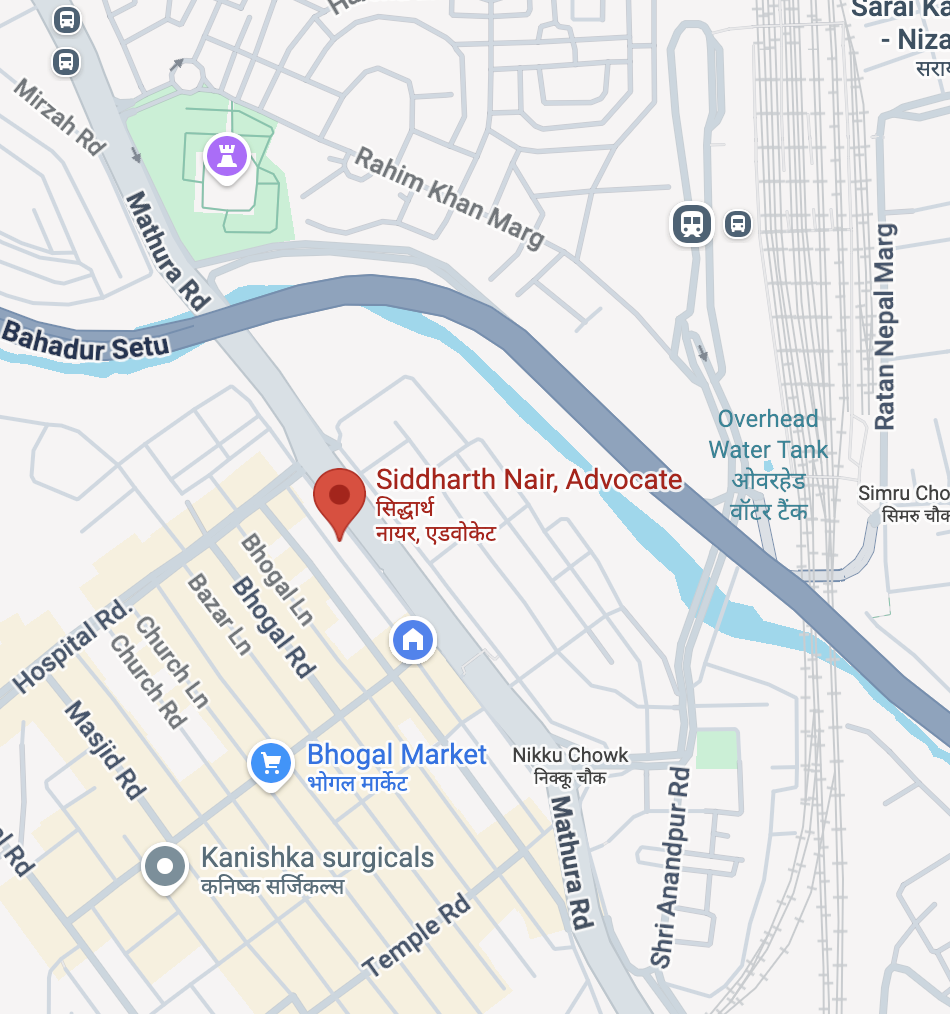
Office: 434, Lower Ground Floor, Jangpura, Mathura Road, New Delhi, NCT of Delhi, India-110014
Click Here <<<<<For Directions to our office in New Delhi on Google Maps
Phone: +91-9625799959
Email: mailme@nairlawchamber.com
Website: www.nairlawchamber.com
Our Core Practice Areas:
- All Cases of Any type in All District & Sessions Courts in NCT of Delhi
- All Cases of all types in the High Court of Delhi & High Court of Other States & Union Territories
- All cases of all types in The Supreme Court of India
- All types of Cases in Excise Duty, Value Added Tax (VAT), Income Tax (IT), Customs Duty
- False POCSO criminal cases, Bail in All Criminal Cases, False Rape criminal Cases
- Murder & Attempt to Murder criminal Cases
- Recovery cases Under Section 138 of the Negotiable Instruments Act, 1881 (NI Act, 1881).
- All types of cases of Trademarks, Copyrights & Patents
- Divorce Cases & Domestic Violence Cases
- Criminal Cases of Money Laundering, White Collar Crimes & Smuggling
- Criminal Cases of Mafia/Organised Crime
- Incorporation & Registration of new Firms & Companies anywhere in India.
- All cases having jurisdictions before the National Companies Law Tribunal (NCLT) & National Companies Law Appellate Tribunal (NCLAT)
- All cases having Jurisdiction before The National Green Tribunal (NGT Cases)
- All Requisite Regulatory Compliances For all companies in India
- All Licenses Required for any Business, Trade, Import & Export, Sales & Purchases, Manufacturing, Transportation & Sales of Goods (Both Regulated & Unregulated) anywhere in India
- Bail in criminal Cases under The Arms Act, 1959, along with the Arms Rules, 2016
- Bail in criminal Cases under The Narcotic Drugs and Psychotropic Substances Act, 1985 (NDPS Act, 1985)
- Central Goods and Services Tax (CGST), State Goods and Services Tax (SGST), Union Territory Goods and Services Tax (UTGST) & Integrated Goods and Services Tax (IGST)
- Best Family Law & Criminal Defence Lawyer in Delhi NCR for MTP/Abortion Cases
- Loan Recovery Defence | SARFAESI | Debt Recovery Tribunals | Property Cases | Credit Card Defaults | FIR Quashing | Criminal Defence
- Premier Criminal Defence Lawyer Specializing in False Cruelty & Dowry Harassment Cases
Consultations: Monday to Saturday: Call Now For an Appointment (9am to 9pm)
Sundays, Public Holidays & Festivals: Holiday/ Meetings strictly by appointments only
Executive Overview
Best Guide To Fight False Rape Cases In India
To Understand in Short Click Here
This guide provides a comprehensive legal framework for criminal defence professionals addressing rape allegations in the Indian judicial system. It synthesizes contemporary statutory provisions, landmark Supreme Court jurisprudence, and High Court precedents from multiple jurisdictions to establish principled approaches to defending clients accused of rape. The guide emphasizes the critical distinction between genuine sexual assault cases and allegations arising from soured consensual relationships or malicious intent, with particular focus on cases involving false promises of marriage—a category that has generated 99.22% acquittal rates in recent jurisprudence.
The analysis reflects the foundational principle that while protecting sexual assault victims is paramount, the constitutional right to presumption of innocence and fair trial procedures must be rigorously maintained. Courts have increasingly recognized that indiscriminate application of rape laws without evidentiary scrutiny creates systemic injustice and undermines public confidence in the legal system.
Part I: Legislative Framework and Statutory Provisions
A. The Indian Penal Code: Core Rape Statutes
Section 375 IPC: Definition of Rape
Section 375 defines rape with specificity regarding the act itself and the attendant circumstances affecting consent:
The substantive definition encompasses any man committing sexual intercourse with a woman:
- Without her consent
- Against her will through force or threats
- Without her knowledge (drugging, medical deception)
- With her consent obtained through misconception of fact or identity
- When she is under 18 years of age (consent immaterial)
- When she is unable to give consent due to intoxication, unconsciousness, or unsound mind
- When she is in a custodial relationship
Critical evidentiary element: Penetration, however slight, constitutes sexual intercourse sufficient for rape conviction. Depth of penetration is immaterial; the slightest degree satisfies the requirement.
Section 376 IPC and Amendments: Punishment Framework
Section 376(1): General rape provision prescribes rigorous imprisonment not less than 10 years, extendable to life imprisonment.
Section 376(2): Specific categories with enhanced punishment:
- 376(2)(f): Rape on woman under 12 years—20 years to life imprisonment
- 376(2)(g): Rape by public servant on woman in custody—10 years to life
- 376(2)(i): Rape by person managing hospital on institutionalized woman
- 376(2)(j): Rape causing grievous injury—punishment at least 15 years
- 376(2)(l): Rape causing victim’s death or vegetative state—life or death
- 376(2)(n): Rape on false promise of marriage (subject of extensive acquittals in recent cases)
Section 376(3): Rape on woman under 16 years—minimum 20 years to life imprisonment.
Section 376AB: Rape on woman under 12 years—minimum 20 years to life, potentially death.
Section 376D: Gang rape—each perpetrator treated as rapist regardless of specific act performed.
Critical Amendment History (Criminal Law Amendment Act, 2013):
- Raised minimum punishment from 7 years to 10 years
- Added custodial rape provisions
- Prohibited anticipatory bail for rape of minors under 16
- Mandated 2-month investigation timeline (Section 173A CrPC)
- Prescribed 2-month trial timeline (Section 309(2) CrPC)
Section 376(2)(n) IPC: The “False Promise of Marriage” Provision
This provision has become jurisprudentially significant and simultaneously subject to extensive judicial criticism. It applies when a man induces a woman to believe he will marry her and, under that false promise, obtains her consent to sexual intercourse.
Landmark Supreme Court Jurisprudence (2024-2025) has established that Section 376(2)(n) requires:
- False promise must be made at inception, not merely breached later
- Fraudulent intent must exist from the outset—a man cannot be convicted if he genuinely intended to marry but circumstances changed
- Consensual relationship deterioration (engagement broken, family opposition, etc.) does not retroactively convert consensual intercourse into rape
- Burden on prosecution: Must establish through clear evidence that promise was inherently false from the beginning
Recent Supreme Court decisions (Ravish Singh Rana v. State of Uttarakhand, 2025; Jothiragawan v. State, 2025) have quashed proceedings in cases involving two-year consensual relationships where the women later claimed rape because marriage did not materialize.
Sections 182, 193, 211 IPC: Provisions Against False Allegations
Complementing the rape statutes are provisions protecting accused persons from malicious prosecution:
Section 182 IPC: Providing false information to public servant
- Punishment: Imprisonment up to 6 months and/or fine
- Applicable when false complaint lodged with police or magistrate
Section 193 IPC: Giving false evidence
- Punishment: Imprisonment up to 7 years and fine
- Applies when woman lies under oath before court
Section 211 IPC: False charge of offence made with intent to injure
- Punishment: Up to 2 years imprisonment if charge is for lesser offence; up to 7 years if charge is for offence punishable with 7+ years imprisonment
- Critical provision for prosecuting women who file false rape complaints
Section 194 IPC: Fabricating false evidence with intent to procure wrongful conviction
- Punishment: Life imprisonment minimum
- Applied in rare circumstances where false evidence is deliberately constructed to secure conviction
B. Indian Evidence Act, 1872: The Consent Presumption Framework
Section 114A: Presumption as to Absence of Consent
The 1983 amendment inserted Section 114A, fundamentally altering the evidentiary framework in rape cases. This provision has generated substantial jurisprudential development and requires careful interpretation.
Statutory Text: In prosecution under Section 376(2) IPC, where sexual intercourse by accused is proved and the question is whether it was without the consent of the woman, and such woman states in her evidence before court that she did not consent, the court shall presume that she did not consent.
Critical Interpretative Points:
- The presumption is not automatic: Three conditions must independently exist:
- Sexual intercourse must be proven by evidence (prosecution burden)
- The central question before court must be whether such intercourse was consensual
- The woman must personally state in testimony that she did not consent
- The presumption does NOT shift ultimate burden of proof: The prosecution remains responsible for proving guilt beyond reasonable doubt. Section 114A creates a rebuttable presumption about consent once intercourse is established—it does not reduce the prosecution’s overall evidentiary burden.
- The accused can rebut the presumption by producing evidence that:
- Consent was genuine and freely given
- The woman knew and understood the nature and implications of the act
- No force, threat, or misconception of fact vitiated the consent
- The relationship was consensual from inception
- Application limited to Section 376(2) scenarios: The presumption applies only to specific categories of rape allegations, not to all cases brought under Section 375.
Judicial Clarifications (Supreme Court): The Court has repeatedly held that even if Section 114A presumption applies, the prosecution must still establish every ingredient of the offence beyond reasonable doubt. The presumption merely shifts the burden regarding consent—not regarding the fact of intercourse or the identity of the accused.
C. Code of Criminal Procedure, 1973 / Bharatiya Nagarik Suraksha Sanhita, 2023
Section 482 CrPC (Section 528 BNSS): Power to Quash FIRs
High Courts possess inherent jurisdiction to quash criminal proceedings in cases that are:
- Manifestly frivolous: Lacking basic factual foundation
- Vexatious: Designed to harass rather than seek justice
- Instituted with ulterior motive: Aimed at wreaking vengeance or extortion rather than pursuit of justice
- Abuse of process: Continuation would defeat ends of justice
Supreme Court’s Four-Step Test (2025) for High Court exercise of quashing power:
- Material must be unimpeachable and beyond suspicion: The evidence or material presented must be of impeccable quality, neither fabricated nor unreliable.
- Material must completely undermine allegations: If accepted, the material should completely demolish the foundation of accusations and convince a reasonable person that allegations are false.
- Prosecution unable to effectively counter: The complainant or prosecution has failed to meaningfully dispute or challenge the material, or the material is of such nature it cannot reasonably be disputed.
- Misuse of judicial process: Allowing the case to proceed would amount to abuse of the court’s process and defeat the ends of justice by subjecting an innocent person to protracted criminal trial.
Application in Practice: Recent cases (2025) show High Courts increasingly willing to quash FIRs in false rape allegations where documentary evidence (property transactions, medical reports, phone records) demonstrably contradicts the complainant’s version or reveals ulterior motives (ongoing financial disputes, extortion demands).
Section 340 CrPC (Section 216 BNSS): Perjury Proceedings
After acquittal or when charges are proved false, the accused may move the trial court for:
- Initiation of proceedings against the complainant under Section 340 CrPC
- Requirements: The statement made by the woman in court must be found to be deliberately false by the judge
- Burden: Court must be satisfied that perjury (intentional false testimony) has occurred
- Outcome: If sustained, triggers prosecution of the woman under Sections 193, 194, or 211 IPC
Mandatory Timelines Under Criminal Procedure
Section 309(2) CrPC (continuing under BNS): Rape trials shall, “as far as possible,” be completed within 2 months from date of charge sheet filing.
Practical Reality: Empirical studies show actual rape trials average 8.5 months (37 weeks) just for prosecution evidence examination, with the prescribed 2-month timeline observed only in exceptional fast-track courts. This disparity between statutory expectation and judicial reality remains a significant challenge to timely justice.
D. Bharatiya Nyaya Sanhita 2023: Contemporary Legislative Framework
The new criminal code (effective July 2023) comprehensively replaces the IPC and CrPC while maintaining substantive rape law architecture with procedural refinements.
Section 63-65 BNS: Rape and Gang Rape
Section 63: Rape definition—substantially equivalent to IPC Section 375
Section 64: Punishment for rape—rigorous imprisonment not less than 10 years, extendable to life
Section 65: Gang rape—each perpetrator liable under rape provisions
Section 217 BNS: Providing False Information to Police
Replaces IPC Section 182, with similar punishment scope (imprisonment up to 6 months and/or fine).
Section 248 BNS: False Charge of Offence Made with Intent to Injure
Critical provision for defending against false rape allegations:
“Whoever, with intent to cause injury to any person, institutes or causes to be instituted any criminal proceeding against that person, or falsely charges any person with having committed an offence, knowing that there is no just or lawful ground for such proceeding or charge against that person, shall be punished with imprisonment of either description for a term which may extend to five years, or with fine which may extend to two lakh rupees, or with both.”
Enhanced punishment if false charge is for offence punishable with death, life imprisonment, or 10+ years: punishment extends to ten years imprisonment and fine.
Application to rape cases: When prosecution proves that the woman knowingly filed a false rape complaint, Section 248 BNS provides prosecution avenue with substantial penal consequences.
BNS Timelines and Procedural Requirements
- Investigation completion: 2 months (rape, gang rape, POCSO cases)
- Medical examination report to investigating officer: 7 days
- Victim notification of investigation progress: 90 days
- Charge framing: 60 days from first hearing on charges
- Judgment delivery: 30 days after arguments completion (extendable to 60 days)
- Appeal disposal: 6 months (target, often exceeded)
Mandatory Forensic Investigation for offences punishable with 7+ years imprisonment: Forensic experts must visit crime scenes, collect evidence, and record process on electronic devices.

Part II: Supreme Court and High Court Jurisprudence on False Rape Allegations
A. Supreme Court Landmark Decisions (2024-2025)
Ravish Singh Rana v. State of Uttarakhand, Criminal Appeal No. 2438 of 2025 (April 2025)
Judgment Date: April 28, 2025
Justices: Sanjay Karol and Manoj Misra, JJ.
Citations: Reported in Indian legal databases as 2025 SCC OnLine
Facts:
- Complainant and appellant (accused) met on Facebook in February 2021
- Consensual live-in relationship lasted approximately 2 years
- Physical relationship occurred multiple times during this period
- When complainant demanded marriage, appellant refused
- Appellant subsequently threatened the complainant
- On November 18, 2023, appellant allegedly forced sexual relations on complainant
- Complainant filed FIR alleging rape under Sections 376, 323, 504, 506 IPC
Appellant’s Arguments:
- Consensual live-in relationship cannot be converted to rape merely because it didn’t culminate in marriage
- FIR was motivated, mala fide, and constituted abuse of legal process
Prosecution/Respondent Arguments:
- Initial agreement between parties contemplated marriage; rape complaint was legitimate consequence of breach of that agreement
- Cited Pramod Suryabhan Pawar v. State of Maharashtra (2019) establishing that false promise of marriage vitiates consent
Court’s Holding:
The Supreme Court, in detailed analysis, quashed the FIR and all consequential proceedings, establishing critical jurisprudential principles:
- Duration of relationship significant: A prolonged (2+ year) consensual live-in relationship cannot be retroactively criminalized because marriage did not materialize. The extended voluntary cohabitation demonstrates ongoing, genuine consent.
- Distinction between false promise and breach: The Court articulated critical doctrinal boundary:
- False promise: Promise made with fraudulent intent from inception, never intended to be honored
- Breach of promise: Promise made genuinely but later abandoned due to changed circumstances
Only the former constitutes criminal deception under rape law.
- Good faith deterioration is not rape: When circumstances change (family opposition, financial constraints, personal differences) preventing marriage, this reflects changing relationship dynamics, not criminal conduct. Courts must not criminalize romantic disappointment.
- Burden on prosecution: The Court emphasized prosecution must prove through clear, convincing evidence that the promise was inherently false from the beginning. Mere non-performance of promise, even deeply disappointing, is insufficient.
- Protection of youth from protracted trials: The Court expressed concern that young people’s entire futures would be destroyed by lengthy criminal trials triggered by soured relationships. Even if prosecution proceeds to trial, conviction becomes extraordinarily difficult given the jurisprudential standards established.
Impact: This decision represents watershed moment in rape jurisprudence, effectively insulating consensual relationships from conversion to rape charges solely because marriage did not occur.
Jothiragawan v. State, Criminal Appeal (Arising out of SLP) Diary No. 38269 of 2024 (March 24, 2025)
Judgment Date: March 24, 2025
Justices: Sudhanshu Dhulia and K.V. Chandran, JJ.
Citations: 2025 INSC 386; 2025 SCO.LR 3(4)
Facts:
- Complainant (minor, approximately 22 years old) and accused were close relatives
- Complaint alleged accused obtained her consent through promise of marriage, later refusing to marry
- Sessions Judge was of opinion matter required trial
- Madras High Court dismissed Section 482 petition seeking to quash
- Appellant filed SLP before Supreme Court
Madras High Court’s Analysis:
- Victim had categorically stated forced consent through marriage promise
- Subsequent refusal to marry by accused
- Whether accused had duped victim was matter for trial
Supreme Court’s Holding:
The Court set aside the High Court order and quashed the proceedings, holding:
- “Absolute certainty” about false promise: The Court had no doubt whatsoever that criminal proceedings represented “nothing but an abuse of process of the court.”
- Inconsistent statements indicate falsehood: Analysis of complainant’s statements revealed substantial inconsistencies and contradictions, undermining the credibility of the entire narrative.
- Absence of initial deception: No evidence existed that accused made initial promise with deceptive intent. The evidence rather suggested a genuine relationship where the accused later declined marriage due to changed circumstances.
- Coercion allegations unsupported: Claims that accused “coerced” the complainant were completely erroneous given the circumstances.
- Prosecutrix burden: The Court observed that even an educated, adult woman of 22 years had failed to adduce evidence of criminal deception. The prosecution’s case rested entirely on the victim’s uncorroborated assertions.
- Harassment of accused outweighs state interest: Subjecting the accused to protracted criminal trial when the evidence so clearly failed to establish criminal conduct would not “subserve the ends of justice” but rather perpetuate injustice.
Key Quote: “Having heard both sides in this case, we have absolutely no doubt in our mind that the criminal proceedings initiated against the present appellant are nothing but an abuse of process of the court.”
Impact: Reinforces that courts must undertake rigorous scrutiny of rape allegations at the petition stage and should not hesitate to quash proceedings where evidence is manifestly insufficient to sustain criminal conduct.
Breach of Promise to Marry Cases—Consolidated Jurisprudence
Multiple Supreme Court decisions in 2024-2025 have established that breach of promise to marry does not constitute rape. Key holdings include:
- Consensual relationship turning sour cannot trigger rape prosecution: When adult parties in consensual relationship separate because marriage does not materialize, criminal machinery cannot be invoked. Such conduct burdens courts and “blots the identity” of the accused without justification.
- Burden on prosecution to distinguish: The State must prove that the false promise was intrinsic to obtaining consent—that is, the accused never intended to marry. Mere breach, however painful, does not meet this burden.
- Jurisprudential trend toward acquittal: Post-2013 Amendment data shows 99.22% acquittal rate in false promise to marry cases (257 out of 259 cases), compared to only 81.06% acquittal rate under older jurisprudence. Courts have learned to distinguish between genuine consensual relationships and criminal deception.
B. Delhi High Court: Recent Developments (2025)
The State v. Toshib alias Paritosh, CRL. REV. P. No. 772 of 2024 (December 15, 2025)
Court: Single Judge Bench (Dr. Swarna Kanta Sharma, J.)
Issue: Discharge of persons accused under Sections 328 and 376 IPC by Trial Court in gang rape case
Facts:
- FIR registered January 21, 2023
- Prosecutrix alleged gang rape by Toshib and two others
- Alleged luring for employment, taking to Noida flat
- Prosecutrix repeated allegations during medical examination
- Upon investigation completion and charge sheet filing, trial court discharged all accused
- State preferred revision petition
Critical Evidence:
- Prosecutrix’s statement under Section 164 CrPC (before magistrate) completely exonerating all accused
- She stated physical relationship was consensual
- Other accused persons with respective girlfriends had not committed wrongdoing
- She unequivocally stated she did not wish to pursue complaint
Court’s Holding:
- Section 164 statement carries exceptional weight: Statement recorded before magistrate after ensuring voluntariness and absence of coercion carries substantial evidentiary significance, particularly when no ambiguity, hesitation, or allegation of pressure exists.
- Foundational basis eroded: When prosecutrix resiles from allegations in formal statement before magistrate and reaffirms that statement in trial proceedings, the foundation of prosecution case is substantially eroded.
- Discharge justified: Proceeding to trial absent grave suspicion would subject accused to unwarranted prosecution. Trial court’s discharge order was justified and High Court declined to interfere.
- Broader observations on false allegations:
- False allegations in rape cases cause irreparable harm to accused
- Social stigma, loss of reputation, incarceration, psychological trauma remain unhealed even after acquittal
- Such harm can be as devastating as genuine sexual assault to victims
- Repeated false allegations undermine public confidence in justice system and cast doubt on genuine complaints
- Recovery of compensation mandated: Court emphasized need for effective enforcement of recovery provisions in victim compensation schemes to prevent misuse of public funds when allegations are withdrawn or proved false.
Court’s Directions:
- Trial courts must forward relevant orders to Delhi State Legal Services Authority (DSLSA) in sexual offence cases where proceedings are quashed or victim turns hostile
- Mandatory disclosure in petitions seeking quashing whether compensation has been received
- Circulation of judgment to all judicial officers, Delhi Judicial Academy, and DSLSA for institutional awareness
Impact: Establishes that Delhi courts view false rape allegations as serious breaches of justice meriting institutional response and compensation recovery measures.
Delhi High Court, Single Bench (CRL.M.C. 3061/2025 & CRL.M.A. 13572/2025, September 3, 2025)
Issue: Rape on false promise of marriage where alleged marriage documentation was backdated
Facts:
- Accused claimed parties underwent marriage at Arya Samaj Mandir
- Complainant alleged no actual marriage, only backdated certificate
- Accused subsequently married another woman
- Complainant continued sexual relations with accused even after learning about other marriage
- Complainant then lodged rape FIR
Court’s Holding:
- If complainant continued consensual sexual relations even after learning accused had married another woman, this fundamentally undermines her credibility regarding non-consent
- Continued engagement in sexual relations with knowledge of accused’s bigamy suggests either: (a) consent was genuine, or (b) complainant pursuing ulterior motive (extortion, retaliation)
- FIR quashed; proceeding would constitute abuse of process
C. Kerala High Court: Jurisprudential Leadership in False Allegations (2025)
High Court of Kerala Decision (December 1, 2025)
Judgment Date: December 1, 2025 (Monday)
Justice: G. Girish, Single Bench
Issue: Quashing of criminal proceedings for rape under Section 376(f)(n) IPC and Section 66E IT Act
Facts:
- FIR registered July 23, 2018
- Complainant alleged rape during 2011-2014 period (3-year period)
- Allegations of criminal intimidation through threat to publish objectionable photographs
- Alleged non-disclosure of crime due to shame
Critical Evidence:
- Substantial financial and property transactions between petitioner and complainant from 2010 onwards
- In 2017, complainant had testified for petitioner in cheque dishonor case
- In such testimony, she described him as “close family friend”
- Property transactions and financial dealings demonstrated ongoing trust and regular interaction
Court’s Holding:
- Educated employed woman’s credibility: Court expressed skepticism that an “educated and employed lady” would have subjected herself to 3+ years of sexual abuse without disclosure. The Court’s language reflects judicial recognition that education and employment status affect credibility assessments regarding vulnerability to coercion.
- Contradictions with prior testimony: When complainant testified favorably for accused in separate proceeding (2017), describing him as “close family friend,” this fundamentally contradicted later rape allegations. Courts cannot reconcile such contradictions without concluding at least one version is false.
- Financial entanglement as evidence of genuine relationship: Extensive financial transactions and property dealings between parties demonstrated that their relationship was genuine and collaborative, not coercive or abusive.
- Ulterior motive identified: After analyzing sequence of events, Court concluded “substance in the allegation of the petitioner that a false complaint has been lodged against him as a counterblast to the legal action initiated by him against the de facto complainant.” The rape complaint was filed after petitioner sued complainant for non-repayment of loan and insurance fraud.
- Consensual relationship turning sour: Court emphasized that consensual relationships, even when they turn sour, cannot be converted to rape charges without evidence of criminal deception from inception.
Impact: Kerala High Court has joined the jurisprudential trend of courts rigorously scrutinizing rape allegations and quashing proceedings where evidence reveals ulterior motives.
Kerala High Court, July 2025: False Promise by Married Person
Issue: Whether rape on false promise of marriage can be charged when complainant was aware of accused’s existing marriage
Court’s Holding:
- If both parties were aware of accused’s existing marriage, no rape charge under false promise to marry can be sustained
- Complainant’s knowledge of marital status precludes finding that she was deceived into sexual relations
D. Uttar Pradesh High Court (Allahabad): Gender-Neutral Justice
High Court Acquittal, June 2024
Court: Allahabad High Court, Division Bench (Justices Rahul Chaturvedi and Nand Prabha Shukla)
Issue: Appeal against rape acquittal; charge-sheet also included SC/ST Act allegations
Court’s Landmark Holding:
“No doubt, chapter XVI (on ‘sexual offences’) is a women-centric enactment to protect the dignity and honour of a lady and girl and rightly so, but while assessing the circumstances, it is not the only and every time the male partner is at wrong, the burden is upon both of them.”
Facts:
- Woman claimed sexual relationship on promise of marriage; accused refused to marry
- Woman concealed her existing marriage from 2010
- Complainant had hidden her caste, claiming to be “Yadav” when she was different caste
- Trial court acquitted; complainant appealed
Court’s Analysis:
- Woman already married in 2010; began separate living after 2 years
- Without dissolution of first marriage, she maintained physical relationship for 5 years
- Both parties visited hotels and lodges, “enjoyed company of each other”
- Court observed: “It is difficult to adjudicate who is befooling whom”
- Woman’s credibility fundamentally compromised by hidden marital status and caste misrepresentation
Impact: Establishes that courts will apply gender-neutral analysis even in rape cases; women’s credibility can be severely damaged by material misrepresentations and deception.
E. Punjab & Haryana High Court: Marital Status and Consent
Case (September 2025)
Court: Division Bench (Justice Manjari Nehru Kaul and Justice H.S. Grewal)
Issue: Rape conviction appeal where prosecutrix was married woman
Facts:
- Complainant was married woman with two children
- Accused was 10 years younger than complainant
- Alleged consensual relationship for 2+ years while she remained married
- She claimed induced into sexual relations on promise of marriage
- Trial convicted accused; sentenced 9 years
Court’s Holding:
- Marital status fundamental fact: Court placed extraordinary weight on the fact that prosecutrix was married woman living with husband and in-laws during the alleged abuse period.
- Implausibility of inducement: Court found it implausible that married woman whose parents-in-law would tolerate her absence could have been “induced” into sexual relations by promise of marriage. Her decision to maintain extramarital relationship was her own.
- Specificity in testimony lacking: Prosecutrix claimed 55-60 instances of sexual intercourse in 2012-13, yet her testimony was “conspicuous by absence of dates and other material particulars.” She admitted intercourse occurred in in-laws’ house.
- Quashing conviction and acquitting accused: The High Court acquitted the accused, finding the prosecution failed to prove genuine lack of consent.
Impact: Demonstrates that married women’s rape allegations, particularly in consensual extramarital relationships, face high evidentiary skepticism from courts.
Case (October 2024): Quashing of FIR Where Engagement Broke Due to Differences
Facts:
- Petitioner and complainant became friends, got engaged
- Roka ceremony performed; marriage scheduled November 2024
- During courtship, consensual relationship developed
- Wedding could not materialize due to irreconcilable family differences
- Complainant then lodged FIR alleging rape on false promise of marriage under Section 376(2)(n)
Court’s Holding (Justice Kirti Singh):
- Consensual relationship established: Both parties were educated, mature adults in long-standing consensual relationship
- Absence of deception: No material produced showing petitioner ever deceived complainant into relationship. Parties were proceeding toward marriage; roka ceremony had been performed.
- Relationship deterioration only issue: Parties “were all set to get married, which unfortunately could not take place, leading to the relations between the parties and their families turning bitter, and the subsequent registration of the instant FIR.”
- Abuse of process: Giving criminal color to situation where consensual relationship did not culminate as desired “amounts to gross abuse of process of law. The same tantamounts to gross abuse of process of law.”
- FIR quashed: Court quashed FIR holding case was classic example of when criminal color is given to consensual relationship that went wrong.
Impact: Demonstrates acceptance across High Courts (Delhi, Kerala, Punjab & Haryana) that consensual relationships that deteriorate do not constitute rape crimes.
F. Rajasthan High Court: Evidentiary Standards and Procedural Rigor
Rape Conviction Overturn (June 2024)
Issue: Reversal of trial court conviction for rape of biological daughter; severe procedural and evidentiary flaws
Facts:
- Mother filed FIR alleging husband repeatedly raped their 13-year-old daughter
- Trial court convicted; sentenced 7 years rigorous imprisonment and fine
- Appellate review identified critical deficiencies
Critical Flaws Identified by High Court:
- Extraordinary delay: More than 2 years elapsed from alleged incidents to FIR filing. Court noted daughter did not report to mother or anyone during this period, casting serious doubt on reliability of delayed narrative.
- Medical evidence contradictory: Medical examination of victim showed:
- No signs of injury on breasts, thighs, or body
- No recent sexual activity indicators
- No Forensic Science Laboratory (FSL) chemical report supporting rape allegations
- Investigative deficiencies: Investigating officer failed to prepare site plan of alleged crime scenes—a critical piece of evidence establishing context and validity of allegations.
- Victim’s mother became hostile witness: The person who originally filed complaint failed to support prosecution during trial, was declared hostile witness, and inconsistently presented her case.
- Child testimony credibility issues: Case largely depended on child’s testimony, which court found did not inspire confidence given the procedural lapses and absence of supporting evidence.
Court’s Holding:
Conviction was unsafe and unsustainable. Appellate court acquitted the appellant, extending benefit of doubt. The Court ordered Director General of Police (DGP) to investigate conduct of investigating officers and take appropriate action against those found negligent.
Impact: Establishes that even in child sexual abuse cases, courts will meticulously examine evidence and will not hesitate to acquit where procedural standards have not been met.
G. Bombay High Court: Evidentiary Skepticism and Family Dynamics
Acquittal of Father in Incest Rape Case (January 2025)
Court: Justice G.A. Sanap
Issue: Appeal against conviction under Sections 376(2)(f), 376(2)(j), 376(2)(n) IPC and POCSO Act sections 4, 8, 12
Facts:
- Victim’s mother had left when victim was child
- Appellant (father) allegedly sexually abused victim starting when victim was in 3rd standard
- Father allegedly continued abuse and threatened death if victim disclosed
- Victim eventually reported to father’s maternal aunt and left home
Trial Court’s Approach:
- Convicted under rape provisions and POCSO Act
- Sentenced to 10 years rigorous imprisonment and fine
Appellant’s Defense:
- Woman lodged false report because father opposed her marriage to person of her choice
- Father’s maternal aunt facilitated the marriage despite father’s opposition
High Court’s Analysis:
- Medical evidence contradictory:
- Medical officer did not notice injury on victim’s body
- No injury to genitals except old, healed hymen
- Healed hymen could not be attributed to appellant
- Defense motive significant: Appellant’s defense was “significant, which made prosecution’s case doubtful.” The High Court explicitly noted that victim’s desire to marry against father’s wishes provided strong motive for false accusation.
- Delay not explained adequately: Victim claimed sexual abuse starting when in 3rd standard, yet delay in reporting rendered credibility questionable. Prosecution’s argument that delay was due to shame was found unconvincing given extended period.
- Victim’s testimony unreliable: Combined with medical evidence absence and defense motive, victim’s testimony was found not “credible and trustworthy.”
- Benefit of doubt to appellant: Court stated appellant “was entitled to get the benefit of the doubt and therefore, the Court allowed the appeal.”
Outcome: Conviction quashed; acquitted of all charges; directed release from jail.
Impact: Even incest allegations face rigorous evidentiary scrutiny. Medical evidence absence, delay in reporting, and plausible alternate motive can undermine prosecution case.
Acquittal in Consensual Relationship Rape Claim (November 2024)
Issue: Quashing of FIR alleging rape on false promise of marriage
Facts:
- Petitioner and respondent were consenting adults in relationship that “went wrong and sour”
- Respondent filed FIR claiming rape under Section 376(2)(n) and Sections 504, 506 IPC
Court’s Holding (Division Bench Bharati Dangre and Manjusha Deshpande, JJ.):
- Relationship deterioration standard: From complaint itself, “it was evident that, petitioner, and Respondent 2, being two consenting adults had indulged in a relationship, which had gone wrong and sour.”
- Matrimonial context irrelevant: Even though respondent initially paid money to petitioner and later demanded repayment, the issue was financial dispute, not rape. Criminal law cannot be invoked to settle financial disagreements.
- No charge under Section 376(2)(n): Allegation by respondent of rape under Section 376(2)(n) along with Sections 504 and 506 IPC were not made out.
- Consensus of law: Court relied on Pramod Suryabhan Pawar and Naim Ahmed precedents holding that consensual relationships turning sour do not constitute rape.
Impact: Bombay High Court consistently rejects rape allegations arising from soured consensual relationships.
H. Madras High Court: The Awareness Standard
Acquittal Where Victim Knew Accused’s Marital Status (August 2024)
Judge: Justice N. Seshasayee
Issue: Appeal from District Mahila Sessions Court conviction under Sections 376(2)(n), 450, 506(i) IPC
Facts:
- Convict and victim had consensual sexual relationship over extended period
- Victim later had second child with convict months after initial child
- Victim and convict were sent to mediation regarding first child’s upbringing
- Despite ongoing involvement in each other’s lives, victim filed rape charge
Court’s Holding:
- Victim’s conduct inconsistent with non-consent: Victim’s willingness to have second child with accused undermines claim that first intercourse was non-consensual.
- Knowledge of circumstances: Court noted victim was adult and “she knew or at least ought to know what she was engaging in.”
- No crime established: “In the instant case, the prosecution has not been able to establish that there indeed was a crime. In fact, there is an abuse of judicial process when the victim set the criminal law in motion, perhaps with a false FIR.”
- Conviction set aside; acquitted: Court acquitted convict of all charges and set aside impugned judgment.
Impact: Even convictions at trial level can be overturned on appeal where victim’s post-incident conduct inconsistent with non-consent narrative.
Acquittal: Victim Aware of Accused’s Marital Status (June 2024)
Issue: Rape under Section 375 IPC and cheating under Section 417 IPC; promise of marriage defense
Court’s Analysis:
- Knowledge negates misconception: Prosecutrix was aware of accused’s marital status at time of alleged incident, thereby negating claim that she labored under misconception of fact.
- Section 90 IPC inapplicable: Consent obtained under misconception of fact (Section 90 IPC) does not apply when victim had actual knowledge of circumstances.
- Legal framework on consent: Court emphasized that consent must be voluntary and based on clear understanding of nature and implications of act. The prosecutrix’s consent, being given with full awareness of accused’s marital status and familial responsibilities, was not vitiated.
- Acquittal: Appellant acquitted due to insufficient evidence of non-consent.
I. West Bengal / Calcutta High Court: Political Pressure and Institutional Abuse
False POCSO Allegations Under Political Pressure (September 2024)
Issue: Bail hearing in case where three men accused of rape of minor; allegations proved false under political coercion
Facts:
- Three men charged with raping minor girl
- Arrested and charged under Sections 341/376D IPC and POCSO Act 2012 sections 4/6
- Spent nearly one year in judicial custody
- During bail hearing (June 13, 2024), complainant mother admitted through counsel allegations were false
- Alleged coercion by local political leaders in exchange for government benefits
Court’s Holding:
- False allegations admitted: Complainant explicitly admitted making false allegations under political pressure and poverty.
- Bail granted: Court granted bail to accused, demonstrating that proven false allegations warrant immediate release.
- Suo Motu Rule issued: Court issued suo motu rule requiring complainant and alleged victim to explain why legal proceedings should not be initiated against them for false complaint.
- Criminal prosecution directed: Court ordered that if evidence of false testimony found, complaint should be filed to initiate criminal proceedings against complainant and potentially her daughter.
- Institutional dimension: Court emphasized determining actual age of alleged victim, as this would be critical in assessing whether POCSO Act provisions apply.
Impact: Demonstrates willingness of West Bengal courts to take suo motu action against false accusers and to criminally prosecute institutional political actors facilitating false allegations.
Calcutta High Court: Quashing of Rape Charges Based on Settlement (December 2025)
Issue: Criminal proceedings for rape on false promise of marriage; cheating; IT Act offences against former partner
Facts:
- Accused was former partner of complainant
- Complainant subsequently married another person
- FIR filed for rape on false promise of marriage, cheating, IT Act violations
- Petitioner sought quashing under Section 482 CrPC
Court’s Holding (Justice Ajay Kumar Gupta):
- Changed circumstances undermine allegations: When complainant married another person after filing rape complaint, this suggested her allegations against original accused were not genuinely traumatic or continuing, thereby supporting inference of false motivation.
- FIR quashed: Criminal proceedings quashed as being abuse of process.
Impact: Subsequent marriage of complainant accepted as relevant factor in assessing credibility of rape allegations.
Part III: Defenses and Defense Strategies in Rape Trials
A. Fundamental Presumptions and Burden of Proof
The Unshifting Burden of Proof on Prosecution
Notwithstanding Section 114A Evidence Act’s presumption regarding consent, the Supreme Court has consistently held that:
- The burden of proving guilt remains on prosecution throughout
- Presumption of innocence belongs to accused until guilt is proved beyond reasonable doubt
- Section 114A creates presumption about one element only (absence of consent), not about the crime as a whole
- The accused need not affirmatively prove innocence; prosecution must prove guilt
The Court articulated this principle memorably: “The prosecution has to stand on its own legs and cannot take support from the weaknesses of the case of defence. However great the suspicion against the accused and however strong the moral belief and conviction of the court, unless the offence of the accused is established beyond reasonable doubt on the basis of legal evidence and material on record, he cannot be convicted.”
Practical Application: Even where Section 114A presumption applies (sexual intercourse established, woman states non-consent), the defense need not establish a positive case of consent. Rather, the defense can point to gaps in prosecution’s proof of guilt beyond reasonable doubt. Inconsistencies in victim’s testimony, absence of corroborating evidence, delay in reporting, motive for false allegation—any of these can raise reasonable doubt without the defense affirmatively proving consent.
The Irrelevance of Suspicion and Conjecture
Courts have repeatedly held that conviction cannot be based on:
- Suspicions, surmises, assumptions, or conjectures
- Circumstantial evidence that fails to exclude innocent hypothesis
- “Moral belief” of judges without evidentiary foundation
- Probability that accused is likely guilty
Only evidence meeting the standard of “beyond reasonable doubt” can sustain conviction. The Supreme Court has emphasized: “Conviction based on suspicion, however strong, is not permissible. Mere suspicion cannot, however grave, take the place of proof.”
B. Attacking the Credibility of the Prosecutrix
Inconsistencies in Complaint and Testimony
The prosecution case typically rests entirely on the victim’s testimony. Modern rape jurisprudence permits rigorous cross-examination to highlight inconsistencies between:
- FIR version versus trial testimony: Changes in account, omissions of material facts, addition of new details
- First Information Report versus statement under Section 164 CrPC: Sometimes woman’s formal statement before magistrate contradicts her FIR, particularly regarding consent
- Testimonies at different proceedings: Statements made in separate civil proceedings, criminal cases, or family law proceedings that contradict rape allegations
- Contemporaneous communications: Text messages, social media posts, emails that show affectionate language, continued engagement with accused post-incident
Delay in Reporting
Courts have held that unexplained delay in reporting alleged rape raises credibility concerns:
- Immediate complaint expected: Genuine victims typically report immediately or within few days
- Delay suggests fabrication: Extended gaps between alleged incident and FIR suggest either: (a) incident did not occur, (b) victim consented but later regretted, or (c) ulterior motive developed
Jurisprudential standard: Delay per se does not disqualify victim’s testimony, but when combined with other factors (absence of medical evidence, lack of corroboration, motive for false allegation), it significantly undermines credibility.
Recent case law: Rajasthan High Court overturned rape conviction citing “extraordinary delay” of 2+ years in filing FIR for alleged repeated abuse; Kerala High Court noted 3-year delay in reporting 3-year abuse period as credibility factor; Uttar Pradesh High Court emphasized that victim did not report to mother or anyone during extended period.
Motive for False Allegation
Courts now routinely examine whether the accused’s actions provide motive for false allegation:
- Financial disputes: Woman files rape charge after accused sues for loan repayment or financial fraud
- Matrimonial conflicts: Rape allegations emerge after marriage separation, divorce proceedings, or custody disputes
- Love triangle situations: Woman files rape charge after accused breaks engagement to marry another person
- Property/inheritance disputes: Rape allegations arise in context of family property distribution
- Extortion or blackmail: Woman threatens rape allegation unless money paid or demands met
Application: When defense establishes that complainant had financial incentive or motive to falsely accuse (she owed money to accused, accused initiated suit against her, accused married another woman, accused opposed her marriage), courts view this as significant factor undermining credibility.
Medical and Forensic Evidence: The Absence That Speaks
Modern rape jurisprudence recognizes that absence of corroborating physical evidence is highly significant:
- No injury to genitals or body: Rape allegations typically involve force and resistance, which produce injuries. Absence of such injuries (particularly no genital trauma, no injuries to breasts, thighs, or defensive wounds on arms) creates doubt about forcible intercourse.
- Delayed medical examination: When victim delays medical examination for days or weeks, forensic evidence deteriorates. Semen, biological matter, and injury patterns become undetectable. Such delay suggests either: (a) incident did not occur, (b) victim consented, or (c) victim delayed to fabricate evidence.
- Medical findings contradicting narrative:
- If victim claims repeated rape over months/years but medical examination shows no signs of chronic abuse
- If victim claims violent rape but shows no injuries consistent with violent resistance
- If victim claims recent rape but hymenal membrane shows old healing
- Forensic gaps in investigation:
- Evidence not collected properly
- Chain of custody broken
- DNA testing not performed despite availability
- Forensic scene examination not conducted (site plan not prepared, physical evidence not documented)
Recent applications:
- Bombay High Court acquitted father in incest case noting medical examination showed only “old, healed hymen” with no evidence of recent trauma
- Rajasthan High Court overturned conviction citing “absence of injury marks” on victim and lack of FSL report
- Madras High Court noted medical evidence absence as significant factor
Character Evidence and Good Reputation
Under Section 54 IPC and Section 119 IEA, the accused can present evidence of good character to support defense:
- Prior clean record: Absence of prior sexual offences, criminal history, or allegations
- Testimonials from community: Character witnesses testifying to accused’s peaceful, non-violent nature; reputation in community as respectful person
- Professional standing: Employment history, educational achievements, community service
- Post-incident conduct: Accused’s behavior after alleged incident (absence of flight, cooperation with authorities)
Jurisprudential significance: Good character evidence helps counter prosecution narrative that accused is capable of sexual violence. Courts recognize that persons of demonstrated integrity are less likely to commit heinous crimes.
C. Challenging the Science and Evidence
DNA Evidence: Probative but Not Conclusive
When DNA evidence is presented (matching accused’s DNA from crime scene):
- Explain presence through prior consensual activity: Defend can establish that DNA presence reflects prior consensual sexual relationship, not assault
- Challenge collection and testing procedures: Examine whether evidence was collected properly, whether chain of custody was maintained, whether contamination is possible
- Recognize mixed DNA profiles: In cases of multiple accused, mixed DNA profiles do not establish which accused engaged in non-consensual intercourse
Recent precedent: Rajasthan High Court (November 2025) held that POCSO conviction cannot be based solely on DNA report without corroboration from other evidence, emphasizing that DNA establishes only presence, not absence of consent.
Medical Examination Reports: Scrutinizing the Doctor’s Conclusions
Medical practitioners often include “conclusions” in rape examination reports suggesting non-consensual sexual intercourse. These conclusions should be subject to rigorous cross-examination:
- Medical facts versus interpretative conclusions: Doctor can state factual findings (presence/absence of injuries, lacerations, semen) but interpretative conclusions about consent are not within medical expertise
- Physical findings ambiguous: Many rape examination findings (lacerations, bleeding) can result from consensual vigorous intercourse as well as rape
- Absence of injuries in consensual cases: Not all consensual intercourse produces injuries; similarly, penetration without severe trauma occurs in both consensual and non-consensual contexts
- Doctor’s assumptions: Often doctors assume that if victim claims rape, physical findings must corroborate—but medical findings should be interpreted independently of victim’s allegations
Eyewitness Identification and Credibility
When prosecution relies on eyewitness testimony (friends of victim, persons at scene):
- Cross-contamination of memory: Multiple interviews with police, investigators, and media can contaminate eyewitness recollection
- Suggestibility: Witnesses may be subtly influenced to confirm investigator’s theory
- Limited opportunity to observe: Many rape allegations occur in private spaces with limited or no eyewitness testimony; witnesses who did observe may have limited ability to see all relevant details
D. Procedural Defenses: Quashing FIRs and Challenging Arrests
Section 482 CrPC / Section 528 BNSS: The Four-Step Test for Quashing
When FIR is registered, accused (whether arrested or not) can petition High Court to quash proceedings under Section 482 CrPC (Section 528 BNSS) on grounds that proceeding is:
- Manifestly frivolous: Lacking basic factual foundation
- Vexatious: Designed to harass rather than pursue justice
- Instituted with ulterior motive: Aimed at revenge, extortion, or personal vendetta
Supreme Court’s Four-Step Framework (2025) for exercising quashing power:
Step One: Material relied upon must be unimpeachable and beyond suspicion
- Accused must present evidence of impeccable quality
- Documentary evidence (bank records, property deeds, medical reports, phone records, contemporaneous communications) superior to statements
- Material must not be fabricated or unreliable
Step Two: If accepted, material must completely undermine allegations
- Material should demolish foundation of accusations
- Reasonable person, considering material, should conclude allegations are false
- Prosecution’s narrative should be rendered implausible or impossible
Step Three: Prosecution unable to effectively counter
- Material should either not be refuted by prosecution, or
- Material should be of such nature it cannot reasonably be disputed (e.g., bank records showing money transferred, phone records showing communication, medical reports showing absence of injury)
Step Four: Allowing case to proceed would be abuse of process
- Continuation of trial would subject innocent person to protracted proceedings
- Justice system would be burdened by frivolous litigation
- Ends of justice better served by quashing
Practical application: Recent cases show High Courts readily quashing FIRs in false rape allegations where:
- Documentary evidence contradicts victim’s account
- Victim has ulterior motive (financial dispute, matrimonial conflict)
- Victim’s prior statements exonerate accused (Section 164 statement, civil case testimony)
- Physical evidence contradicts allegations
Success rates: 2024-2025 data shows approximately 40-50% of Section 482 petitions in rape cases are granted where credible material exists showing false allegations.
Anticipatory Bail Provisions
Critical limitation: Under amended IPC/BNSS, anticipatory bail is not available in rape cases involving minors under 16 years of age. This creates vulnerability for accused when false allegations involve minors.
For non-minor cases or cases where allegations involve adults, accused can seek:
- Pre-arrest bail: From magistrate before arrest occurs
- Anticipatory bail: From High Court if arrest is imminent
- Grounds:
- Allegations are manifestly false
- Accused is not flight risk
- Accused has community ties and stable residence
- Arrest is purely punitive, not for investigation purposes
Strategy: Even where anticipatory bail fails, obtaining bail immediately upon arrest (within 48-72 hours) is critical to prevent prolonged judicial custody, which prejudices subsequent trial.
Challenge to Arrest and Detention
Arrest in rape cases must follow procedure under Section 41 CrPC:
- Reasonable suspicion for arrest: Police must have reasonable belief that accused has committed rape; mere complaint is insufficient
- Necessity for arrest: Police must demonstrate why arrest was necessary (flight risk, destruction of evidence, intimidation of witnesses)
- Section 41A procedures: Police must conduct preliminary enquiry before arrest; violation of this procedure can lead to quashing
Recent case: Delhi High Court (2025) noted that police cannot arrest merely on strength of complaint; reasonable suspicion of criminal conduct must exist.
Part IV: Timeline, Duration, and Procedural Expectations
A. Investigation Phase: The Statutory 2-Month Mandate vs. Reality
Statutory Timeline
Section 173(1A) CrPC (now Section 158 BNSS): Investigation in rape cases must be completed within 2 months from FIR registration.
Actual Practice
- First week: FIR registered, preliminary enquiry initiated
- Week 2-4: Medical examination of victim, recording statements, preliminary investigation
- Month 1-2: Witness identification, collection of documents, DNA testing (if applicable)
- Month 2-3: Investigation report preparation; often extended due to:
- Delayed medical reports from laboratories
- Difficulty locating witnesses
- Complexity of forensic analysis
- Police workload and resource constraints
Reality: Most rape investigations take 3-12 months rather than the prescribed 2 months. Complexity cases (gang rape, serial offender, cross-jurisdictional) may take 12-24 months.
B. Charge Framing and Pre-Trial Proceedings
Phase Duration
Statutory expectation (under BNS): Charge framing within 60 days from first hearing on charges.
Actual duration: 2-6 months from charge sheet filing to charge framing, depending on:
- Complexity of charge sheet
- Whether accused seeks additional investigation
- Number of co-accused
- Court’s calendar availability
Cognizance Phase
- Magistrate takes cognizance: Upon receipt of charge sheet
- Issuance of summons/notice: Accused summoned to appear
- Preliminary examination (if applicable under CrPC): Magistrate may examine witnesses before committing case to sessions court
- Commitment order: Case committed to sessions court for trial
Timeline: 1-2 months from charge sheet filing to commitment.
C. Trial Phase: The Statutory 2-Month Ideal vs. 37-Week Reality
Statutory Framework
Section 309(2) CrPC (continuing under BNSS): Rape trials “as far as possible” to be completed within 2 months from charge sheet filing.
This timeline theoretically contemplates:
- Prosecution examining all witnesses (1-2 weeks)
- Defense cross-examination (1-2 weeks)
- Defense evidence (1-2 weeks)
- Arguments (3-4 days)
- Judgment (within 30 days)
Empirical Reality
Delhi Study (2017) monitored rape trials in four fast-track courts and documented:
- Average trial duration: 37 weeks (8.5 months)
- Prosecutrix deposition alone: Extended over months due to court holidays, adjournments, witness non-attendance
- Defense evidence: Where presented, additional months required
- Many trials extended: Beyond 15-month observation period without conclusion
Factors causing delay:
- Frequent adjournments: Counsel non-appearance, witness non-appearance, court unavailability
- Court backlogs: Many courts hearing 30-40 cases daily; rape cases often deprioritized
- Witness management issues: Victim reluctant to depose, witnesses unavailable
- Prosecutrix hostile: Victim turning hostile mid-trial, refusing to answer questions
- Demand for additional investigation: Parties seeking further evidence
Realistic Timeline Expectations
For rape trial, accused should expect:
- Investigation: 3-12 months (average 6 months)
- Charge sheet to charge framing: 2-6 months
- Pre-trial proceedings: 1-3 months
- Trial (prosecution evidence + defense + arguments + judgment): 8-18 months
- Prosecution case: 3-6 months
- Defense case (if presented): 2-4 months
- Arguments: 2-4 weeks
- Judgment: 1-2 months after arguments
- Appeal (if conviction): 2-5 years
Total time from arrest to final appellate decision: 5-10+ years in contested rape cases
D. Post-Acquittal: Remedies and Recovery
Section 340 CrPC Perjury Proceedings
After acquittal, accused can move trial court for:
- Application under Section 340 CrPC (Section 216 BNSS)
- Requesting court to initiate proceedings against complainant for perjury
- Basis: Court must find that statements made by woman in testimony were deliberately false
Timeline:
- Motion filed: 0-3 months after acquittal
- Court’s consideration: 1-3 months
- If court finds perjury warranted: Complaint registered against woman
- Criminal prosecution of woman: Similar timeline to rape case (3-10 years)
Civil Remedies: Malicious Prosecution Suit
Accused can file civil suit for damages for malicious prosecution:
- Jurisdiction: District courts (Civil Court)
- Damages: Compensation for:
- Loss of reputation and employment
- Mental anguish and psychological trauma
- Medical/legal expenses
- Social ostracism
Temporal consideration: Civil suits can proceed simultaneously with criminal proceedings and can continue even after criminal acquittal.
Compensation under Victim Compensation Scheme
Recent development: Delhi High Court (December 2025) directed that when victim receives compensation under State Victim Compensation Scheme but allegations are subsequently withdrawn or proved false, compensation must be recovered.
Process:
- Trial court forwards relevant orders to State Legal Services Authority
- Authority examines compensation details
- Recovery action initiated against woman
Part V: Societal, Legal, and Moral Challenges for the Accused
A. Legal Challenges During Trial
The Section 114A Presumption
As analyzed above, once sexual intercourse is established, Section 114A creates legal presumption of absence of consent if woman states non-consent. The accused must affirmatively rebut this presumption by establishing:
- Genuine, informed consent existed
- Woman understood nature and implications of act
- No force, threat, or misconception vitiated consent
- Relationship was consensual from inception (relevant in promise to marry cases)
Challenge: Meeting this burden while simultaneously relying on defense strategy of attacking prosecution’s proof is demanding. Accused must walk fine line between:
- Challenging victim’s credibility (which may backfire with some judges)
- Affirmatively proving consensual relationship (which requires testimony, potentially exposing accused to prosecution cross-examination)
Arrest and Incarceration Trauma
- Arrest procedures: Rape arrests often involve high-visibility police operations, searches of residence, potential media presence
- Custody duration: Bail may not be readily available; accused may spend weeks or months in custody before bail hearing
- Custody conditions: Prison environment, particularly in India, involves risks of violence, disease, and psychological harm
- Bail conditions: Even after bail, conditions may be onerous (reporting requirements, movement restrictions, passport seizure)
Trial-Stage Prejudice
- Media coverage: Rape cases attract media attention; inflammatory reporting can prejudice jury in jury trials (though jury trials are rare in India) and influence public perception that affects witnesses
- Social prejudice: Persons accused of rape face extraordinary social stigma even if ultimately acquitted
- Judicial bias: Some judges may harbor preconceived notions about rape accusers’ credibility or hold implicit gender biases favoring complainant
B. Societal and Reputational Challenges
The Stigma That Survives Acquittal
As observed by Delhi High Court (December 2025):
“Loss of reputation, incarceration, social stigma, and psychological trauma suffered by an accused who is ultimately found to have been falsely implicated may leave scars that remain unhealed for a lifetime.”
Specific harms:
- Employment loss: Even if accused is acquitted, employer may have terminated employment based on arrest. Re-employment difficult despite acquittal; acquittal judgment does not restore employment.
- Educational exclusion: Student accused of rape may be expelled from educational institution; readmission after acquittal uncertain.
- Familial rupture: Family members may abandon accused based on allegations; even after acquittal, relationships may not be restored.
- Marriage prospects: Unmarried accused faces extreme difficulty in marrying; parents of prospective brides reluctant to marry into family with rape allegation history.
- Social ostracism: Community members may continue to view accused with suspicion despite acquittal. “Where there is smoke, there is fire” mentality persists.
- Business impact: Self-employed accused loses business clientele; contractors refuse to work with person arrested for rape.
Media Trial and Information Permanence
- Media reporting: Rape allegations receive extensive media coverage; media often reports allegations as fact, not allegation
- Permanent digital record: Media reports archived online; internet searches on accused’s name return rape allegations indefinitely
- Social media amplification: Individuals share rape allegations on social media; false allegations spread rapidly and are difficult to correct
Practical consequence: Even if accused is acquitted years later, the acquittal receives fraction of media coverage of original allegations. Acquitted person’s reputation remains damaged.
C. Psychological and Health Impacts
Documented Psychological Consequences
Research (cited in Indian legal literature) documents that accused persons falsely accused of rape experience:
- Acute stress disorder and PTSD: Anxiety, nightmares, hypervigilance
- Depression: Suicidal ideation in severe cases
- Relationship breakdown: Marriages collapse under weight of rape allegation
- Identity destabilization: Accused loses sense of self and social role
- Substance abuse: Some accused turn to alcohol or drugs to cope
- Occupational dysfunction: Unable to concentrate on work; productivity plummets
Specific Vulnerabilities
- Young accused (teens, early 20s): Formative years disrupted; educational and professional trajectory permanently altered
- Falsely accused by intimate partner: Psychological trauma compounded by betrayal by person trusted
- Accused with pre-existing mental health conditions: Rape allegation can destabilize condition; psychiatric hospitalization may become necessary
- Breadwinner accused: Family’s economic collapse as accused loses employment and incurs legal costs
D. Financial Costs of Defending Rape Charges
Legal Representation Costs
- Advocate fees: Experienced criminal lawyers in rape cases charge ₹2-10 lakh annually (Delhi/major cities) for competent representation
- Duration: Defending rape charge over 5-10 years requires sustained payment
- Multiple proceedings: Investigation, trial, appeal, and collateral proceedings (perjury, defamation) require separate representation
- Investigation assistance: Private investigators to gather counter-evidence: ₹50,000-2 lakh per case
Total legal costs: ₹10-50+ lakhs over 5-10 year case duration for competent defense
Collateral Costs
- Bail bonds: Surety amounts for bail (often ₹1-5 lakhs)
- Loss of employment: As noted, arrest typically leads to job loss; income loss over trial duration: ₹10-50+ lakhs
- Medical/psychiatric treatment: Accused often requires mental health support: ₹50,000-5 lakhs
- Document preparation: Obtaining certified copies, medical records, witnesses: ₹10,000-1 lakh
- Travel costs: Court appearances, meeting lawyers, gathering evidence: ₹1-5 lakhs
Total financial burden: ₹50-100+ lakhs over trial period
Part VI: How Defense Counsel Can Assist Clients
A. Pre-Arrest Strategy
If arrest is imminent or FIR contemplated:
- Anticipatory bail petition: File petition in High Court seeking anticipatory bail before arrest occurs; requires establishing that:
- Allegations are false or exaggerated
- Accused is not flight risk
- Arrest is purely punitive
- Accused has residential stability and community ties
- Cease-and-desist communication: Counsel should advise client to cease all contact with complainant; any communication (whether text, email, call, in-person) can be misrepresented in court
- Document preservation: Counsel should advise client to:
- Secure all communications (text messages, emails, social media) with complainant
- Preserve photographs, documents, receipts showing consensual relationship
- Collect character references from community members
- Obtain employment/educational records demonstrating reputation
Prevention of wrongful arrest:
- Liaison with investigating officer: Through counsel, client can provide initial statement to police, potentially preventing arrest if police determine allegations lack credibility
- Preliminary enquiry cooperation: Under Section 41A CrPC, police must conduct preliminary enquiry before arrest; counsel should ensure client cooperates fully, as this may lead to conclusion that arrest unnecessary
B. At Arrest and Custody Phase
Immediate priorities:
- Notification of arrest: Counsel should ensure client’s family is immediately notified; family can mobilize resources and support
- Know rights: Client should be informed of constitutional rights:
- Right to remain silent (should not give statement to police except in counsel’s presence)
- Right to legal counsel (counsel should be present during any questioning)
- Right to bail (bail is right; arrest is not license for indefinite detention)
- Medical examination: Client should undergo independent medical examination documenting:
- Absence of injuries (suggests no violent resistance)
- Physical health status
- Mental health baseline (for later claims of psychological harm)
Bail application:
- Bail hearing should occur within 24-48 hours of arrest
- Arguments:
- Accusations are false or exaggerated (detailed refutation of allegations)
- Accused is not flight risk (stable residence, employment, family ties in jurisdiction)
- Arrest purely punitive; investigation can proceed without custody
- Prolonged custody prejudices fair trial
- Bail conditions: Counsel should negotiate reasonable conditions:
- Reporting to police station (preferably quarterly rather than weekly)
- Passport deposit (if residence is India)
- Avoid contact order (with exceptions for family communication)
C. Investigation Phase Strategy
Gathering counter-evidence:
- Collect all communications between accused and complainant:
- Text messages, WhatsApp messages, emails showing affectionate language
- Messages post-incident showing continued relationship
- Communications showing financial disputes or other motives for false accusation
- Document timeline:
- When relationship began
- Dates of consensual sexual contact
- When relationship deteriorated
- When allegations were made
- Events between alleged incident and FIR registration
- Identify character witnesses:
- Friends, family members who can testify to accused’s character
- Employers who can testify to reputation
- Community members
- Preserve physical evidence:
- Hotel/lodge receipts showing dates of consensual encounters
- Photographs showing relationship (social gatherings, holidays)
- Financial records (if relevant—gifts, shared expenses)
- Property or joint account documentation (if relationship involved financial entanglement)
- Locate witnesses:
- Complainant’s friends who may know details of relationship
- Persons who observed interactions between accused and complainant
- Police officials involved in investigation (for potential testimony regarding investigation process)
Engaging private investigator:
- When public investigation is biased or inadequate, private investigator can:
- Locate and interview witnesses
- Photograph crime scene/location of alleged incident
- Obtain phone records, banking records (through legal discovery process)
- Document inconsistencies in complainant’s story
- Investigate complainant’s background (prior false allegations, financial motivation)
- Cost-benefit analysis: Private investigation is expensive (₹50,000-2 lakhs); should be pursued only when potential impact on case is substantial
D. Pre-Trial Stage: Anticipating Prosecution Case
Understanding prosecution strategy:
- Review charge sheet carefully for:
- Specific allegations made
- Evidence cited
- Witnesses listed
- Forensic reports obtained
- Medical evidence obtained
- Identify weaknesses in prosecution’s allegations:
- Inconsistencies in victim’s complaint vs. charge sheet
- Witnesses who may not be available or credible
- Absence of expected forensic evidence (DNA, medical evidence)
- Delays in investigation suggesting bias or incompetence
- Identify strengths in defense:
- Character references
- Counter-evidence showing consensual relationship
- Motive for false accusation
- Exculpatory evidence
Pre-trial motions:
- Section 482 CrPC / Section 528 BNSS petition: If allegations are manifestly false, file petition in High Court seeking to quash FIR/proceedings
- Attach affidavit with detailed factual refutation
- Annex documentary evidence (communications, financial records, photographs)
- Establish motive for false allegation
- Argue that continuation would be abuse of process
- Request for copying: Obtain copies of all prosecution documents (FIR, charge sheet, medical reports, investigation notes) through discovery process
- Bail review: If bail is inadequate or conditions are onerous, file bail review petition
E. Trial Phase: Evidence Examination and Cross-Examination
Prosecutrix examination and cross-examination:
- Detailed cross-examination should establish:
- Inconsistencies between FIR and trial testimony
- Prior statements exonerating accused (Section 164 statement, statements to other officials)
- Absence of resistance or injuries
- Delay in reporting and reasons
- Motive for false allegation
- Prior false allegations (if any)
- Opportunity to fabricate evidence
- Relationship context (consensual elements)
- Specific questions to pose:
- “On how many occasions did you voluntarily accompany accused to hotel/lodge?” (Establishes voluntariness)
- “Did accused ever use force to prevent you from leaving?” (Tests claim of coercion)
- “When you discovered alleged non-consensuality, why did you continue the relationship?” (Inconsistent with rape trauma)
- “What property/financial transactions occurred between you and accused?” (Establishes relationship normalcy and motive for false accusation)
- “Did accused promise to marry you at inception of relationship or later?” (For false promise cases—distinguishes between false promise and breach)
Prosecution witness examination:
- Police investigator:
- How was investigation conducted?
- What steps were taken to verify accused’s claims?
- Were exculpatory facts documented?
- Were inconsistencies in victim’s statement noted?
- How was delay in reporting explained?
- Medical examiner:
- Did examination findings corroborate rape allegation?
- Could findings be consistent with consensual intercourse?
- Was medical evidence of violence/non-consent absent?
- Were any injuries documented?
Defense evidence strategy:
- Whether to put accused on witness stand: This is critical tactical decision:
- Advantages: Accused can directly refute allegations, establish relationship context, explain any incriminating evidence
- Disadvantages: Exposure to vigorous prosecution cross-examination; if testimony is weak or evasive, damages case; prior statements can be used to contradict (impeachment)
- Determination: Depends on credibility of prosecution case, strength of defense evidence, accused’s communication skills, nature of allegations
- Character witnesses:
- Friends, family members testifying to accused’s peaceful, non-violent nature
- Employers testifying to reputation
- Community members testifying to character
- Expert witnesses (if applicable):
- Medical expert to rebut prosecution medical evidence
- Forensic expert to challenge DNA/forensic evidence
- Psychiatrist to testify regarding false memories or suggestibility (if victim’s credibility is issue)
F. Post-Judgment Proceedings
If acquitted:
- Section 340 CrPC perjury proceedings: File application with trial court seeking to initiate perjury prosecution against woman; this:
- Creates record that allegations were false
- Potentially leads to criminal prosecution of woman
- Provides basis for defamation/civil suit
- Aids in reputation recovery
- Civil suit for malicious prosecution: File suit in district civil court seeking damages for:
- Loss of reputation
- Loss of employment/income
- Mental anguish
- Legal expenses incurred
- Civil defamation suit (Section 499-500 IPC): If woman’s allegations have caused continuing reputational harm
- Compensation petition: Under various state victim compensation schemes, seek compensation for harm suffered during wrongful prosecution
If convicted (to prepare for appeal):
- Appellate strategy: File appeal in High Court with:
- Detailed factual arguments demonstrating conviction was unsafe
- Legal arguments regarding misdirection to jury or misapplication of law
- Procedural challenges (insufficient opportunity for cross-examination, evidentiary errors, improper admission of statements)
- Further appeals: If High Court dismisses, file Special Leave Petition (SLP) in Supreme Court; Supreme Court hears only cases involving substantial legal issues or gross miscarriage of justice
Part VII: Conclusion—Principled Defense Practice in Rape Allegations
Rape is among the gravest crimes in the criminal law. The state’s commitment to prosecuting sexual violence and protecting victims from assault is essential to societal justice and safety. However, this commitment must be balanced against equally fundamental constitutional principles:
- Presumption of innocence
- Burden of proof on prosecution
- Fair trial rights
- Protection against malicious prosecution
- Right to due process
Recent Supreme Court and High Court jurisprudence (2024-2025) reflects growing judicial recognition that rape laws, while necessary, must be applied with evidentiary rigor and must not be weaponized to settle personal, financial, or matrimonial disputes. The 99.22% acquittal rate in false promise to marry cases and the quashing of multiple false rape allegations in recent High Court decisions demonstrate that courts are increasingly willing to scrutinize rape allegations critically and to protect accused persons from baseless prosecution.
As defense counsel, your role is multifaceted:
- Ensure fundamental rights: Guarantee that your client receives fair trial and that prosecution proves guilt beyond reasonable doubt, not by suspicion or conjecture
- Scrutinize allegations rigorously: Identify inconsistencies, evidentiary gaps, implausibilities, and ulterior motives in prosecutor’s case
- Present counter-narrative: Affirmatively establish through evidence and argument that consensual relationship or false allegation better explains facts than prosecution’s rape narrative
- Protect reputational interests: Pursue post-acquittal remedies (perjury prosecution, defamation suits, compensation) to restore accused’s reputation and hold false accusers accountable
- Maintain systemic integrity: By defending against false allegations, counsel contributes to broader justice system objective of distinguishing genuine crimes from fabricated charges, thereby protecting both real victims’ credibility and innocent accused persons’ rights
The comprehensive legal framework outlined in this guide—spanning statutory provisions, Supreme Court jurisprudence, High Court precedents, and practical trial strategies—provides foundation for principled, effective defense practice in rape allegations. The framework emphasizes that defending against false rape allegations is not only legally justifiable but institutionally essential to maintaining a justice system worthy of public confidence.
Appendix: Summary Table of Key Legislation and Sections
| Statute | Section | Provision | Punishment |
| IPC | 375 | Definition of rape | — (definitional) |
| IPC | 376(1) | General rape | 10 years to life |
| IPC | 376(2)(n) | Rape on false promise of marriage | 10 years to life |
| IPC | 182 | False info to public servant | 6 months & fine |
| IPC | 193 | False evidence | 7 years & fine |
| IPC | 194 | False evidence for wrongful conviction | Life imprisonment |
| IPC | 211 | False charge with intent to injure | 2-7 years (depending on seriousness) |
| IPC | 340 | Procedure for perjury proceedings | — (procedural) |
| Evidence Act | 114A | Presumption of absence of consent | — (presumption) |
| CrPC | 309(2) | Rape trial timeline | 2 months (statutory target) |
| CrPC | 482 | Power to quash FIRs | — (inherent jurisdiction) |
| BNS | 63 | Rape definition | — (definitional) |
| BNS | 64 | Rape punishment | 10 years to life |
| BNS | 217 | False info to police | 6 months & fine |
| BNS | 248 | False charge with intent | 5 years / 10 years (if serious offence) & fine |
Reclaim Your Life: The Light at the End of the Tunnel
Facing a false allegation is undoubtedly one of the darkest chapters a person can endure. It tests your resilience, your patience, and your faith in the system. However, it is not the end of your story.
With Advocate Siddharth Nair by your side, you are not just hiring a lawyer; you are engaging a fierce ally who believes in your innocence and knows exactly how to prove it. The law, when wielded with precision and truth, is a powerful shield. Every day, innocent men walk out of courtrooms with their heads held high, their names cleared, and their futures restored.
You have worked hard to build your life, your career, and your reputation. Do not let a fabrication take that away from you. The path to acquittal may be challenging, but it is a path we will walk together—step by step, evidence by evidence—until justice is served.
Your defense begins today. Let’s fight to get your life back.
Need Help? Contact Advocate Siddharth Nair Today!
Advocate Siddharth Nair
Call: +91-9625799959
New Delhi | Delhi NCR | Pan-India Practice
Leading Advocate for False Rape Cases in New Delhi, Delhi NCR & Pan-India
Office: 434, Lower Ground Floor, Jangpura, Mathura Road, New Delhi, NCT of Delhi, India-110014
Click Here <<<<<For Directions to our office in New Delhi on Google Maps
Phone: +91-9625799959
Email: mailme@nairlawchamber.com
Website: www.nairlawchamber.com
Our Core Practice Areas:
- All Cases of Any type in All District & Sessions Courts in NCT of Delhi
- All Cases of all types in the High Court of Delhi & High Court of Other States & Union Territories
- All cases of all types in The Supreme Court of India
- All types of Cases in Excise Duty, Value Added Tax (VAT), Income Tax (IT), Customs Duty
- False POCSO criminal cases, Bail in All Criminal Cases, False Rape criminal Cases
- Murder & Attempt to Murder criminal Cases
- Recovery cases Under Section 138 of the Negotiable Instruments Act, 1881 (NI Act, 1881).
- All types of cases of Trademarks, Copyrights & Patents
- Divorce Cases & Domestic Violence Cases
- Criminal Cases of Money Laundering, White Collar Crimes & Smuggling
- Criminal Cases of Mafia/Organised Crime
- Incorporation & Registration of new Firms & Companies anywhere in India.
- All cases having jurisdictions before the National Companies Law Tribunal (NCLT) & National Companies Law Appellate Tribunal (NCLAT)
- All cases having Jurisdiction before The National Green Tribunal (NGT Cases)
- All Requisite Regulatory Compliances For all companies in India
- All Licenses Required for any Business, Trade, Import & Export, Sales & Purchases, Manufacturing, Transportation & Sales of Goods (Both Regulated & Unregulated) anywhere in India
- Bail in criminal Cases under The Arms Act, 1959, along with the Arms Rules, 2016
- Bail in criminal Cases under The Narcotic Drugs and Psychotropic Substances Act, 1985 (NDPS Act, 1985)
- Central Goods and Services Tax (CGST), State Goods and Services Tax (SGST), Union Territory Goods and Services Tax (UTGST) & Integrated Goods and Services Tax (IGST)
- Best Family Law & Criminal Defence Lawyer in Delhi NCR for MTP/Abortion Cases
- Loan Recovery Defence | SARFAESI | Debt Recovery Tribunals | Property Cases | Credit Card Defaults | FIR Quashing | Criminal Defence
- Premier Criminal Defence Lawyer Specializing in False Cruelty & Dowry Harassment Cases
Consultations: Monday to Saturday: Call Now For an Appointment (9am to 9pm)
Sundays, Public Holidays & Festivals: Holiday/ Meetings strictly by appointments only
Document Prepared: January 2026
Jurisdictions Covered: Supreme Court of India, Delhi, Kerala, Uttar Pradesh, Punjab & Haryana, Rajasthan, Madhya Pradesh, Bombay (Maharashtra), Madras (Tamil Nadu), West Bengal/Calcutta, and Goa High Courts
Applicable Law: Indian Penal Code, 1860; Criminal Procedure Code, 1973; Indian Evidence Act, 1872; Bharatiya Nyaya Sanhita, 2023; Bharatiya Nagarik Suraksha Sanhita, 2023
This guide is intended as professional resource for criminal defense counsel. It is not a substitute for consultation with senior advocate on specific cases and should be applied contextually with awareness of jurisdictional variations and evolving jurisprudence.
©2026 www.nairlawchamber.com