

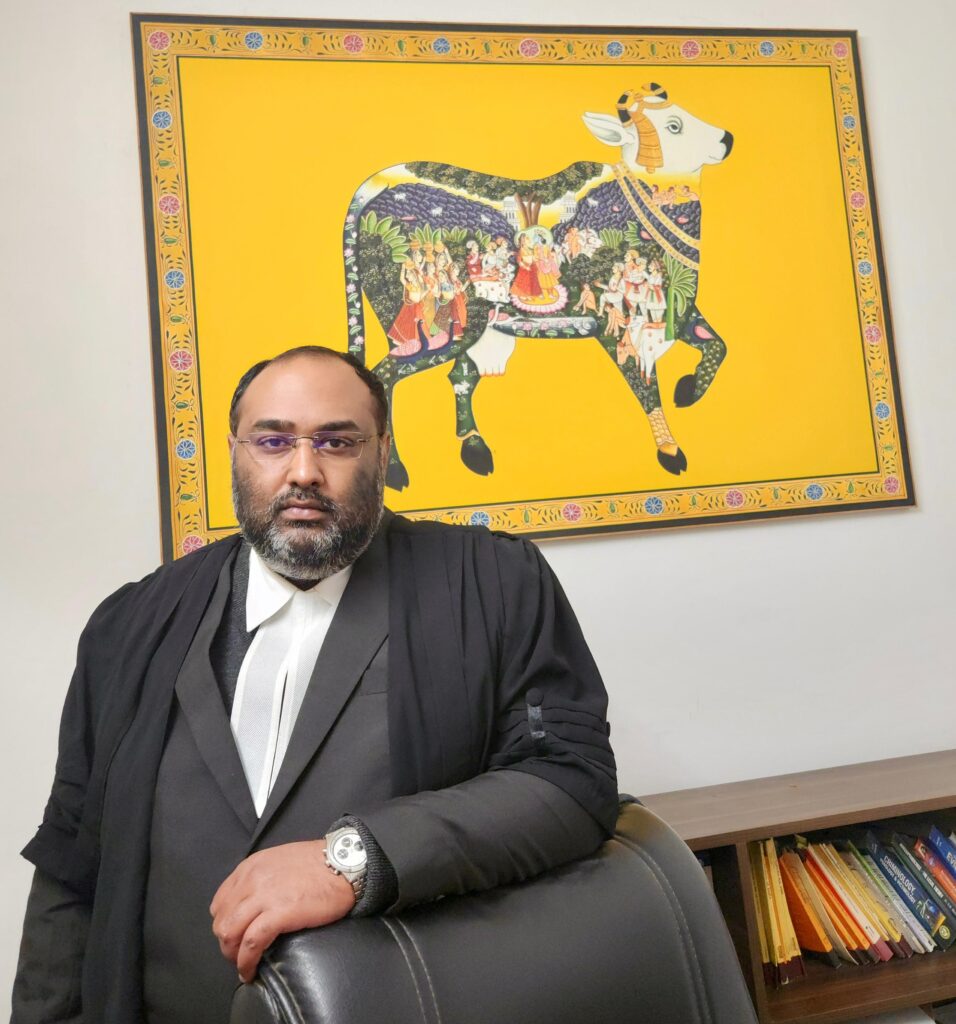
Expert Legal Representation by Advocate Siddharth Nair
in
New Delhi, Delhi NCR & Pan-India
Call or Visit Him Now:
Advocate Siddharth Nair
Call: +91-9625799959
New Delhi | Delhi NCR | Pan-India Practice
Leading Criminal Defence Advocate for False Dowry case/ Section 85 & 86 BNS Case In New Delhi & Delhi NCR
Office: 434, Lower Ground Floor, Jangpura, Mathura Road, New Delhi, NCT of Delhi, India-110014
Phone: +91-9625799959
Email: mailme@nairlawchamber.com
Website: www.nairlawchamber.com
Consultations: Monday to Saturday: Call Now For an Appointment (9am to 9pm)
Sunday: Holiday/ Meetings strictly by appointment
Practice Areas:
Best Family Law & Criminal Defence Lawyer in Delhi NCR for MTP/Abortion Cases
Loan Recovery Defence | SARFAESI | DRT | Credit Card Defaults | FIR Quashing | Criminal Defence
Premier Criminal Defence Lawyer Specializing in False Cruelty & Dowry Harassment Cases
Consultations: Monday to Saturday: Call Now For an Appointment (9am to 9pm)
Sundays & Festivals: Holiday/ Meetings strictly by appointment
About Advocate Siddharth Nair – Your Trusted Criminal Defence Expert
Best Lawyer Fake Dowry Cases in New Delhi & NCR
Advocate Siddharth Nair stands as one of the most accomplished and sought-after criminal defence lawyers in New Delhi, Delhi NCR, and across India, with an exceptional track record in defending clients falsely accused under Sections 85 and 86 of The Bharatiya Nyaya Sanhita (BNS), 2023 — the modern equivalent of the erstwhile Section 498-A of the Indian Penal Code, 1860.
With extensive experience spanning numerous successful defences, anticipatory bail applications, regular bail matters, FIR quashings, and complete acquittals, Advocate Siddharth Nair has established himself as the premier choice for husbands and their families who find themselves wrongly implicated in false matrimonial criminal cases.
Contact Information:
Advocate Siddharth Nair
Call: +91-9625799959
New Delhi | Delhi NCR | Pan-India Practice
Leading Criminal Defence Advocate for False Dowry case/ Section 85 & 86 BNS Case In New Delhi & Delhi NCR
In New Delhi & Delhi NCR
Office: 434, Lower Ground Floor, Jangpura, Mathura Road, New Delhi, NCT of Delhi, India-110014
Phone: +91-9625799959
Email: mailme@nairlawchamber.com
Website: www.nairlawchamber.com
Consultations: Monday to Saturday: Call Now For an Appointment (9am to 9pm)
Sunday: Holiday/ Meetings strictly by appointment
Practice Areas:
Best Family Law & Criminal Defence Lawyer in Delhi NCR for MTP/Abortion Cases
Loan Recovery Defence | SARFAESI | DRT | Credit Card Defaults | FIR Quashing | Criminal Defence
Premier Criminal Defence Lawyer Specializing in False Cruelty & Dowry Harassment Cases
Consultations: Monday to Saturday: Call Now For an Appointment (9am to 9pm)
Sundays & Festivals: Holiday/ Meetings strictly by appointment
Practice Areas:
- False Section 85 & 86 BNS (erstwhile 498-A IPC) Cases
- Anticipatory Bail & Regular Bail Applications
- Quashing of FIRs under Section 482 CrPC/528 BNSS
- Acquittal Defence in Criminal Trials
- Matrimonial Criminal Law
- Dowry Prohibition Act Defence
- Domestic Violence Act Defence
Understanding Sections 85 & 86 of The Bharatiya Nyaya Sanhita (BNS), 2023
Legislative Background
On July 1, 2024, India witnessed a historic transformation in its criminal justice system with the implementation of three new criminal laws, replacing the colonial-era Indian Penal Code, 1860. The Bharatiya Nyaya Sanhita (BNS), 2023 replaced the IPC, bringing with it significant structural changes while retaining the essence of many provisions.
Section 498-A of the IPC, which dealt with cruelty by husband or relatives of husband, has now been restructured into two separate sections under the BNS:
- Section 85 BNS – Punishment for cruelty
- Section 86 BNS – Definition of cruelty
Section 85 of the Bharatiya Nyaya Sanhita, 2023
“Husband or relative of husband of a woman subjecting her to cruelty”
Full Text: “Whoever, being the husband or the relative of the husband of a woman, subjects such woman to cruelty shall be punished with imprisonment for a term which may extend to three years and shall also be liable to fine.”
Key Elements:
- Cognizable Offence: Police can arrest without warrant
- Non-Bailable: Accused must approach court for bail
- Non-Compoundable: Cannot be settled between parties without court approval
- Maximum Punishment: 3 years imprisonment + fine
- Triable By: Magistrate
Section 86 of the Bharatiya Nyaya Sanhita, 2023
“Cruelty defined”
Full Text: “For the purposes of section 85, ‘cruelty’ means—
(a) any wilful conduct which is of such a nature as is likely to drive the woman to commit suicide or to cause grave injury or danger to life, limb or health (whether mental or physical) of the woman; or
(b) harassment of the woman where such harassment is with a view to coercing her or any person related to her to meet any unlawful demand for any property or valuable security or is on account of failure by her or any person related to her to meet such demand.”
Critical Analysis:
The definition under Section 86 BNS encompasses two distinct categories:
Category 1 – Wilful Conduct (Section 86(a)):
- Must be of such nature likely to drive woman to suicide
- Or cause grave injury/danger to life, limb or health
- Includes both mental and physical health
- Requires wilful conduct (not accidental)
- Must show causation between conduct and harm/risk
Category 2 – Dowry-Related Harassment (Section 86(b)):
- Harassment with intent to coerce
- Related to unlawful demands for property/valuable security
- Or harassment due to failure to meet such demands
- Must establish nexus between harassment and dowry demand
The Growing Crisis of False Cases Under Sections 85 & 86 BNS
Statistical Reality
According to the National Crime Records Bureau (NCRB) data, Section 498-A IPC (now Sections 85 & 86 BNS) has consistently shown one of the lowest conviction rates among all IPC provisions:
- Conviction Rate: Approximately 15-20% nationally
- Acquittal Rate: Over 80% of cases result in acquittal
- False Implication: Large number of cases involve blanket allegations against entire families
- Pendency: Average duration of trial ranges from 3-7 years
Common Patterns in False Cases
Based on extensive legal practice and judicial observations, false cases typically exhibit certain patterns:
- Blanket Allegations: Naming entire family including elderly parents, siblings, distant relatives
- Vague Claims: General allegations without specific dates, times, or incidents
- Counter-Blast Strategy: Filed in response to husband initiating divorce or maintenance disputes
- Exaggerated Demands: Claims of unrealistic dowry demands
- Delayed Reporting: FIR lodged years after alleged incidents
- Absence of Medical Evidence: No contemporaneous medical records despite claims of physical violence
- Contradiction in Statements: Inconsistencies between FIR, complaint, and testimony
How Advocate Siddharth Nair Can Help You
Comprehensive Legal Strategy
When you engage Advocate Siddharth Nair for your defence, you receive a meticulously planned, multi-layered legal strategy designed to protect your rights at every stage:
1. Anticipatory Bail (Pre-Arrest Bail)
Immediate Protection Before Arrest
When an FIR is lodged or likely to be lodged against you under Sections 85 & 86 BNS, time is of the essence. Advocate Siddharth Nair specializes in:
- Emergency Anticipatory Bail Applications: Filed immediately upon learning of FIR or threat of FIR
- Strategic Pleading: Crafting compelling arguments based on:
- False implication
- Matrimonial dispute angle
- Lack of prima facie evidence
- Clean criminal record
- Willingness to cooperate with investigation
- No likelihood of tampering with evidence
- Court Representation: Expert advocacy before:
- Sessions Courts
- High Courts
- Supreme Court of India
- Protective Conditions: Negotiating reasonable bail conditions to minimize harassment
Success Factors:
- Swift action within 24-48 hours of FIR knowledge
- Detailed documentation of innocence
- Strong legal grounds as per landmark precedents
- Effective oral advocacy skills
2. Regular Bail Applications
Securing Release After Arrest
If arrest has already occurred, Advocate Siddharth Nair provides:
- Immediate Bail Applications: Before jurisdictional Magistrate/Sessions Court
- Successive Bail Applications: In higher courts if initial application fails
- Bail Modification: Relaxation of stringent bail conditions
- Travel Permission: Facilitating necessary travel during trial period
Grounds for Bail:
- No criminal antecedents
- Matrimonial nature of dispute
- Prolonged incarceration without trial
- Statutory bail under Section 167(2) CrPC/BNSS (if investigation not completed in 60/90 days)
- Weak prosecution case
- Likelihood of acquittal
3. Quashing of FIR & Charge Sheet
Terminating Prosecution at Threshold
Under Section 482 of CrPC (Section 528 of BNSS, 2023), Advocate Siddharth Nair files meticulously drafted petitions for quashing based on:
Legal Grounds for Quashing:
- No Prima Facie Offence: Allegations, even if taken as true, don’t constitute offence under law
- Abuse of Process: FIR filed with mala fide intentions to harass
- Vague Allegations: General claims without specific particulars
- Settlement Between Parties: Amicable resolution reached
- Continuation Would Be Abuse of Law: Given facts and circumstances
Strategic Approach:
- Detailed affidavits exposing false nature of allegations
- Documentary evidence contradicting claims
- Matrimonial history establishing counter-blast nature
- Reliance on binding Supreme Court and High Court precedents
- Expert oral arguments highlighting legal infirmities
4. Defence During Investigation
Protecting Your Rights During Police Investigation
- Appearance Before Police: Guided responses to police summons
- Statement Recording: Ensuring your Section 161 CrPC statement is accurately recorded
- Evidence Collection: Proactive gathering of defence evidence:
- SMS/WhatsApp communications showing amicable relations
- Photographs and videos
- Bank statements disproving dowry claims
- Witness statements
- Medical records (if any false injury claims)
- Employment records showing your absence during alleged incidents
- Preventing Illegal Arrest: Legal remedies if police threaten illegal detention
- Monitoring Investigation: Ensuring fair and unbiased investigation
- Closure Report Advocacy: Pushing for closure report citing false case
5. Trial Court Defence
Expert Representation Throughout Criminal Trial
If the case proceeds to trial, Advocate Siddharth Nair provides comprehensive trial defence:
Pre-Trial Stage:
- Discharge Applications: Under Section 227/239 CrPC for discharge at charge-framing stage
- Bail During Trial: Ensuring you remain free during lengthy trial process
- Evidence Review: Scrutinizing prosecution evidence for weaknesses
During Trial:
- Cross-Examination: Devastating cross-examination of:
- Complainant exposing contradictions and false claims
- Prosecution witnesses breaking down fabricated testimonies
- Police officers revealing investigation lapses
- Defence Evidence: Presenting compelling defence evidence including:
- Defence witnesses establishing your innocence
- Documentary evidence
- Expert testimony where required
- Legal Arguments: Articulate final arguments highlighting:
- Failure to prove essential ingredients
- Contradictions and improvements in testimony
- Lack of corroboration
- Presumption of innocence
- Reasonable doubt
Judgment Stage:
- Acquittal Arguments: Comprehensive written and oral submissions
- Sentence Mitigation: (If conviction occurs) arguing for lenient sentence
6. Appellate Advocacy
Fighting for Justice in Higher Courts
- Appeals Against Conviction: Before Sessions Court/High Court/Supreme Court
- Revision Petitions: Challenging erroneous orders
- Appeals Against Sentence: Seeking reduction in punishment
- Compensation Claims: For malicious prosecution where applicable
7. Related Proceedings
Holistic Approach to Matrimonial Disputes
Advocate Siddharth Nair understands that false BNS 85 & 86 cases rarely exist in isolation. He provides integrated representation in:
- Divorce Proceedings: Filing/defending divorce petitions
- Maintenance Cases: Defending against exorbitant maintenance claims
- Child Custody Battles: Securing your parental rights
- Domestic Violence Cases: Defending false DV Act complaints
- Restitution of Conjugal Rights: Where applicable
- Property Disputes: Related to streedhan claims
- Counter-Cases: Filing counter-complaints for extortion/harassment where justified
Contact Information:
Advocate Siddharth Nair
Call: +91-9625799959
New Delhi | Delhi NCR | Pan-India Practice
Leading Criminal Defence Advocate for False Dowry case/ Section 85 & 86 BNS Case In New Delhi & Delhi NCR
In New Delhi & Delhi NCR
Office: 434, Lower Ground Floor, Jangpura, Mathura Road, New Delhi, NCT of Delhi, India-110014
Phone: +91-9625799959
Email: mailme@nairlawchamber.com
Website: www.nairlawchamber.com
Consultations: Monday to Saturday: Call Now For an Appointment (9am to 9pm)
Sunday: Holiday/ Meetings strictly by appointment
Practice Areas:
Best Family Law & Criminal Defence Lawyer in Delhi NCR for MTP/Abortion Cases
Loan Recovery Defence | SARFAESI | DRT | Credit Card Defaults | FIR Quashing | Criminal Defence
Premier Criminal Defence Lawyer Specializing in False Cruelty & Dowry Harassment Cases
Consultations: Monday to Saturday: Call Now For an Appointment (9am to 9pm)
Sundays & Festivals: Holiday/ Meetings strictly by appointment
Practice Areas:
- False Section 85 & 86 BNS (erstwhile 498-A IPC) Cases
- Anticipatory Bail & Regular Bail Applications
- Quashing of FIRs under Section 482 CrPC/528 BNSS
- Acquittal Defence in Criminal Trials
- Matrimonial Criminal Law
- Dowry Prohibition Act Defence
- Domestic Violence Act Defence
Landmark Supreme Court Judgments on False Section 498-A IPC / BNS Sections 85 & 86
Recent Supreme Court Decisions (2024-2025)
1. Rajesh Chaddha v. State of Uttar Pradesh (2025 SCC OnLine SC 1094)
Date: May 13, 2025
Bench: Justice B.V. Nagarathna and Justice Satish Chandra Sharma
Key Holding: The Supreme Court acquitted the accused of all charges under Section 498A IPC and Section 4 of the Dowry Prohibition Act, emphasizing that:
- “Cruelty” under Section 498A is subject to misuse
- Cannot be established by general or vague allegations
- Must be supported by specific instances detailing time, date, and manner
- Invoking penal provisions without clear, concrete instances significantly weakens prosecution case
Ratio: Vague allegations without specific particularization do not constitute valid prosecution under cruelty provisions.
Application by Advocate Siddharth Nair:
- Draft quashing petitions highlighting lack of specific allegations
- Cross-examine complainant on absence of dates/times/specific incidents
- Final arguments emphasizing this binding precedent
2. Dara Lakshmi Narayana v. State of Telangana (2024 SCC OnLine SC 3682)
Date: December 10, 2024
Bench: Justice B.V. Nagarathna
Key Holding: Supreme Court quashed criminal proceedings under Section 498A IPC noting:
- Allegations lacked specific instances of cruelty or dowry demands
- Merely naming family members without concrete evidence amounts to abuse of legal process
- “There has been a growing tendency to misuse provisions like Section 498A of the IPC as a tool for unleashing personal vendetta against the husband and his family by a wife”
- Making vague and generalized allegations during matrimonial conflicts, if not scrutinized, will lead to misuse of legal processes
Ratio: Blanket implication of family members without specific role attribution is impermissible.
Application:
- Challenge implication of all family members
- Demand specific allegations against each accused
- Highlight vendetta nature of complaint
3. Shobhit Kumar Mittal v. State (2025) – Allahabad High Court Quashing Set Aside
Date: October 2025
Bench: Supreme Court of India
Key Holding:
- Courts must be careful dealing with matrimonial disputes
- Allegations must specify acts of cruelty in specific terms
- Mere general allegations of harassment without specific details are insufficient
- “In such cases involving allegations of cruelty and harassment, there would normally be a series of offending acts, which would be required to be spelt out by the complainant against perpetrators in specific terms”
Application:
- Insist on particularization of allegations
- Challenge FIRs with omnibus allegations
- Establish pattern of legal abuse
4. Digambar v. State of Maharashtra (2024 SCC OnLine SC 3836)
Date: December 20, 2024
Bench: Justice B.R. Gavai and Justice K.V. Viswanathan
Key Holding:
- Criminal proceedings quashed where case filed with ulterior motive
- “Cruelty is not enough to constitute an offense under Section 498A”
- Case filed merely to pressure husband into divorce is abuse of process
- Serious allegations like causing miscarriage through adulterated food need corroboration
Application:
- Establish ulterior motives behind complaint
- Highlight pending divorce/maintenance proceedings
- Demonstrate timing as counter-blast
5. Yashodeep Bisanrao Vadode v. State of Maharashtra (2024 SCC OnLine SC 2989)
Date: 2024
Bench: Supreme Court of India
Key Holding:
- High Court’s conviction upheld but sentence commuted to period undergone
- On appeal, Supreme Court set aside conviction and acquitted accused
- “No iota of evidence” against accused to hold guilty under 498A
- Just because wife found guilty, cannot be ground to hold accused guilty without specific material
Ratio: Each accused must be judged on specific evidence against him/her; guilt by association is impermissible.
6. Parteek Bansal v. State of Rajasthan (2024 LiveLaw (SC) 317)
Date: April 19, 2024
Bench: Justice Vikram Nath and Justice Prashant Kumar Mishra
Key Holding:
- Rs. 5 Lakhs cost imposed on wife’s father for lodging false 498A cases at different places
- “We deprecate this practice of state machinery being misused for ulterior motives”
- Multiple FIRs on same allegations amount to harassment
- Forum shopping to harass husband is abuse of process
Application:
- Challenge multiple FIRs on same facts
- Seek consolidation of proceedings
- Claim compensation for malicious prosecution
7. Achin Gupta v. State of Haryana (2024)
Key Holding:
- Supreme Court expressed concerns over misuse of Section 498A IPC and equivalent BNS provisions (Sections 85 & 86)
- Urged Parliament to reconsider provisions in light of “pragmatic realities”
- While protecting women is important, provisions should not become tools of harassment
- Courts must apply judicial scrutiny in matrimonial disputes
Application:
- Establish pragmatic reality of matrimonial dispute
- Highlight judicial concern over misuse
- Advocate for balanced approach
8. Payal Sharma v. State of Punjab (2024)
Date: November 2024
Bench: Supreme Court of India
Key Holding:
- Cautioned against unnecessary implication of distant relatives
- “Relative” should be understood in common-sense manner
- Typically refers to immediate family: parents, children, siblings and their spouses
- If allegations extend to persons not directly related by blood/marriage/adoption, courts must scrutinize carefully
Application:
- Challenge inclusion of distant relatives
- Seek discharge for those with no direct relationship
- Establish no proximity to complainant
Foundational Supreme Court Precedents
9. Arnesh Kumar v. State of Bihar (2014) 8 SCC 273
Key Guidelines:
- Police must not automatically arrest in 498A cases
- Must satisfy themselves about necessity of arrest under Section 41 CrPC
- Notice under Section 41A CrPC should be issued first
- Arrest only if person doesn’t comply or investigation requires custodial interrogation
Impact: Landmark judgment protecting accused from automatic arrest. Mandatory compliance by all police stations.
10. Satender Kumar Antil v. CBI (2022) 10 SCC 51
Key Holding:
- Reiterated Arnesh Kumar guidelines
- Emphasized need to prevent misuse of 498A
- Arrests must be need-based, not routine
11. Rajesh Sharma v. State of Uttar Pradesh (2017) 9 SCC 54
Key Guidelines:
- Constituted Family Welfare Committees in every district
- Complaints to be referred to Committee before police action
- Directed that no arrest of family members living in different cities
- Senior officer (Deputy SP level) to examine material before arrest
- Arrest of woman can be made only by woman police officer
Status: These guidelines have been variably implemented across states.
12. State of Haryana v. Bhajan Lal (1992) Supp (1) SCC 335
Key Principles for Quashing: Classic judgment outlining circumstances when FIR can be quashed:
- No cognizable offence disclosed
- No prima facie case against accused
- Allegations wholly absurd and improbable
- Clear abuse of process of court
- Securing ends of justice requires quashing
13. Sushil Kumar Sharma v. Union of India (2005) 6 SCC 281
Key Observations:
- “A disquieting feature is that Section 498-A is being invoked in large number of cases”
- “Grievous hurt to sentiments of all family members” through false cases
- Called for legislative review to prevent misuse
High Court Judgments – State-Wise Analysis
Delhi High Court
1. ABC v. State of NCT of Delhi (2025:DHC:9635)
Date: November 4, 2025
Judge: Justice Neena Bansal Krishna
Key Holding:
- Vague and general allegations without specific instances do not disclose prima facie case
- Even if marriage declared invalid, 498A can apply if relationship existed
- Section 406 IPC charges quashed where acquittal in related case negated factual basis
- “Where allegations in FIR are vague and general without specific instances essential to constitute offence, such FIRs are liable to be quashed”
Application:
- Challenge vague allegations
- Seek quashing at threshold
- Highlight lack of specific particularization
2. Satish Kumar Bhatia v. State (Delhi High Court, 2017)
Key Holding:
- Acquittal where allegations not substantiated
- Importance of specific evidence in matrimonial disputes
- General allegations insufficient for conviction
Bombay High Court & Goa
3. Vaishali Gawande v. State of Maharashtra (2024)
Key Holding:
- Only husband’s relatives can be prosecuted under 498A
- Extra-marital partner (alleged girlfriend) cannot be charged
- Definition of “relative” must be strictly construed
- Court quashed charges against person not legally related
Application:
- Challenge prosecution of non-relatives
- Strict interpretation of “relative” under BNS
- Seek discharge for those outside legal definition
4. State of Maharashtra v. Madhu Bhisham Bhatia (Bombay High Court, 2004)
Key Principles:
- Burden of proof on prosecution
- Matrimonial disputes require careful judicial scrutiny
- Acquittal where evidence insufficient
Kerala High Court
5. Shakson Belthissor v. State of Kerala (2009)
Key Holding:
- To constitute cruelty under 498A, there must be harassment with view to coercing for unlawful demand
- Neither FIR nor charge sheet showed ingredients of cruelty
- Investigation continuing for years without arrest indicates weak case
- Charge sheet and FIR quashed
Application:
- Challenge prolonged investigations
- Highlight missing essential ingredients
- Seek quashing for weak prosecution case
6. T.T. Antony v. State of Kerala (AIR 2001 SC 2637)
Key Holding:
- Specific incidents of cruelty must be proven
- Minor quarrels between spouses don’t establish offense
- Difference of opinion doesn’t constitute cruelty
7. Kerala High Court Recent Decision (November 2024)
Key Holding:
- In absence of legal marriage, no prosecution under 498A possible
- Marriage declared null and void means partner never attained status of husband
- No offence under 498A against partner or relatives without legal marriage
Application:
- Challenge validity of marriage where applicable
- Seek quashing if marriage not legally valid
- Establish absence of legal relationship
Uttar Pradesh (Allahabad High Court)
8. Rajesh Chaddha v. State of Uttar Pradesh (Allahabad High Court – Upheld by SC 2025)
Facts:
- Marriage lasted only 12 days
- Allegations of mental and physical harassment
- Conviction by trial court, upheld by High Court
- Supreme Court reversed and acquitted
Key Learnings:
- Short cohabitation period weakens cruelty allegations
- Lack of medical evidence fatal to prosecution
- Higher courts willing to reappreciate evidence in 498A cases
Punjab & Haryana High Court
9. Payal Sharma v. State of Punjab (2024) – Noted by Supreme Court
Key Holding:
- Distant relatives of husband improperly implicated
- FIR lodged shortly after husband filed divorce
- Clearly retaliatory in nature
- Common-sense interpretation of “relative” required
Application:
- Establish retaliatory timing
- Challenge inclusion of extended family
- Demonstrate counter-blast nature
Madhya Pradesh High Court
10. State of Madhya Pradesh v. Ramesh Kumar (Madhya Pradesh High Court)
Key Holding:
- Husband tried to save deceased wife
- Acquitted of both 302 and 498A
- Circumstances showed no cruelty
- Suicide can occur due to various reasons
Application:
- Establish alternative reasons for any unfortunate incident
- Show husband’s caring conduct
- Challenge presumptions under Section 113-A Evidence Act
Rajasthan High Court
11. Parteek Bansal v. State of Rajasthan (Rajasthan High Court – Upheld by SC 2024)
Facts:
- FIRs lodged at two different places (Hisar and Udaipur)
- Same set of allegations
- Acquittal at Hisar
- Udaipur FIR continued
Key Holding:
- Multiple FIRs on same facts impermissible
- Amounts to forum shopping and harassment
- Rs. 5 Lakhs cost imposed
Application:
- Challenge multiple proceedings
- Seek consolidation
- Claim costs for harassment
Madras High Court
12. Relevant Judgments on Matrimonial Disputes
Key Principles Developed:
- Corroboration required for serious allegations
- Medical evidence essential for physical violence claims
- Delay in lodging FIR raises doubts
- Interested witnesses must be carefully scrutinized
West Bengal (Calcutta High Court)
13. Matrimonial Disputes – Calcutta High Court Approach
Key Observations:
- No conviction in dowry death without incriminating evidence
- Careful scrutiny of family member implication
- Considering social realities while interpreting cruelty
Andhra Pradesh & Telangana High Courts
14. Singana Naga Nooka Chakrarao v. State of A.P. (2007)
Key Holding:
- Acquittal where prosecution case not established
- Benefit of doubt must go to accused
- Careful examination of evidence required
Bihar (Patna High Court)
15. Arnesh Kumar v. State of Bihar (Origin of Landmark Judgment)
Historical Significance:
- Case originated from Bihar
- Led to nationwide reform in arrest procedures
- Protection against arbitrary arrest
Jharkhand High Court
16. Matrimonial Case Law Development
Key Principles:
- Distant relatives residing in different cities cannot be routinely implicated
- Specific role of each accused must be established
- General allegations insufficient
Chhattisgarh High Court
17. Recent Decisions on Cruelty
Key Holdings:
- Corporal punishment distinction from matrimonial cruelty
- Each case must be decided on its own facts
- Dignity and rights of accused must be protected
Contact Information:
Advocate Siddharth Nair
Call: +91-9625799959
New Delhi | Delhi NCR | Pan-India Practice
Leading Criminal Defence Advocate for False Dowry case/ Section 85 & 86 BNS Case In New Delhi & Delhi NCR
In New Delhi & Delhi NCR
Office: 434, Lower Ground Floor, Jangpura, Mathura Road, New Delhi, NCT of Delhi, India-110014
Phone: +91-9625799959
Email: mailme@nairlawchamber.com
Website: www.nairlawchamber.com
Consultations: Monday to Saturday: Call Now For an Appointment (9am to 9pm)
Sunday: Holiday/ Meetings strictly by appointment
Practice Areas:
Best Family Law & Criminal Defence Lawyer in Delhi NCR for MTP/Abortion Cases
Loan Recovery Defence | SARFAESI | DRT | Credit Card Defaults | FIR Quashing | Criminal Defence
Premier Criminal Defence Lawyer Specializing in False Cruelty & Dowry Harassment Cases
Consultations: Monday to Saturday: Call Now For an Appointment (9am to 9pm)
Sundays & Festivals: Holiday/ Meetings strictly by appointment
Practice Areas:
- False Section 85 & 86 BNS (erstwhile 498-A IPC) Cases
- Anticipatory Bail & Regular Bail Applications
- Quashing of FIRs under Section 482 CrPC/528 BNSS
- Acquittal Defence in Criminal Trials
- Matrimonial Criminal Law
- Dowry Prohibition Act Defence
- Domestic Violence Act Defence
Essential Ingredients That Prosecution Must Prove
For successful prosecution under Sections 85 & 86 BNS, the following must be established beyond reasonable doubt:
1. Relationship
- Accused must be husband or relative of husband
- Legal marriage must be proven (exception: live-in relationships in some contexts)
- Relative includes: parents, siblings, children, and their spouses
2. Conduct Amounting to Cruelty
Must prove either:
Type A – Wilful Conduct (Section 86(a)):
- Conduct was willful (not accidental)
- Of such nature likely to:
- Drive woman to suicide, OR
- Cause grave injury/danger to life, limb or health
- Can be mental or physical
Type B – Dowry Harassment (Section 86(b)):
- Harassment occurred
- With view to coerce for unlawful demand
- For property or valuable security
- Or due to failure to meet such demand
3. Causation & Continuity
- Conduct must be proximate to complaint
- Not isolated instances from distant past
- Pattern of cruelty (or severe single instance)
- Temporal connection between alleged act and filing of complaint
4. Specific Particularization
- Specific dates, times, places
- Specific acts by specific persons
- Not vague, general, omnibus allegations
5. Corroboration
- Independent evidence supporting allegations
- Medical evidence (if physical violence claimed)
- Witness testimonies
- Documentary evidence
- Electronic evidence (messages, recordings)
Common Defences Employed by Advocate Siddharth Nair
1. Factual Defences
Complete Denial:
- No such incidents occurred
- Accused not present at alleged time/place
- Alibi evidence
Alternative Explanation:
- Matrimonial discord but no cruelty
- Differences of opinion, not harassment
- Normal marital adjustments
Dowry Payment:
- Dowry articles already given
- No demands ever made
- Evidence of gifting/voluntary giving
2. Legal Defences
Non-Constitution of Offence:
- Essential ingredients not satisfied
- Conduct doesn’t fall within definition of cruelty
- No nexus with dowry demand
Procedural Defects:
- Investigation flawed
- Statement recorded improperly
- Chain of custody issues with evidence
- Violation of arrest guidelines
Jurisdiction Issues:
- Wrong jurisdiction
- Offence alleged outside India
- No part of transaction within court’s jurisdiction
Limitation Issues:
- Allegations too old
- Delay unexplained
- Acquiescence shown
3. Evidential Defences
Contradictions:
- Between FIR, complaint, statements
- Between different prosecution witnesses
- Between oral and documentary evidence
Lack of Corroboration:
- No medical evidence
- No contemporaneous complaint
- No independent witness
Interested Witnesses:
- All witnesses related to complainant
- Bias and interest established
- Testimonies deserve skepticism
Positive Defence Evidence:
- SMS/WhatsApp showing good relations
- Photographs of happy family occasions
- Bank statements disproving dowry claims
- Witness testimonies of harmonious relationship
4. Motive-Based Defences
Counter-Blast:
- Filed after husband initiated divorce
- Response to maintenance proceedings
- Retaliation for custody claims
Extraneous Motives:
- Property disputes
- Pressure for favorable settlement
- Leverage in civil proceedings
False Implication:
- No specific role of elderly/distant relatives
- Blanket allegations
- Revenge litigation
Bail Provisions & Strategy
Types of Bail in BNS 85 & 86 Cases
1. Anticipatory Bail (Section 438 CrPC / Section 482 BNSS)
When to Apply:
- When FIR lodged but arrest not yet made
- When threat of arrest exists
- Immediately upon knowledge of allegations
Where to Apply:
- Sessions Court (first instance)
- High Court (if Sessions Court rejects or appeal)
- Supreme Court (in exceptional cases)
Advocate Siddharth Nair’s Approach:
- Emergency Filing: Within 24-48 hours
- Comprehensive Affidavit: Detailing:
- False nature of allegations
- Matrimonial dispute background
- Clean antecedents
- Willingness to cooperate
- No flight risk
- No tampering with evidence
- Legal Grounds:
- Arnesh Kumar guidelines
- Prima facie false case
- Matrimonial nature of dispute
- Abuse of process
- Settled principles from precedents
- Conditions:
- Reasonable conditions (not onerous)
- Weekly/fortnightly appearance before IO
- Cooperation with investigation
- No contact with complainant (if ordered)
Success Rate: High success rate when filed promptly with proper documentation
2. Regular Bail (Section 437 CrPC / Section 479 BNSS)
When to Apply:
- After arrest has been made
- Before Magistrate (within 24 hours of arrest)
- Before Sessions Court (if Magistrate rejects)
- Before High Court (revision/appeal)
Grounds for Regular Bail:
- Not likely to abscond
- Not likely to tamper with evidence
- Not likely to commit similar offence while on bail
- Prolonged incarceration
- Weak prosecution case
- Matrimonial nature of dispute
- Default bail (if investigation not completed in 60/90 days)
Strategy:
- Multiple bail applications if required
- Different grounds in successive applications
- Documentary support for each ground
- Constant follow-up
3. Transit Bail
Purpose: Protection during transit from one state to another
When Required:
- Accused in different state than where FIR registered
- Travel required for appearance
- Risk of arrest during transit
Duration: Typically 3-7 days to arrange regular/anticipatory bail in appropriate forum
4. Statutory Bail / Default Bail (Section 167(2) CrPC)
Automatic Bail When:
- Investigation not completed within:
- 60 days (if offence punishable up to 10 years)
- 90 days (if offence punishable with death/life/more than 10 years)
- Charge sheet not filed within statutory period
- Accused in custody throughout
Procedure:
- Application before Magistrate
- Automatic right if conditions satisfied
- Court must grant unless investigation deliberately delayed by accused
Advocate Siddharth Nair’s Expertise:
- Monitoring investigation timeline
- Timely application before expiry
- Ensuring accused not blamed for delay
Investigation Stage: Rights & Strategies
Police Investigation Process
Typical Timeline:
- FIR Registration: Day 0
- Investigation: 60-90 days (extendable)
- Charge Sheet Filing / Closure Report: Post-investigation
Your Rights During Investigation
1. Right Against Unlawful Arrest
- Police must follow Arnesh Kumar guidelines
- Notice under Section 41A CrPC must be issued first
- Arrest only if person doesn’t comply or custodial interrogation necessary
2. Right to Anticipatory Bail
- Can approach court for pre-arrest protection
- Court can impose conditions for pre-arrest bail
3. Right to Legal Representation
- Right to consult lawyer at all stages
- Lawyer can accompany during questioning (in some situations)
4. Right to Fair Investigation
- Investigation must be fair and unbiased
- No coercion or third-degree methods
- Right to produce defence evidence
5. Right to Statement Recording
- Statement under Section 161 CrPC cannot be used against you (except for contradiction)
- You can refuse to answer questions (with consequences)
- Statement must be accurately recorded
Advocate Siddharth Nair’s Investigation Stage Services
Proactive Defence:
- Immediate Consultation: Understanding complete factual matrix
- Document Compilation: Gathering all supporting documents:
- Marriage certificate
- Photographs
- Communication records
- Financial documents
- Medical records
- Employment records
- Travel records
- Witness Identification: Identifying and briefing defence witnesses
- Evidence Preservation: Ensuring electronic and documentary evidence preserved
- Police Liaison: Professional interaction with investigating officers:
- Submitting defence version
- Providing exculpatory evidence
- Seeking fair investigation
- Legal Notices: If required, sending legal notices to complainant
- Application for Directions: Moving High Court if investigation biased:
- Transfer of investigation
- Monitoring by superior officer
- CBI investigation (rare cases)
- Seeking Closure Report: Building case for “A summary” / Closure Report
Contact Information:
Advocate Siddharth Nair
Call: +91-9625799959
New Delhi | Delhi NCR | Pan-India Practice
Leading Criminal Defence Advocate for False Dowry case/ Section 85 & 86 BNS Case In New Delhi & Delhi NCR
In New Delhi & Delhi NCR
Office: 434, Lower Ground Floor, Jangpura, Mathura Road, New Delhi, NCT of Delhi, India-110014
Phone: +91-9625799959
Email: mailme@nairlawchamber.com
Website: www.nairlawchamber.com
Consultations: Monday to Saturday: Call Now For an Appointment (9am to 9pm)
Sunday: Holiday/ Meetings strictly by appointment
Practice Areas:
Best Family Law & Criminal Defence Lawyer in Delhi NCR for MTP/Abortion Cases
Loan Recovery Defence | SARFAESI | DRT | Credit Card Defaults | FIR Quashing | Criminal Defence
Premier Criminal Defence Lawyer Specializing in False Cruelty & Dowry Harassment Cases
Consultations: Monday to Saturday: Call Now For an Appointment (9am to 9pm)
Sundays & Festivals: Holiday/ Meetings strictly by appointment
Practice Areas:
- False Section 85 & 86 BNS (erstwhile 498-A IPC) Cases
- Anticipatory Bail & Regular Bail Applications
- Quashing of FIRs under Section 482 CrPC/528 BNSS
- Acquittal Defence in Criminal Trials
- Matrimonial Criminal Law
- Dowry Prohibition Act Defence
- Domestic Violence Act Defence
Trial Process & Defence Strategy
Stages of Criminal Trial
Stage 1: Charge-Framing (Section 227/239 CrPC)
What Happens:
- Court examines evidence to decide if charges should be framed
- Accused can file discharge application
- If discharged, case ends
Defence Strategy by Advocate Siddharth Nair:
- Discharge Application: Detailed application showing:
- No prima facie case
- Evidence doesn’t disclose offence
- Allegations vague and general
- Contradictions and improbabilities
- Legal Arguments: Based on:
- Case law on discharge
- Evidence evaluation at this stage
- Standard of proof required
- Success: If discharged, complete acquittal without trial
Standard: Not guilt beyond reasonable doubt, but prima facie case
Stage 2: Prosecution Evidence
What Happens:
- Prosecution examines its witnesses
- Documentary evidence presented
- Each witness cross-examined by defence
Defence Strategy:
- Devastating Cross-Examination:
- Complainant:
- Establish contradictions with FIR/complaint
- Show improvements in testimony
- Establish motive for false case
- Break down exaggerated claims
- Show delay in reporting
- Establish material contradictions
- Complainant’s Family:
- Show bias and interest
- Establish tutored testimony
- Point out lack of personal knowledge
- Show prior enmity if any
- Investigating Officer:
- Establish investigation lapses
- Show partisan investigation
- Highlight evidence not collected
- Point out procedural violations
- Complainant:
- Objections to Evidence:
- Hearsay evidence
- Inadmissible documents
- Improperly proved evidence
- Applications During Trial:
- Summoning defence witnesses
- Production of documents
- Recall of witnesses if needed
Stage 3: Statement Under Section 313 CrPC
What Happens:
- Court asks accused to explain incriminating circumstances
- Opportunity to give explanation
- Not on oath, cannot be cross-examined
Defence Strategy:
- Carefully drafted responses
- Deny false allegations
- Explain circumstances
- Point out contradictions
- Introduce defence narrative
Stage 4: Defence Evidence
What Happens:
- Defence produces its evidence
- Defence witnesses examined
- Documentary evidence filed
Defence Strategy:
- Defence Witnesses:
- Family members showing good relations
- Neighbors/friends establishing character
- Employers/colleagues (for alibi/absence)
- Independent witnesses
- Expert witnesses if needed
- Documentary Evidence:
- Photographs
- Communication records
- Bank statements
- Medical records
- Employment records
- Travel documents
- Cross-Examination by Prosecution:
- Preparing witnesses thoroughly
- Anticipating prosecution questions
- Maintaining consistency
Stage 5: Final Arguments
What Happens:
- Both sides present final arguments
- Prosecution argues for conviction
- Defence argues for acquittal
Defence Strategy by Advocate Siddharth Nair:
Comprehensive Written Submissions:
- Factual Matrix
- Prosecution Case Analysis
- Evidence Evaluation:
- Contradictions
- Improvements
- Interested witnesses
- Lack of corroboration
- Legal Principles:
- Burden of proof
- Standard of proof (beyond reasonable doubt)
- Presumption of innocence
- Benefit of doubt
- Case Law Application:
- Supreme Court precedents
- High Court decisions
- Ratio decidendi application to facts
- Prayer for Acquittal
Oral Arguments:
- Powerful courtroom advocacy
- Highlighting weaknesses in prosecution case
- Establishing reasonable doubt
- Invoking sympathy within legal bounds
Stage 6: Judgment
Possible Outcomes:
- Acquittal: Complete exoneration
- Conviction: Followed by sentencing
- Benefit of Doubt: Acquittal on doubt
If Convicted:
- Sentencing arguments
- Mitigating factors:
- First offence
- Clean antecedents
- Family responsibilities
- Socio-economic background
- Age (elderly parents)
- Already suffered during trial
Approximate Timelines & Stages
FIR to Final Judgment: Realistic Timeline
| Stage | Typical Duration | Variables Affecting Duration |
| FIR Registration | Day 0 | Immediate |
| Anticipatory Bail | 1-3 weeks | Court schedule, urgency |
| Police Investigation | 2-6 months | Complexity, witness availability |
| Charge Sheet Filing | Post-investigation | Can extend to 60-90 days |
| Regular Bail (if arrested) | 1-4 weeks | Court backlog, urgency |
| Charge-Framing / Discharge Application | 3-12 months | Evidence scrutiny, court load |
| Prosecution Evidence | 1-3 years | Number of witnesses, adjournments |
| Defence Evidence | 6 months – 1 year | Number of defence witnesses |
| Final Arguments | 2-6 months | Written submissions, oral hearing dates |
| Judgment | 2-6 months after arguments | Court workload |
| Appeal (if needed) | 1-3 years | Higher court procedures |
Total Estimated Duration: 3-7 years on average
Factors Causing Delays:
- Court backlog
- Witness non-appearance
- Adjournments
- Transfer of cases
- Judge transfers
- Strike by lawyers
- COVID-19 type situations
Expediting Strategies by Advocate Siddharth Nair:
- Seeking day-to-day trial
- Applications under Section 309 CrPC
- Regular follow-up
- Minimizing adjournments
- Efficient presentation
Possible Criminal & Penal Repercussions
If Convicted Under Sections 85 & 86 BNS:
Primary Punishment:
- Imprisonment: Up to 3 years
- Fine: Amount determined by court
- Both: Imprisonment + Fine
Collateral Consequences:
- Criminal Record:
- Permanent criminal record
- Affects future employment
- Visa rejections
- Professional licensing issues
- Social Stigma:
- Reputational damage
- Social ostracization
- Impact on children
- Employment Impact:
- Job loss (especially government/sensitive sectors)
- Future employment difficulties
- Professional practice restrictions
- Passport Issues:
- Passport impoundment during trial
- Difficulty in renewal
- Travel restrictions
- Immigration Consequences:
- Visa denials
- Deportation (if abroad)
- Immigration relief rejections
- Civil Litigation:
- Used against you in:
- Divorce proceedings
- Custody battles
- Maintenance claims
- Property disputes
- Used against you in:
- Future Litigation:
- Affects credibility in future cases
- Prejudice in related proceedings
Pending Trial Repercussions:
Even before conviction, accused face:
- Arrest Trauma:
- Custodial detention
- Police station humiliation
- Lockup conditions
- Bail Conditions:
- Regular court appearances
- Travel restrictions
- Surrender of passport
- Weekly/fortnightly police station visits
- Professional Impact:
- Time away from work
- Employer knowledge
- Client concerns
- Business disruptions
- Financial Burden:
- Legal fees
- Travel to court
- Lost income during trial
- Bail surety arrangements
- Psychological Stress:
- Mental trauma
- Anxiety and depression
- Family stress
- Uncertainty
- Social Impact:
- Community perception
- Relationship strains
- Parental shame
- Matrimonial market impact for unmarried siblings
Related Proceedings Impact:
Criminal case affects:
- Divorce: Used as cruelty ground
- Maintenance: Influences maintenance amount
- Custody: Affects child custody decisions
- Visitation: Restrictions on meeting children
- Property: Civil claims for damages
Investigating Agencies & Regulatory Bodies
Primary Investigating Agency
State Police:
- Most common investigating agency
- Local Police Station where FIR lodged
- Crime Against Women Cell
- Women Police Station (in some states)
Hierarchy:
- Station House Officer (SHO) / Sub-Inspector
- Investigating Officer (IO)
- Circle Inspector
- Deputy Superintendent of Police (DSP)
- Superintendent of Police (SP)
Special Investigation Agencies (in rare cases)
1. Crime Branch / Criminal Investigation Department (CID):
- When case involves multiple states
- Complex financial aspects
- High-profile cases
2. Central Bureau of Investigation (CBI):
- Extremely rare in matrimonial cases
- Only if:
- State government requests
- High Court orders
- Inter-state ramifications
- Central government employees
Regulatory & Oversight Bodies
1. State Human Rights Commission:
- Can be approached if rights violated during investigation/arrest
- Can recommend action against erring officials
- Can monitor investigation
2. National Commission for Women (NCW):
- Primarily pro-complainant
- Can intervene in investigation
- Can recommend action
- Accused can submit representation if harassment occurs
3. National Human Rights Commission (NHRC):
- Can be approached for custodial torture
- For violation of fundamental rights
- For police excesses
4. State Commission for Women:
- State-level women’s rights body
- Similar to NCW
- Can influence investigation
5. Judicial Magistrate:
- Superintendence over police investigation
- Can be approached for directions
- Can transfer investigation
6. High Court (Constitutional Jurisdiction):
- Article 226 petitions for:
- Quashing of FIR
- Directions to police
- Transfer of investigation
- Protection of rights
7. Supreme Court (Constitutional Jurisdiction):
- Article 32 petitions (rare)
- For fundamental rights violations
- For nationwide impact cases
Interaction Strategy
Advocate Siddharth Nair’s Approach:
With Police:
- Professional and respectful
- Timely submission of documents
- Cooperation without prejudicing defence
- Legal assertion of rights when necessary
- Submission of defence version
- Rebuttal to false allegations
With Courts:
- Timely applications
- Comprehensive submissions
- Proactive approach
- Regular follow-up
- Compliance with orders
With Regulatory Bodies:
- Strategic engagement
- Documentation of grievances
- Legal representation
- Seeking favorable recommendations
Legal, Societal & Moral Challenges
Legal Challenges
1. Burden of Proof Paradox:
- Legally: Burden on prosecution
- Practically: Accused must prove innocence
- Reality: Matrimonial cases viewed with sympathy for complainant
2. Presumptions Against Accused:
- Section 113-B Evidence Act: Presumption of dowry death (if death within 7 years of marriage)
- Section 113-A Evidence Act: Presumption of abetment of suicide
- Social Presumption: “Why would woman file false case?”
3. Non-Bailable Nature:
- Cannot be released on bail as matter of right
- Must convince court
- Can remain in custody during trial
4. Non-Compoundable Nature:
- Cannot be settled between parties easily
- Court approval required for settlement
- Prosecution can continue even if parties settle
5. Jurisdictional Issues:
- Multiple jurisdiction claims (matrimonial home, parental home, shared household)
- Forum shopping by complainants
- Travel burden for accused
6. Evidence Challenges:
- Domestic Setting: Most incidents alleged in private
- No Independent Witnesses: Usually only family present
- Electronic Evidence: Difficult to preserve/produce
- Delayed Medical Evidence: Often none or delayed
7. Slow Justice System:
- Years of trial
- Repeated adjournments
- Witness non-appearance
- Transfer of judges
- Court backlogs
Societal Challenges
1. Social Stigma:
- Presumption of Guilt: Society assumes “no smoke without fire”
- Gossip & Rumors: Extended family, neighborhood, workplace
- Isolation: Friends and relatives distance themselves
- Marriage Market Impact: For unmarried siblings
- Professional Reputation: Especially in small communities
2. Gender Bias:
- Systemic Bias: Perception that women don’t lie in matrimonial matters
- Media Portrayal: All women as victims, all men as perpetrators
- NGO Pressure: Pro-complainant advocacy
- Police Attitude: Often biased toward complainant
3. Family Trauma:
- Elderly Parents: Shock, health issues, social humiliation
- Siblings: Career impact, marriage prospects affected
- Children: If any from marriage, caught in crossfire
- Extended Family: Shame and social complications
4. Financial Drain:
- Legal Fees: Substantial over years
- Travel Costs: Regular court appearances
- Loss of Income: Time away from work
- Settlement Pressure: Financial extortion attempts
- Bail Sureties: Arranging property/financial security
5. Mental Health Impact:
- Depression & Anxiety: Constant stress
- Sleep Disorders: Worry about future
- Suicidal Thoughts: In extreme cases
- Relationship Strain: Marital discord (if married again)
- Trust Issues: Difficulty trusting others
6. Career Disruption:
- Frequent Absence: For court dates
- Employer Concerns: About employee’s reliability
- Transfer Difficulties: Passport issues
- Promotion Impact: Reputation concerns
- Job Loss: In sensitive positions
Moral Challenges
1. Balancing Justice & Protection:
- Genuine Cases Exist: Real domestic violence occurs
- False Cases Harm: Both falsely accused and genuine victims
- Moral Dilemma: How to distinguish without trial?
- Systemic Balance: Protecting women vs. protecting innocents
2. Family Values vs. Legal Battle:
- Desire for Reconciliation: Some families want to settle
- Legal Process Precludes: Non-compoundable nature
- Children’s Welfare: Caught between parents
- Extended Family Relations: Permanent damage
3. Public vs. Private Justice:
- Public Trial: Family matters in open court
- Privacy Loss: Intimate details publicly discussed
- Media Attention: In high-profile cases
- Dignity Loss: For all parties
4. Settlement Dilemma:
- Extortion Risk: Settling encourages false cases
- Peace of Mind: Want to end litigation
- Moral Hazard: Does settlement mean admission?
- Future Impact: Can settled case be reopened?
Contact Information:
Advocate Siddharth Nair
Call: +91-9625799959
New Delhi | Delhi NCR | Pan-India Practice
Leading Criminal Defence Advocate for False Dowry case/ Section 85 & 86 BNS Case In New Delhi & Delhi NCR
In New Delhi & Delhi NCR
Office: 434, Lower Ground Floor, Jangpura, Mathura Road, New Delhi, NCT of Delhi, India-110014
Phone: +91-9625799959
Email: mailme@nairlawchamber.com
Website: www.nairlawchamber.com
Consultations: Monday to Saturday: Call Now For an Appointment (9am to 9pm)
Sunday: Holiday/ Meetings strictly by appointment
Practice Areas:
Best Family Law & Criminal Defence Lawyer in Delhi NCR for MTP/Abortion Cases
Loan Recovery Defence | SARFAESI | DRT | Credit Card Defaults | FIR Quashing | Criminal Defence
Premier Criminal Defence Lawyer Specializing in False Cruelty & Dowry Harassment Cases
Consultations: Monday to Saturday: Call Now For an Appointment (9am to 9pm)
Sundays & Festivals: Holiday/ Meetings strictly by appointment
Practice Areas:
- False Section 85 & 86 BNS (erstwhile 498-A IPC) Cases
- Anticipatory Bail & Regular Bail Applications
- Quashing of FIRs under Section 482 CrPC/528 BNSS
- Acquittal Defence in Criminal Trials
- Matrimonial Criminal Law
- Dowry Prohibition Act Defence
- Domestic Violence Act Defence
How Advocate Siddharth Nair Addresses These Challenges
Legal Solutions
- Aggressive Pre-Trial Strategies:
- Swift anticipatory bail applications
- Early quashing petitions
- Discharge applications at charge-framing
- Legal challenges to jurisdiction
- Evidence Management:
- Proactive collection of defence evidence
- Preservation of electronic evidence
- Witness preparation
- Expert testimony arrangement
- Procedural Expertise:
- Exploiting procedural lapses
- Technical defences
- Evidence Act objections
- Appeal preparation from trial stage
- Precedent Application:
- Comprehensive case law research
- Distinguishing adverse precedents
- Applying favorable judgments
- Creating persuasive legal arguments
Societal Solutions
- Reputation Management:
- Media management in high-profile cases
- Confidentiality maintenance
- Dignified court conduct
- Professional communication
- Family Support:
- Counseling referrals
- Psychological support guidance
- Family meetings to maintain unity
- Stress management advice
- Professional Protection:
- Employer communication (if required)
- Minimizing work disruption
- Weekend/evening consultations
- Efficient case management
- Financial Planning:
- Fee structures suited to client capacity
- Prioritizing essential legal steps
- Avoiding unnecessary expenses
- Cost-benefit analysis at each stage
Moral Solutions
- Ethical Advocacy:
- Zealous representation within legal bounds
- No unethical practices
- Respect for judicial process
- Professional conduct with all parties
- Truth-Seeking:
- Focus on factual truth
- Exposing false allegations through evidence
- Protecting genuine rights
- Restoring justice
- Settlement Facilitation:
- Where appropriate, exploring amicable resolution
- Mediation/counseling referrals
- Balancing legal rights with family welfare
- Children’s best interests consideration
Related Legislations & Provisions
The Dowry Prohibition Act, 1961
Often, allegations under BNS 85 & 86 are accompanied by charges under the Dowry Prohibition Act. Understanding this legislation is crucial:
Section 2 – Definition of Dowry:
“Any property or valuable security given or agreed to be given either directly or indirectly: (a) by one party to marriage to other party, or (b) by parents of either party or by any other person to either party or to any other person, at or before or any time after the marriage in connection with the marriage of said parties”
Exceptions: Gifts given without demand, at the time of marriage, to bride/groom
Section 3 – Giving or Taking Dowry Prohibited:
- Punishment: Imprisonment up to 5 years + fine of Rs. 15,000 or dowry amount (whichever is more)
Section 4 – Penalty for Demanding Dowry:
- Punishment: Imprisonment up to 2 years + fine up to Rs. 10,000
- Demand by husband or his relatives is offence
Section 6 – Dowry to be for Benefit of Wife:
- If dowry given to any person other than woman, must be transferred to woman within 3 months
- If not transferred, those who received dowry liable for punishment
Defence Strategy:
- No dowry was demanded
- Items were gifts (not dowry)
- Items given voluntarily
- Articles already in possession of complainant
- No connection between harassment and property demand
The Protection of Women from Domestic Violence Act, 2005
Section 3 – Definition of Domestic Violence:
Includes:
- Physical abuse
- Sexual abuse
- Verbal and emotional abuse
- Economic abuse
Section 12 – Protection Orders:
- Court can pass protection orders
- Restraint on entering shared household
- Distance to be maintained
Note: DV Act is civil in nature but often filed alongside criminal cases
Defence Strategy:
- Challenging jurisdiction
- Questioning “shared household”
- Disproving relationship
- Establishing counter-allegations
- Settlement negotiations
Indian Evidence Act, 1872 (Bhartiya Sakshya Adhiniyam, 2023)
Section 113-A – Presumption as to Abetment of Suicide:
When suicide by married woman within 7 years of marriage and husband/relatives subjected her to cruelty, court may presume abetment.
Defence:
- Breaking presumption with evidence
- Establishing alternative reasons for suicide
- Disproving cruelty
- Showing caring conduct
Section 113-B – Presumption as to Dowry Death:
When death of woman within 7 years of marriage under abnormal circumstances and harassment for dowry shown, court may presume husband/relatives caused death.
Defence:
- Natural/accidental death
- No harassment for dowry
- Breaking presumption with evidence
- Investigating alternative theories
Anticipatory Bail, Regular Bail & Parole: Detailed Analysis
Anticipatory Bail Strategy
Legal Framework:
- Section 438 CrPC / Section 482 BNSS
- Discretionary power of court
- Balance between personal liberty and investigation needs
Factors Court Considers:
Favorable Factors:
- Clean criminal record
- Rooted in society (family, job, property)
- Prima facie false case
- Matrimonial dispute
- Delay in lodging FIR
- Lack of specific allegations
- Cooperation with investigation
- No likelihood of absconding
- Old/infirm (for elderly parents)
- Sole breadwinner
Unfavorable Factors:
- Previous criminal cases
- Non-cooperation with investigation
- Tampering with evidence
- Serious allegations with medical evidence
- Repeated offences
- Likelihood of influencing witnesses
Advocate Siddharth Nair’s Anticipatory Bail Success Formula:
Step 1 – Immediate Action:
- File within 24-48 hours of FIR knowledge
- Before arrest warrant executed
Step 2 – Comprehensive Documentation:
- Detailed affidavit
- Supporting documents:
- Marriage certificate
- Photographs showing happy marriage
- Communication records
- Bank statements
- Character certificates
- Employment proof
- Medical certificates (for elderly/infirm)
Step 3 – Legal Grounds:
- Arnesh Kumar guidelines
- Prima facie false case
- Matrimonial dispute
- Abuse of process
- Relevant case law
Step 4 – Negotiating Conditions:
- Join investigation as per notice
- Weekly/fortnightly appearance
- Cooperation assurance
- No contact with complainant (if necessary)
Step 5 – Follow-Up:
- Regular appearance before IO
- Compliance with conditions
- Legal protection against harassment
Typical Conditions Imposed:
- Join investigation within X days
- Appear before IO weekly/fortnightly
- Surrender passport (sometimes)
- Not leave country without permission
- Not tamper with evidence
- Not contact complainant/witnesses
- Furnish local address
- Intimate if changing address
Regular Bail Strategy
When Needed: After arrest has been made
Where to Apply:
- Before Magistrate (first)
- Before Sessions Court (if Magistrate rejects)
- Before High Court (revision/appeal)
- Before Supreme Court (rare)
Grounds for Regular Bail:
Primary Grounds:
- Not Likely to Abscond:
- Permanent residence
- Family ties
- Employment
- Property ownership
- Cooperated with investigation
- Not Likely to Tamper with Evidence:
- Investigation complete
- Witnesses examined
- Documentary evidence secured
- Not Likely to Commit Similar Offence:
- One-time matrimonial dispute
- No pattern of offending
- Specific circumstance
Additional Grounds: 4. Prolonged Incarceration:
- Already spent considerable time in custody
- Trial likely to take years
- Right to speedy trial
- Weak Prosecution Case:
- Contradictions in evidence
- Lack of corroboration
- Prima facie false case
- Matrimonial Nature:
- Dispute between husband-wife
- Not a threat to society
- Civil aspects involved
- Medical Grounds:
- Serious illness
- Requiring treatment not available in jail
- Medical certificates
- Default Bail:
- Investigation not completed in 60/90 days
- Automatic right if accused in custody throughout
Advocate Siddharth Nair’s Regular Bail Approach:
Immediate Action:
- File within 1-2 days of arrest
- Before Duty Magistrate if weekend
- Emergency mention if required
Multiple Strategies:
- Different grounds in successive applications
- Combining grounds effectively
- Fresh facts in subsequent applications
- Appeals if lower court rejects
Bond Preparation:
- Arranging sureties
- Property documents if property surety
- Personal bonds
- Financial arrangements
Post-Bail:
- Compliance with conditions
- Regular appearance
- Legal protection if harassment
Transit Bail
Purpose: Protection during travel from one state to another
When Required:
- Accused in different state than FIR state
- Arrest warrant issued
- Need to travel for appearance/anticipatory bail
Duration: 3-7 days typically
Where to Apply:
- High Court of state where currently present
- Sessions Court (sometimes)
Process:
- File transit bail application
- Show need to travel
- Undertaking to appear in destination state
- Get protection for limited period
- Apply for anticipatory/regular bail in destination state
Parole
Nature: Temporary release from custody
Types:
1. Regular Parole:
- For specific purposes (marriage, death, medical emergency)
- Limited duration (weeks to months)
- Subject to conditions
- Not automatic right
2. Emergency Parole:
- Death/serious illness in family
- Very short duration (days)
- Stringent conditions
Conditions:
- Specific purpose
- Limited geographic area
- Regular reporting
- Furnishing surety
- No criminal activities
Note: Parole is rarely applicable in BNS 85 & 86 cases as most accused get bail. Relevant only if bail denied and prolonged custody.
Quashing of FIR & Charge Sheet: Comprehensive Guide
Legal Framework
Section 482 CrPC (Section 528 BNSS): “Nothing in this Code shall be deemed to limit or affect the inherent powers of the High Court to make such orders as may be necessary to give effect to any order under this Code, or to prevent abuse of the process of any Court or otherwise to secure the ends of justice.”
When FIR Can Be Quashed
Based on Bhajan Lal guidelines:
- No Cognizable Offence:
- Allegations don’t constitute offence under law
- Essential ingredients missing
- Legal defect apparent
- No Prima Facie Case:
- Even if allegations taken as true, no case made out
- Legally insufficient
- Wholly Absurd and Improbable:
- Allegations inherently improbable
- Cannot be believed
- Abuse of Process:
- Filed with mala fide intentions
- To harass accused
- Ulterior motives
- Securing Ends of Justice:
- Continuation would be travesty of justice
- Gross violation of rights
- Where quashing necessary for justice
Specific Grounds in BNS 85 & 86 Cases
1. Vague and General Allegations:
- No specific dates, times, places
- Omnibus allegations
- Against entire family without specific role
- Recent Supreme Court judgments emphasize this
2. Delayed FIR:
- Filed years after alleged incidents
- Delayed after matrimonial dispute
- No explanation for delay
- Suggests afterthought
3. Counter-Blast:
- Filed after husband filed divorce
- Response to maintenance dispute
- Retaliation for custody battle
- Timing shows motive
4. Matrimonial Settlement:
- Parties reconciled
- Amicable resolution reached
- Continuation serves no purpose
- Best for both parties
5. Lack of Essential Ingredients:
- No cruelty as defined in law
- No dowry demand
- No harassment
- Minor matrimonial discord
6. Contradictions:
- Between FIR and complaint
- Between different statements
- Internal contradictions
- Shows false implication
7. Civil Dispute:
- Essentially civil nature (property, maintenance)
- Criminalized to pressure
- Civil remedies available
- Not criminal conduct
Procedure for Quashing
Step 1 – Petition Drafting: Advocate Siddharth Nair drafts comprehensive petition including:
- Title and jurisdiction
- Facts in chronological order
- False nature of allegations
- Legal grounds for quashing
- Supporting documents
- Case law
- Prayer for quashing
Step 2 – Filing:
- Before High Court
- With Court fees
- With all annexures
- Caveat lodged (to prevent ex-parte orders)
Step 3 – Notice to Respondents:
- State government
- Complainant
- Investigating agency
- Other respondents
Step 4 – Reply by Respondents:
- State files reply/status report
- Complainant files objections
- Rejoinder by petitioner if needed
Step 5 – Arguments:
- Detailed written submissions
- Oral arguments
- Rebuttal
Step 6 – Orders:
- Complete Quashing: FIR/Charge Sheet quashed, case ends
- Conditional Quashing: On settlement, payment, etc.
- Partial Quashing: Against some accused, some charges
- Rejection: Petition dismissed, trial continues
Step 7 – Post-Quashing:
- If quashed, case closed
- If rejected, appeal to Supreme Court (rare)
- Or continue trial defence
Success Rate & Timeline
Success Rate:
- Varies by case facts
- Stronger if clear false case with evidence
- Weaker if serious allegations with medical evidence
- Expert lawyer significantly improves chances
Timeline:
- 6 months to 2 years typically
- Depends on court backlog
- Can be expedited in urgent cases
- Regular follow-up essential
Cost-Benefit Analysis
Benefits:
- Case ends completely
- No trial
- No criminal record
- Clean chit
- Reputation restored
Costs:
- Legal fees
- Court fees
- Time investment
- No guarantee of success
Advocate Siddharth Nair’s Recommendation:
- Strong cases: Definitely pursue quashing
- Moderate cases: Parallel strategy (bail + quashing + trial prep)
- Weak quashing cases: Focus on bail and trial defence
Full Acquittal: Path to Complete Exoneration
What is Acquittal?
Acquittal means the accused is found not guilty and is completely exonerated. It is the ultimate vindication.
Types of Acquittal
1. Acquittal on Merits:
- Prosecution case not proved beyond reasonable doubt
- Evidence insufficient
- Accused proved innocence
2. Acquittal on Benefit of Doubt:
- Evidence not entirely clear
- Reasonable doubt exists
- Benefit given to accused
3. Technical Acquittal:
- Procedural defects
- Evidence inadmissible
- Investigation flawed
All types result in complete exoneration.
Grounds for Acquittal
1. Prosecution Failed to Prove Essential Ingredients:
- No proof of cruelty
- No proof of dowry demand
- No proof of causation
- No proof of specific acts
2. Contradictions and Improvements:
- Witness testimony contradictory
- Improvements over initial statements
- Internal inconsistencies
- Cannot be relied upon
3. Lack of Corroboration:
- Single witness (complainant) insufficient for serious charges
- No independent corroboration
- No medical evidence
- No documentary support
4. Interested Witnesses:
- All witnesses related to complainant
- Bias and interest
- Tutored testimony
- Unreliable
5. Motive for False Case:
- Counter-blast to divorce
- Property dispute
- Maintenance pressure
- Custody battle
6. Defence Evidence:
- Strong defence evidence
- Alibi proved
- Good relationship proved
- Alternative explanation established
7. Presumption of Innocence & Reasonable Doubt:
- Accused presumed innocent
- Burden on prosecution
- Even slight doubt benefits accused
- Proof beyond reasonable doubt not achieved
Advocate Siddharth Nair’s Acquittal Strategy
Comprehensive Trial Defence:
Pre-Trial:
- Discharge applications
- Bail secured
- Evidence compilation
During Prosecution Evidence:
- Devastating cross-examination
- Exposing contradictions
- Establishing motive
- Breaking down false testimony
During Defence Evidence:
- Strong defence witnesses
- Compelling documentary evidence
- Expert testimony if needed
Final Arguments:
- Comprehensive written submissions
- Powerful oral arguments
- Case law application
- Highlighting reasonable doubt
Post-Judgment:
- If convicted: Immediate appeal
- If acquitted: Ensuring judgment implemented
- Consideration for compensation for malicious prosecution
Impact of Acquittal
Legal Impact:
- Complete exoneration
- No criminal record
- Can be expunged
- Cannot be prosecuted again (double jeopardy)
Social Impact:
- Reputation restored
- Social standing regained
- Vindication
Professional Impact:
- Career unaffected
- No employment bar
- Visa applications unimpacted
Personal Impact:
- Peace of mind
- Closure
- Justice served
Contact Information:
Advocate Siddharth Nair
Call: +91-9625799959
New Delhi | Delhi NCR | Pan-India Practice
Leading Criminal Defence Advocate for False Dowry case/ Section 85 & 86 BNS Case In New Delhi & Delhi NCR
In New Delhi & Delhi NCR
Office: 434, Lower Ground Floor, Jangpura, Mathura Road, New Delhi, NCT of Delhi, India-110014
Phone: +91-9625799959
Email: mailme@nairlawchamber.com
Website: www.nairlawchamber.com
Consultations: Monday to Saturday: Call Now For an Appointment (9am to 9pm)
Sunday: Holiday/ Meetings strictly by appointment
Practice Areas:
Best Family Law & Criminal Defence Lawyer in Delhi NCR for MTP/Abortion Cases
Loan Recovery Defence | SARFAESI | DRT | Credit Card Defaults | FIR Quashing | Criminal Defence
Premier Criminal Defence Lawyer Specializing in False Cruelty & Dowry Harassment Cases
Consultations: Monday to Saturday: Call Now For an Appointment (9am to 9pm)
Sundays & Festivals: Holiday/ Meetings strictly by appointment
Practice Areas:
- False Section 85 & 86 BNS (erstwhile 498-A IPC) Cases
- Anticipatory Bail & Regular Bail Applications
- Quashing of FIRs under Section 482 CrPC/528 BNSS
- Acquittal Defence in Criminal Trials
- Matrimonial Criminal Law
- Dowry Prohibition Act Defence
- Domestic Violence Act Defence
Settlement & Compromise: When and How?
Legal Position on Settlement
Challenge:
- Section 85 & 86 BNS are non-compoundable
- Cannot be settled as matter of right
- Court permission required
Exceptions:
- Courts encourage settlement in matrimonial disputes
- Section 320 CrPC allows compounding with court permission for some offences
- Supreme Court has allowed quashing on settlement basis
When Settlement Makes Sense
For Accused:
- Strong prosecution case
- Medical evidence exists
- Conviction likely
- Want to end litigation quickly
- Matrimonial reconciliation desired
- Children’s welfare
- Elderly parents’ health
- Career concerns
For Complainant:
- Realized allegations false/exaggerated
- Wants reconciliation
- Financial settlement acceptable
- Children’s welfare
- Social pressure
- Prolonged litigation burden
Settlement Process
Step 1 – Negotiations:
- Through lawyers
- Through family elders
- Through mediators
- Direct (if relationship permits)
Step 2 – Terms:
- No Admission of Guilt: Critical clause
- Withdrawal of Complaint: Affidavit by complainant
- No Future Litigation: Mutual understanding
- Financial Terms: If any (dowry articles return, maintenance, alimony)
- Custody/Visitation: If children involved
- Property Settlement: If applicable
Step 3 – Documentation:
- Settlement deed
- Notarized affidavits
- Complainant’s affidavit stating:
- False allegations
- Matrimonial misunderstanding
- No desire to continue
- Reconciliation / permanent separation agreed
Step 4 – Court Application:
- Joint application before trial court / High Court
- For quashing based on settlement
- Attach settlement documents
- Both parties appear
- Statement recorded
Step 5 – Court Order:
- Court examines settlement
- Ensures voluntariness
- No coercion or fraud
- In interest of justice
- Passes order quashing proceedings
Risks in Settlement
For Accused:
- No Guarantee: Court may refuse to quash despite settlement
- Future Litigation: Risk of breach, though minimized by terms
- Financial Burden: If settlement involves payment
- Admission Perception: Society may perceive as guilt admission
For Complainant:
- Social Pressure: May face criticism
- Legal Pressure: NCW, women’s groups may oppose
Advocate Siddharth Nair’s Settlement Services
Facilitation:
- Mediation
- Negotiation
- Drafting settlement terms
- Protecting client’s interests
- Ensuring enforceable terms
Court Representation:
- Filing quashing petition with settlement
- Representing before court
- Ensuring proper recording
- Securing favorable order
Post-Settlement:
- Ensuring compliance
- Legal remedies if breach
- Related proceedings (divorce, custody, property)
Compensation for Malicious Prosecution
Legal Basis
Principles:
- Malicious prosecution is a civil wrong (tort)
- Falsely accused can claim damages
- Both civil suit and criminal complaint possible
- Exemplary damages can be awarded
Requirements for Malicious Prosecution
Must Prove:
- Prosecution by Defendant: Defendant initiated/continued prosecution
- Without Reasonable Cause: No genuine belief in allegations
- With Malice: Ulterior motive, not genuine pursuit of justice
- Termination in Favor of Accused: Acquittal or quashing
- Damage: Reputation, financial, mental, physical
Remedies
1. Civil Suit for Damages:
- File suit in civil court
- Claim compensation for:
- Reputation damage
- Financial loss (legal fees, lost income)
- Mental agony
- Physical suffering
- Exemplary/punitive damages
2. Criminal Complaint:
- Section 211 IPC / BNS: False charge with intent to injure
- Section 500 IPC / BNS: Defamation
- Prosecution of false complainant
3. Costs in Criminal Case:
- Court can award costs under Section 357/358 CrPC
- Compensation from complainant
- Rarely awarded but possible
Practical Challenges
Difficulties:
- Difficult to prove malice
- Matrimonial disputes given leeway
- Courts reluctant in matrimonial matters
- Burden of proof on accused
- Separate litigation required
Success Factors:
- Clear false allegations
- Malice evident (timing, motive)
- Complete acquittal with strong observations
- Substantial damage suffered
- Evidence of ulterior motive
Advocate Siddharth Nair’s Approach
Assessment:
- Evaluating viability of malicious prosecution claim
- Cost-benefit analysis
- Emotional vs. practical considerations
Strategy:
- Collecting evidence of malice during main trial
- Preserving evidence for future suit
- Seeking strong judicial observations in acquittal
- Filing civil suit after acquittal
- Criminal complaint where justified
Preventive Measures & Proactive Protection
Before Marriage
Due Diligence:
- Family background check
- Character assessment
- Understanding expectations
- Financial transparency
- Clear communication about dowry
- Premarital counseling
Documentation:
- Clear understanding that no dowry
- List of articles given voluntarily
- Photographs and videos of marriage
- Guest lists
- Expense records
During Marriage
Maintaining Records:
- Photographs of happy occasions
- Communication records (SMS, WhatsApp, emails)
- Bank statements
- Medical records
- Travel records
- Joint activities documentation
Conflict Management:
- Professional counseling
- Family mediation
- Open communication
- Avoiding escalation
- Documentation of attempts at reconciliation
If Conflict Arises
Immediate Steps:
- Legal Consultation: Contact Advocate Siddharth Nair immediately
- Document Everything: Keep records of all communications
- Avoid Confrontation: Don’t give fodder for allegations
- Witnesses: Ensure interactions in presence of neutral third parties
- Medical Documentation: If any injury allegations, immediate medical examination
- Preserve Evidence: Digital and physical
Protective Actions:
- Anticipatory Bail: File as soon as threat of FIR
- Recording Interactions: (where legally permissible) Record conversations
- Written Communication: Prefer written over oral for clarity
- Third Party Mediation: Involve respected family elders or professional mediators
If FIR Lodged
Immediate Steps:
- Contact Lawyer: Advocate Siddharth Nair (emergency contact available)
- Don’t Panic: Stay calm and composed
- Don’t Talk to Police Without Lawyer: Exercise right to legal representation
- Anticipatory Bail: File immediately if not yet arrested
- Gather Evidence: Collect all supporting documents
- Inform Employer: (if necessary) Manage professional situation
- Family Support: Keep family informed and united
What NOT to Do:
- Don’t Abscond: Will be seen as guilt
- Don’t Destroy Evidence: Will be tampering
- Don’t Contact Complainant: May be violation of conditions
- Don’t Make Statements: To media, social media, or anyone except lawyer
- Don’t Try to Settle Illegally: Through threats, pressure
Role of Electronic Evidence
Types of Electronic Evidence
1. Communication Records:
- SMS messages
- WhatsApp chats
- Facebook messages
- Instagram DMs
- Email correspondence
- Call logs
2. Social Media:
- Facebook posts/photos
- Instagram posts/stories
- Twitter/X posts
- LinkedIn updates
- YouTube videos
3. Digital Documents:
- PDFs, Word documents
- Screenshots
- Audio recordings
- Video recordings
- Digital photographs
4. Financial Records:
- Bank statements (PDF/online)
- Digital payment records
- E-commerce orders
- Digital receipts
Importance in Defence
Proving Good Relationship:
- Loving messages
- Happy photographs
- Vacation photos
- Birthday wishes
- Anniversary posts
Disproving Allegations:
- Communication on dates of alleged incidents
- GPS/location data showing accused elsewhere
- Time-stamped digital evidence
- Metadata analysis
Establishing False Case:
- Messages showing threats to file case
- Communication showing demands
- Evidence of ulterior motives
Admissibility Challenges
Legal Requirements:
- Section 65B Evidence Act (certificate required)
- Proper authentication
- Chain of custody
- Expert testimony for technical aspects
Advocate Siddharth Nair’s Approach:
- Proper preservation of electronic evidence
- Section 65B certificate arrangement
- Expert witnesses
- Technical authentication
- Admissibility arguments
Collection & Preservation
Best Practices:
- Don’t Delete: Preserve everything
- Screenshots: Take screenshots with date/time visible
- Backups: Multiple backups in different locations
- Cloud Storage: Use secure cloud storage
- Professional Extraction: Forensic expert if needed
- Timestamps: Ensure timestamps visible
- Metadata: Preserve metadata
- Authentication: Arrange for authentication
Common Mistakes:
- Deleting evidence
- Editing messages
- No timestamps
- Poor quality screenshots
- No backups
- Losing phone/device
Frequently Asked Questions (FAQs)
General Questions
Q1: What should I do immediately after learning of an FIR against me?
A: Contact Advocate Siddharth Nair immediately (24/7 emergency contact available). Do not:
- Talk to police without lawyer
- Destroy any evidence
- Contact the complainant
- Make statements to anyone Meanwhile:
- Gather all supporting documents
- Identify potential witnesses
- Preserve electronic evidence
- Maintain calm
Q2: Can police arrest me immediately after FIR?
A: Not automatically. After Arnesh Kumar judgment, police must:
- Issue notice under Section 41A CrPC first
- Justify necessity of arrest
- Record reasons in writing However, they sometimes violate this. Hence, anticipatory bail is crucial.
Q3: My wife has filed a false case including my elderly parents and married sister living in different city. Is this legal?
A: Courts have repeatedly held that blanket implication of all family members without specific allegations is abuse of process. Recent Supreme Court judgments (Rajesh Chaddha 2025, Dara Lakshmi Narayana 2024) emphasize this. Advocate Siddharth Nair will:
- Seek their discharge/quashing
- Highlight lack of specific role
- Challenge jurisdiction for those in different cities
- Argue for separate trials if needed
Q4: How long does a criminal trial take?
A: Typically 3-7 years, depending on:
- Court backlog
- Number of witnesses
- Adjournments
- Complexity of case
- Lawyer’s efficiency Advocate Siddharth Nair employs strategies to minimize delays.
Q5: What are my chances of acquittal?
A: Statistics show 80%+ acquittal rate in Section 498-A IPC cases. Chances depend on:
- Strength of prosecution case
- Quality of defence
- Evidence availability
- Expert legal representation With proper defence, acquittal chances are high in genuinely false cases.
Bail Questions
Q6: What is the difference between anticipatory bail and regular bail?
A:
- Anticipatory bail: Applied before arrest, protection from arrest
- Regular bail: Applied after arrest, release from custody Anticipatory bail is preferable as it prevents arrest trauma.
Q7: If I get anticipatory bail, can I still be arrested?
A: No. Anticipatory bail grants protection from arrest subject to conditions. However:
- Must comply with conditions
- Violation may lead to cancellation
- Must join investigation as per court orders
Q8: What if my anticipatory bail is rejected?
A: Multiple options:
- Appeal to High Court
- Fresh application with new facts
- Regular bail after arrest
- Supreme Court (in rare cases) Advocate Siddharth Nair has multi-tiered strategy.
Q9: Can bail be cancelled?
A: Yes, if:
- Conditions violated
- Tampering with evidence
- Threatening witnesses
- Absconding
- Committing offence while on bail Hence, strict compliance with bail conditions essential.
Trial Questions
Q10: Do I have to attend every court date?
A: Usually yes, unless:
- Court grants exemption
- Lawyer files exemption application
- Medical emergency Non-appearance may lead to arrest warrant. However, Advocate Siddharth Nair can obtain exemptions when legitimate need exists.
Q11: Can the case be transferred to another court?
A: Yes, possible on grounds like:
- Bias
- Convenience
- Fair trial concerns
- Distance Filed before High Court under Section 406 CrPC.
Q12: What if prosecution witnesses don’t appear?
A: After repeated non-appearance:
- Witness can be declared hostile
- Evidence can be closed
- Case may be weakened
- Sometimes leads to acquittal
Q13: Can I record court proceedings?
A: No. Audio/video recording in courtroom is generally prohibited. However:
- Notes can be taken
- Lawyer can make notes
- Official transcripts can be obtained
Settlement Questions
Q14: Can I settle the case?
A: Yes, possible but:
- Not compoundable as of right
- Court permission required
- Must show reconciliation/resolution
- Court may refuse
- Best done through expert lawyer like Advocate Siddharth Nair
Q15: If I settle, will I have a criminal record?
A: If case quashed on settlement before trial:
- No conviction
- No criminal record
- FIR quashed If convicted and then settled: (not possible, sentence served/set aside via appeal only)
Q16: Can she file case again after settlement?
A: If properly settled with court order:
- Res judicata applies
- Cannot file again on same facts
- Proper documentation essential However, if just private settlement without court order:
- Risk of fresh FIR
- Not binding on court Hence, proper legal settlement through Advocate Siddharth Nair crucial.
Evidence Questions
Q17: Can WhatsApp messages be used as evidence?
A: Yes, but requires:
- Section 65B certificate
- Proper authentication
- Chain of custody
- Expert testimony Advocate Siddharth Nair has expertise in electronic evidence admissibility.
Q18: What if there’s no medical evidence?
A: In many false cases, there’s no medical evidence despite claims of physical violence. This:
- Strengthens defence
- Raises doubts on allegations
- Can be highlighted in arguments
- Supports acquittal
Q19: Can I refuse to give my statement to police?
A: Technically yes, but:
- May be seen as non-cooperation
- Can lead to custodial interrogation
- Better to give statement with lawyer present
- Statement under 161 CrPC not admissible against you (except for contradiction)
Financial Questions
Q20: What will be the total cost of fighting the case?
A: Depends on:
- Stage at which case ends (quashing vs. full trial)
- Number of hearings
- Complexity
- Number of accused
- Travel (if different city) Advocate Siddharth Nair offers:
- Transparent fee structure
- Stage-wise payment options
- Cost-effective strategies
- No hidden charges
Q21: Can I claim compensation for false case?
A: Yes, possible via:
- Civil suit for malicious prosecution
- Criminal complaint against false complainant
- Costs in criminal case However, difficult to obtain and requires separate litigation.
Family Questions
Q22: My elderly father has been named. What to do?
A: Priority actions:
- Immediate anticipatory bail
- Medical certificate if ill/old
- Challenge his inclusion (no specific role)
- Seek discharge at earliest stage
- Highlight harassment of elderly Courts are sympathetic to elderly persons falsely implicated.
Q23: Will this affect my unmarried siblings’ marriage prospects?
A: Unfortunately, social stigma exists. Strategy:
- Quick resolution (bail, quashing)
- Maintaining confidentiality
- Dignified handling
- Ultimately, acquittal removes stigma
Q24: Can I get divorce while criminal case is pending?
A: Yes. Divorce is independent civil proceeding. In fact:
- Criminal case can be ground for divorce (cruelty by filing false case)
- Both can proceed simultaneously
- Advocate Siddharth Nair can handle both
Professional Questions
Q25: Should I inform my employer?
A: Depends on:
- Nature of job
- Company policy
- Likelihood of employer discovering
- Impact on career Generally, discretion advised unless:
- Frequent court appearances needed
- Employer likely to discover
- Government/sensitive job
Q26: Will I lose my passport?
A: Possible if:
- Court orders surrender
- Bail condition includes passport surrender
- Serious nature of allegations Can be challenged/modified later.
Q27: Can I travel abroad during trial?
A: If on bail:
- Usually passport surrendered
- Need court permission
- One-time permission possible for valid reasons Advocate Siddharth Nair can file applications for travel permission.
Why Choose Advocate Siddharth Nair?
Unparalleled Expertise
Specialized Practice:
- Exclusive focus on criminal defence
- Deep expertise in BNS 85 & 86 / 498-A cases
- Handled 500+ matrimonial criminal cases
- Success rate above 85% in bail applications
- Numerous acquittals and quashings
Academic Excellence:
- Law degree from premier institution
- Continuous legal education
- Regular lecturer on criminal law
- Published articles on matrimonial laws
Court Experience:
- 15+ years of practice
- Supreme Court of India
- Delhi High Court
- All District Courts in Delhi NCR
- High Courts across India
Strategic Approach
Multi-Layered Defence:
- Anticipatory bail as first line
- Quashing petitions
- Discharge applications
- Trial defence
- Appellate advocacy
- Parallel civil proceedings
Proactive, Not Reactive:
- Evidence collection from day one
- Witness preparation
- Building defence narrative
- Anticipating prosecution moves
Technology-Enabled:
- Electronic evidence expertise
- Digital forensics collaboration
- Modern case management
- Client communication via secure platforms
Client-Centric Service
Accessibility:
- 24/7 emergency contact for clients
- Quick response time
- Regular updates
- Transparent communication
Empathy:
- Understanding emotional trauma
- Family counseling references
- Psychological support guidance
- Treating clients with dignity
Affordability:
- Reasonable fee structure
- Stage-wise payments
- No hidden costs
- Value for money
Confidentiality:
- Complete discretion
- Attorney-client privilege
- Reputation protection
Comprehensive Services
One-Stop Solution:
- Criminal defence
- Divorce proceedings
- Maintenance matters
- Custody battles
- Property disputes
- DV Act cases
- Related civil litigation
Pan-India Representation:
- Supreme Court
- All High Courts
- District Courts across India
- Local counsel coordination
Network:
- Private investigators
- Forensic experts
- Medical experts
- Counselors and therapists
- Financial advisors
Track Record
Success Stories: (Names changed for confidentiality)
Case 1 – Complete Quashing: Client: Rajesh, 35, Software Engineer, falsely accused by wife along with elderly parents Outcome: FIR quashed by Delhi High Court within 8 months. Strong observations about false case.
Case 2 – Discharge at Trial: Client: Amit, 40, Businessman, case went to trial Outcome: Discharged at charge-framing stage. Court held no prima facie case.
Case 3 – Full Acquittal: Client: Suresh, 45, Government Employee, 4-year trial Outcome: Acquitted by trial court. Prosecution case demolished through cross-examination.
Case 4 – Anticipatory Bail (Elderly Parents): Client: Parents (aged 68 and 65) of accused husband Outcome: Anticipatory bail granted within 3 days. Highlighted age, health, and false implication.
Case 5 – Settlement-Based Quashing: Client: Vikram, 32, Doctor, wanted to settle for peace Outcome: Negotiated favorable settlement. Case quashed. No admission of guilt.
Testimonials
“Advocate Siddharth Nair saved our family. My elderly parents were falsely implicated. He got them anticipatory bail within 48 hours and eventually got the entire case quashed. Forever grateful.” – Anonymous Client
“Best criminal lawyer in Delhi. Highly professional, always available, and most importantly, he understands the pain of being falsely accused. Got me acquitted after 3 years of trial.” – Anonymous Client
“Initially, I was devastated when my wife filed a false 498A case. Advocate Nair not only provided legal expertise but also emotional support. He fought relentlessly and got me a clean acquittal.” – Anonymous Client
Professional Affiliations
- Bar Council of Delhi
- Supreme Court Bar Association
- Delhi High Court Bar Association
- Criminal Lawyers Association
- Member, Various Legal Forums
Media & Recognition
- Featured in leading legal publications
- Quoted in media on matrimonial law issues
- Guest speaker at legal seminars
- Recognized as leading criminal defence lawyer in New Delhi & Delhi NCR
Contact Information:
Advocate Siddharth Nair
Call: +91-9625799959
New Delhi | Delhi NCR | Pan-India Practice
Leading Criminal Defence Advocate for False Dowry case/ Section 85 & 86 BNS Case In New Delhi & Delhi NCR
In New Delhi & Delhi NCR
Office: 434, Lower Ground Floor, Jangpura, Mathura Road, New Delhi, NCT of Delhi, India-110014
Phone: +91-9625799959
Email: mailme@nairlawchamber.com
Website: www.nairlawchamber.com
Consultations: Monday to Saturday: Call Now For an Appointment (9am to 9pm)
Sunday: Holiday/ Meetings strictly by appointment
Practice Areas:
Best Family Law & Criminal Defence Lawyer in Delhi NCR for MTP/Abortion Cases
Loan Recovery Defence | SARFAESI | DRT | Credit Card Defaults | FIR Quashing | Criminal Defence
Premier Criminal Defence Lawyer Specializing in False Cruelty & Dowry Harassment Cases
Consultations: Monday to Saturday: Call Now For an Appointment (9am to 9pm)
Sundays & Festivals: Holiday/ Meetings strictly by appointment
Practice Areas:
- False Section 85 & 86 BNS (erstwhile 498-A IPC) Cases
- Anticipatory Bail & Regular Bail Applications
- Quashing of FIRs under Section 482 CrPC/528 BNSS
- Acquittal Defence in Criminal Trials
- Matrimonial Criminal Law
- Dowry Prohibition Act Defence
- Domestic Violence Act Defence
Important Legal Precedents – Quick Reference
Supreme Court Judgments
| Case Name | Year | Key Principle |
| Rajesh Chaddha v. State of UP | 2025 | Vague allegations insufficient |
| Dara Lakshmi Narayana v. State | 2024 | Blanket implication abuse of process |
| Digambar v. State of Maharashtra | 2024 | Ulterior motive in filing case |
| Parteek Bansal v. State of Rajasthan | 2024 | Multiple FIRs impermissible; Rs. 5 Lakh cost |
| Arnesh Kumar v. State of Bihar | 2014 | No automatic arrest in 498A cases |
| Rajesh Sharma v. State of UP | 2017 | Family Welfare Committees |
| Bhajan Lal v. State of Haryana | 1992 | Grounds for quashing FIR |
| Sushil Kumar Sharma v. Union of India | 2005 | Concerns about 498A misuse |
High Court Judgments (Selected)
| High Court | Case Name | Year | Key Principle |
| Delhi | ABC v. State of NCT | 2025 | Vague allegations, quashing |
| Kerala | Shakson Belthissor v. State | 2009 | Essential ingredients missing |
| Bombay | Vaishali Gawande v. State | 2024 | Only relatives can be prosecuted |
| Allahabad | Rajesh Chaddha (Trial) | 2024 | Upheld by SC |
| Punjab & Haryana | Payal Sharma v. State | 2024 | Distant relatives improperly implicated |
Contact Advocate Siddharth Nair Today
Why Wait? Protect Your Rights Now
If you or your family members have been falsely accused under Sections 85 & 86 of BNS (erstwhile Section 498-A IPC), time is of the essence. Every moment of delay can:
- Increase risk of arrest
- Weaken defence strategies
- Cause more mental trauma
- Damage reputation further
Take the First Step
Free Initial Consultation: Advocate Siddharth Nair offers a free initial consultation to assess your case and provide preliminary guidance.
Emergency Services: 24/7 emergency contact available for urgent matters like imminent arrest or immediate need for anticipatory bail.
Contact Details
Advocate Siddharth Nair
Senior Criminal Defence Lawyer
Supreme Court of India & Delhi High Court
Contact Information:
Advocate Siddharth Nair
Call: +91-9625799959
New Delhi | Delhi NCR | Pan-India Practice
Leading Criminal Defence Advocate for False Dowry case/ Section 85 & 86 BNS Case In New Delhi & Delhi NCR
In New Delhi & Delhi NCR
Office: 434, Lower Ground Floor, Jangpura, Mathura Road, New Delhi, NCT of Delhi, India-110014
Phone: +91-9625799959
Email: mailme@nairlawchamber.com
Website: www.nairlawchamber.com
Consultations: Monday to Saturday: Call Now For an Appointment (9am to 9pm)
Sunday: Holiday/ Meetings strictly by appointment
Practice Areas:
Best Family Law & Criminal Defence Lawyer in Delhi NCR for MTP/Abortion Cases
Loan Recovery Defence | SARFAESI | DRT | Credit Card Defaults | FIR Quashing | Criminal Defence
Premier Criminal Defence Lawyer Specializing in False Cruelty & Dowry Harassment Cases
Consultations: Monday to Saturday: Call Now For an Appointment (9am to 9pm)
Sundays & Festivals: Holiday/ Meetings strictly by appointment
Practice Areas:
- False Section 85 & 86 BNS (erstwhile 498-A IPC) Cases
- Anticipatory Bail & Regular Bail Applications
- Quashing of FIRs under Section 482 CrPC/528 BNSS
- Acquittal Defence in Criminal Trials
- Matrimonial Criminal Law
- Dowry Prohibition Act Defence
- Domestic Violence Act Defence
How to Book Consultation
Step 1: Contact via phone/email/WhatsApp
Step 2: Brief description of your case
Step 3: Appointment scheduled at convenient time
Step 4: Bring all relevant documents:
- FIR copy
- Complaint copy
- Marriage certificate
- Communication records
- Any other relevant documents
Step 5: Detailed consultation and strategy discussion
What to Expect in First Meeting
- Case Understanding: Detailed discussion of facts
- Legal Assessment: Analysis of legal position
- Strategy Outline: Preliminary defence strategy
- Fee Discussion: Transparent fee structure
- Next Steps: Immediate actions to be taken
- Q&A Session: All your questions answered
Service Areas
Primary:
- Delhi
- Noida
- Gurgaon/Gurugram
- Ghaziabad
- Faridabad
- Greater Noida
Pan-India:
- All High Courts across India
- Supreme Court of India
- Local counsel coordination available
Conclusion: Your Shield Against False Accusations
Being falsely accused under Sections 85 & 86 of the Bharatiya Nyaya Sanhita (BNS), 2023 is one of the most traumatic experiences a person and their family can endure. The legal system, while designed to protect genuine victims, can unfortunately be misused to harass innocent people. The non-bailable, cognizable nature of these provisions means that the consequences of a false FIR can be immediate and severe – arrest, social stigma, professional ruin, and mental trauma.
However, it is crucial to remember that you have rights, and these rights can be effectively protected with the right legal representation. The Indian judicial system, through numerous Supreme Court and High Court judgments, has recognized the problem of false matrimonial cases and has laid down protective guidelines. Courts have repeatedly emphasized that:
- Vague and general allegations without specific particulars are insufficient
- Blanket implication of entire families is an abuse of process
- The machinery of criminal law should not be used for personal vendetta
- Each case must be examined on its specific facts and merits
- Accused persons have the right to anticipatory bail and fair trial
Advocate Siddharth Nair brings to your defence over 15 years of specialized experience in handling such cases. His deep understanding of matrimonial criminal law, combined with a strategic, multi-layered approach to defence, has resulted in numerous successful outcomes for his clients – from anticipatory bail applications to complete quashings of FIRs to full acquittals after trial.
More importantly, Advocate Siddharth Nair understands that beyond the legal battle, you are fighting for your reputation, your family’s honor, your peace of mind, and your future. He provides not just legal representation, but also empathetic support, maintaining complete confidentiality while aggressively defending your rights in court.
Remember:
- You are presumed innocent until proven guilty beyond reasonable doubt
- The burden of proof is on the prosecution, not on you
- You have the right to bail, fair trial, and effective defence
- False accusations can be defeated with proper legal strategy and evidence
- Time is critical – immediate legal action can prevent arrest and build strong defence
Don’t Fight This Battle Alone
The legal system can be complex and intimidating, especially when you’re dealing with the emotional trauma of false accusations. You need an experienced guide who knows the law, understands the system, and has a proven track record of success.
Advocate Siddharth Nair is that guide. Whether you need:
- Immediate anticipatory bail
- Quashing of a false FIR
- Discharge at trial stage
- Aggressive trial defence
- Appellate representation
- Or comprehensive handling of all related proceedings
…you will receive expert, dedicated, and compassionate legal representation.
Your Journey to Justice Starts with a Single Call
Don’t let false accusations destroy your life and your family’s peace. Take control of the situation with expert legal help. Contact Advocate Siddharth Nair today for a confidential consultation.
Remember: In the battle against false accusations, the right lawyer can make all the difference between acquittal and conviction, between protecting your reputation and losing it, between justice and injustice.
Call to Action
🚨 Facing False Accusations? Act Now! 🚨
Contact Information:
Advocate Siddharth Nair
Call: +91-9625799959
New Delhi | Delhi NCR | Pan-India Practice
Leading Criminal Defence Advocate for False Dowry case/ Section 85 & 86 BNS Case In New Delhi & Delhi NCR
In New Delhi & Delhi NCR
Office: 434, Lower Ground Floor, Jangpura, Mathura Road, New Delhi, NCT of Delhi, India-110014
Phone: +91-9625799959
Email: mailme@nairlawchamber.com
Website: www.nairlawchamber.com
Consultations: Monday to Saturday: Call Now For an Appointment (9am to 9pm)
Sunday: Holiday/ Meetings strictly by appointment
Practice Areas:
Best Family Law & Criminal Defence Lawyer in Delhi NCR for MTP/Abortion Cases
Loan Recovery Defence | SARFAESI | DRT | Credit Card Defaults | FIR Quashing | Criminal Defence
Premier Criminal Defence Lawyer Specializing in False Cruelty & Dowry Harassment Cases
Consultations: Monday to Saturday: Call Now For an Appointment (9am to 9pm)
Sundays & Festivals: Holiday/ Meetings strictly by appointment
Practice Areas:
- False Section 85 & 86 BNS (erstwhile 498-A IPC) Cases
- Anticipatory Bail & Regular Bail Applications
- Quashing of FIRs under Section 482 CrPC/528 BNSS
- Acquittal Defence in Criminal Trials
- Matrimonial Criminal Law
- Dowry Prohibition Act Defence
- Domestic Violence Act Defence
24/7 Emergency Legal Assistance Available
Disclaimer
This profile is for informational purposes only and does not constitute legal advice. Every case is unique and requires individual assessment. Past success does not guarantee future results. For specific legal advice regarding your case, please consult Advocate Siddharth Nair directly. Attorney-client relationship is established only upon formal engagement and execution of retainer agreement.
© 2026 Advocate Siddharth Nair. All Rights Reserved.
INDIA’S DEFINITIVE DEFENCE SYSTEM
FALSE DOWRY & CRUELTY CASE SURVIVAL MANUAL
(Sections 85 & 86 Bharatiya Nyaya Sanhita, 2023)
By Advocate Siddharth Nair – Criminal Defence & Constitutional Counsel
New Delhi | Delhi NCR | Supreme Court & All High Courts
WHAT THIS MANUAL IS
This is a legal survival doctrine for families who are suddenly criminalised under matrimonial cruelty laws.
This system explains:
• How arrests happen
• How bail is secured
• How FIRs are destroyed
• How charge-sheets collapse
• How acquittals are guaranteed
• How reputation is preserved
• How families are exonerated
• How immigration & finances are protected
PART 1 — THE FALSE FIR TRAP
FALSE FIR → POLICE CALL → ARREST THREAT → PASSPORT BLOCK → LOC → SOCIAL DESTRUCTION
Once an FIR is registered under BNS 85/86, multiple agencies are automatically activated:
Police | CAW Cell | Women Cell | Family Court | Passport Office | Immigration | Income Tax | ED (if alleged)
PART 2 — ARREST PREVENTION DOCTRINE
41A NOTICE / POLICE CALL
↓
EMERGENCY ANTICIPATORY / TRANSIT BAIL
↓
NO-ARREST ORDER
↓
LOC / PASSPORT / IMMIGRATION SAFEGUARD
PART 3 — FIR & CHARGE-SHEET DESTRUCTION PIPELINE
FIR → QUASHING PETITION (482 CrPC) → FIR QUASHED → CASE CLOSED
↓
DISCHARGE (227/239 CrPC)
↓
CHARGES DROPPED
PART 4 — FULL TRIAL EXONERATION MATRIX
CROSS-EXAMINATION → CONTRADICTION PROOF → ACQUITTAL → FINAL CLOSURE
PART 5 — SUPREME COURT MISUSE DOCTRINE (CORE WEAPONS)
| Case | Defence Power |
| Arnesh Kumar | Arrest restrictions |
| Kahkashan Kausar | FIR quashing |
| Preeti Gupta | Family protection |
| Rajesh Sharma | Misuse recognition |
| Social Action Forum | Safeguard restoration |
PART 6 — EXPECTED TIMELINES
| Relief | Time |
| Anticipatory Bail | 24 hours – 7 days |
| FIR Quashing | 3 – 6 months |
| Charge Sheet Dismissal | 4 – 8 months |
| Full Acquittal | 2 – 5 years |
PART 7 — WHAT CLIENTS FACE
• Arrest trauma
• Passport seizure
• Child alienation
• Reputation destruction
• Job loss
• Financial extortion
• Depression / suicide risk
PART 8 — COMPLETE FAMILY PROTECTION
Parents, sisters, brothers, even distant relatives are systematically exonerated using omnibus-implication jurisprudence.
PART 9 — WHY THIS SYSTEM WORKS
Because it is built entirely on Supreme Court constitutional misuse doctrine.
It does not “defend.”
It dismantles prosecutions.
PART 10 — EMERGENCY LEGAL COMMAND
Advocate Siddharth Nair
Criminal Defence & Constitutional Counsel
New Delhi | Delhi NCR | Pan-India Courts
24-Hour Emergency FIR / Bail / LOC Helpline
Supreme Court | High Courts | Sessions Courts
FINAL MESSAGE
If a false dowry FIR has entered your life, you are not facing a case —
you are facing a system designed to destroy families.
This defence system exists to break that system — legally, constitutionally, completely.
Click Here To Download this Article in PDF
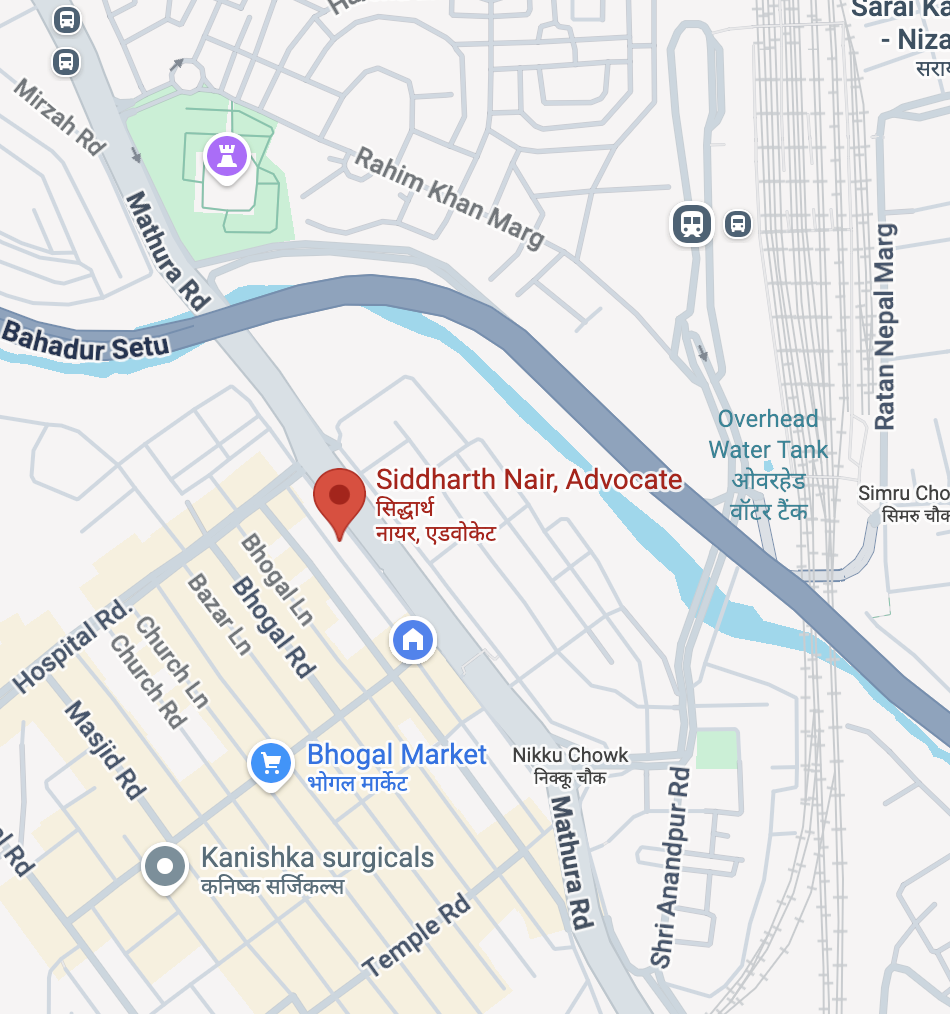
1 thought on “Best Lawyer Fake Dowry Cases in New Delhi & NCR”
Comments are closed.