

Best Divorce Advocate in New Delhi & Delhi NCR:
Advocate Siddharth Nair
Call: +91-9625799959 (Available on WhatsApp)
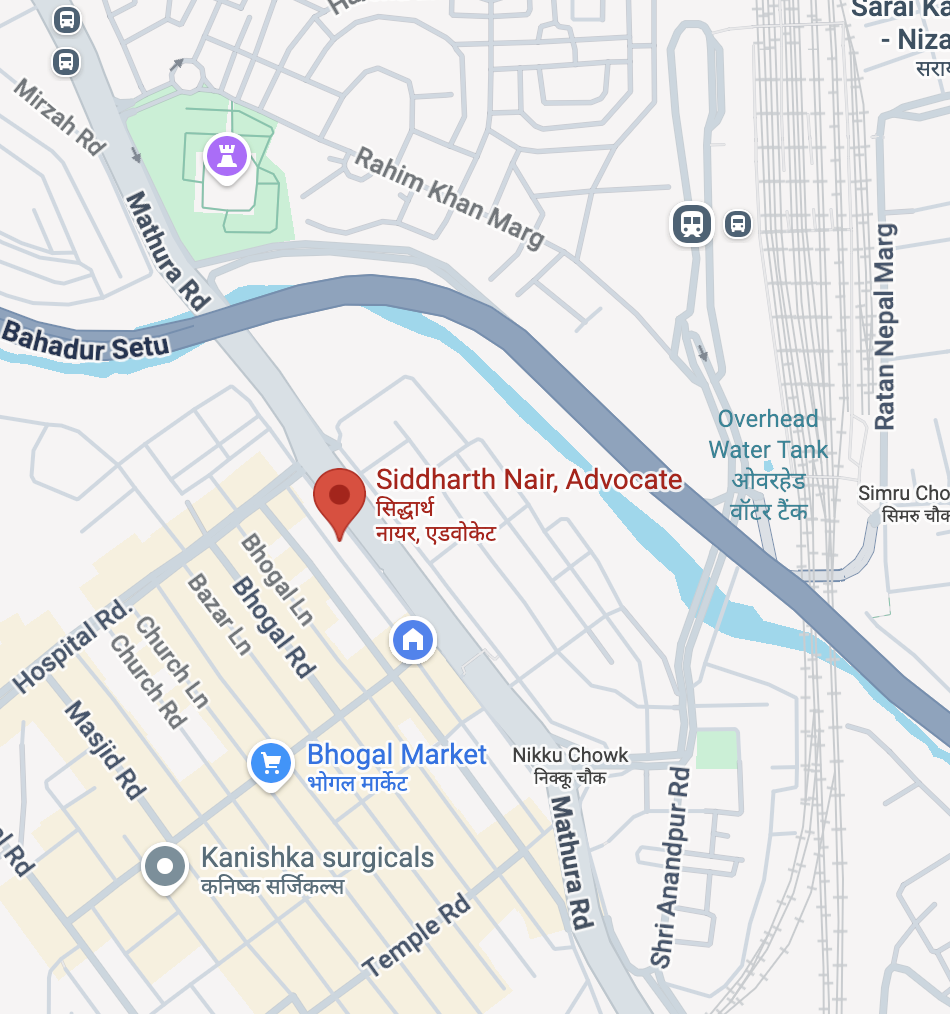
Office: 434, Lower Ground Floor, Jangpura, Mathura Road, New Delhi, NCT of Delhi-110014
I. A Foundation of Excellence: Strategizing Your Divorce Resolution in Delhi NCR
A. The Profile of Dedicated Legal Counsel
Best Divorce Lawyer in New Delhi & Delhi NCR
Advocate Siddharth Nair is recognized as a highly proficient legal expert with a strong foundation established through advanced academic training and extensive experience in complex dispute resolution. A distinguished alumnus of the National Law School of India University (NLSIU), his educational background ensures a rigorous, analytical approach to every case, whether it involves intricate family disputes or complex corporate matters. This unique blend of academic rigour and practical mastery of litigation principles—including appearances before the Supreme Court, High Courts, and specialized tribunals—positions him as a formidable advocate capable of turning conflict into decisive, business-aligned outcomes for his clients.
For families and individuals navigating the emotionally turbulent process of divorce in the New Delhi and NCR region, choosing the right legal representative is the single most critical decision. Advocate Nair’s practice provides comprehensive, strategy-led legal solutions across the entire spectrum of family law, ensuring that every legal step, from initial consultation to final decree, is executed with precision, discretion, and strategic foresight.
B. Defining Divorce Jurisprudence in India: The Legal Framework
Divorce in India, particularly for those governed by the Hindu Marriage Act, 1955 (HMA), follows two primary, distinct pathways, each demanding a specialized legal strategy tailored to the client’s unique circumstances and relationship dynamics. Understanding the fundamental difference between these types is the crucial first step in any divorce proceeding.
| Type of Divorce | Governing Legislation | Key Requirement | Typical Timeline |
| Mutual Consent Divorce | Section 13B, Hindu Marriage Act, 1955 | Both spouses must agree to dissolution and separate for at least one year. | Expedited (3–6 months) if cooling-off period is waived. |
| Contested Divorce | Section 13, Hindu Marriage Act, 1955 | One spouse files based on legally recognized faults (grounds) like cruelty or desertion. | Extended (1–3 years or more), depending on complexity and evidence. |
This profile serves as your comprehensive guide to the legal procedures, necessary documentation, potential risks, and the strategic legal support provided by Advocate Siddharth Nair’s practice in the high-stakes environment of Delhi NCR family courts.

II. Mastering Mutual Consent Divorce (Section 13B HMA): The Path to Amicable Resolution
Best Divorce Lawyer in New Delhi
For couples who acknowledge the irreconcilable differences and are committed to resolving their separation amicably, the Mutual Consent Divorce, outlined in Section 13B of the HMA, is the most efficient and least adversarial route.
A. Procedural Prerequisites and Key Steps
This path mandates two foundational criteria: the mutual, voluntary agreement of both spouses to dissolve the marriage, and proof that the couple has lived separately for a continuous period of at least one year before filing the petition.
The process is formally bifurcated into two mandatory court appearances, known as motions, before the Family Court or District Court in Delhi:
- Drafting the Petition: The process begins with the advocate drafting a joint petition that includes essential details of the marriage, the date of separation, the declaration of mutual consent, and, most critically, a comprehensive settlement agreement. This agreement meticulously details the resolution of all key matters: alimony, child custody, visitation rights, and the division of shared property.
- Filing the First Motion (Petition I): The joint petition is filed with the relevant Delhi Family Court (such as Tis Hazari, Saket, or Karkardooma). Both parties must appear before the judge to verify their statements and confirm their initial consent to the dissolution.
- The Cooling-Off Period: Following the First Motion, the law traditionally mandates a waiting period of six months and a maximum period of eighteen months before the Second Motion can be filed. This period is intended to allow for reconciliation.
B. Strategic Expediency: Waiving the Cooling-Off Period (Landmark Case Laws)
Best Divorce Lawyer in New Delhi
For clients seeking swift, decisive closure, the mandatory six-month waiting period can be waived under certain circumstances. Advocate Nair leverages progressive legal precedents to expedite this process:
- Judicial Discretion: The Supreme Court, in landmark decisions such as Amardeep Singh v. Harveen Kaur (2017) and Shilpa Sailesh vs Varun Sreenivasan (2023), established that the cooling-off period under Section 13B(2) of the HMA is directory, not mandatory.
- Conditions for Waiver: Courts possess the discretionary power to waive this period when they are satisfied that:
- Both parties are genuinely cooperative and committed to parting ways.
- The couple has already been separated for a significant period beyond the statutory minimum.
- There is no realistic chance of reconciliation.
- All financial, custody, and property-related issues have been settled amicably.
By strategically preparing and presenting the case, the advocate can petition the court for this waiver, potentially reducing the timeline for a mutual divorce from 18 months to a highly streamlined 3–6 months.
- Filing the Second Motion (Petition II) and Decree: The Second Motion is filed between the 6th and 18th month (or sooner, if the waiver is granted). Both parties reappear to re-confirm their persistent consent. Upon the court’s satisfaction that the agreement is genuine and non-coerced, the final Divorce Decree is granted, legally dissolving the marriage.
III. Navigating Contested Divorce (Section 13 HMA): Establishing Grounds and Proof
Best Divorce Lawyer in New Delhi
When consensus is impossible due to severe disagreements over terms, or when one spouse refuses consent, a Contested Divorce under Section 13 of the HMA becomes necessary. This highly adversarial process requires the petitioner to prove one or more legally recognised grounds.
A. Statutory Grounds for Contested Litigation
The burden of proof rests entirely on the filing spouse to establish these grounds in court :
- Cruelty: This is the most common and expansive ground, encompassing both physical and mental abuse that makes cohabitation impossible. Mental cruelty involves actions that cause emotional distress severe enough to affect the petitioner’s well-being.
- Landmark Precedent on Mental Cruelty: The Supreme Court has unequivocally stated that “disgusting accusations of unchastity” and character assassination levelled against a spouse in court documents constitute mental cruelty sufficient to sustain a divorce claim under Section 13(1)(i-a) of the HMA. Furthermore, repeated threats to commit suicide have also been held to amount to mental cruelty. The standard of proof demands that the cruelty is of such a nature that the parties cannot be reasonably expected to live together.
- Desertion: The petitioner must prove that the spouse abandoned them for a continuous period of at least two years without reasonable cause and without their consent.
- Adultery: Filing requires conclusive proof that the other spouse has engaged in voluntary extramarital sexual intercourse.
- Other Grounds: These include conversion to another religion, incurable mental disorder, or communicable venereal diseases.
B. Strategic Evidentiary Management in Contestation
A successful contested divorce is built on a foundation of meticulously collected and strategically presented evidence. Advocate Nair’s role involves:
- Forensic Documentation: Translating abstract allegations of cruelty into concrete, admissible evidence, which may include electronic records, medical reports, and witness testimonies.
- Interim Relief: Filing applications for immediate interim maintenance (under Section 24 HMA or Section 125 Cr.P.C.) and interim custody to stabilize the client’s position and ensure financial security while the main petition is being litigated.
IV. The Critical Role of Documentation: Necessary Court Submissions
A divorce petition, regardless of whether it is contested or mutual, requires stringent documentation to meet the standards of the Delhi Family Courts. Timely and complete submission of these documents is essential to prevent procedural delays.
Advocate Nair guides clients through the preparation of this essential document checklist, ensuring that all submissions are accurate and legally compliant: PLEASE CLICK HERE TO DOWNLOAD PDF
V. Securing Financial Stability: Alimony, Maintenance, and Asset Division
The financial resolution is often the most contentious part of a divorce. Advocate Nair’s strategy focuses on ensuring a fair and equitable settlement that secures the client’s long-term financial independence.
A. Alimony and Maintenance Determination (No Fixed Formula)
In India, the quantum of maintenance (alimony) is determined by the court using the principle of fairness and equity, rather than a rigid formula. The court must adopt an approach that is “fair and equitable” based on the unique facts and circumstances of each case.
Key factors assessed by the courts include:
- Income and Financial Resources: A detailed evaluation of the income, assets, investments, and liabilities of both spouses.
- Standard of Living: The lifestyle enjoyed by the couple during the marriage is used to determine the necessary maintenance required post-divorce.
- Earning Capacity: The court considers the potential earning capacity of both parties, based on their qualifications and employment opportunities, crucial in assessing intentional underemployment.
- Duration of Marriage: Longer marriages typically weigh in favour of more substantial or permanent maintenance awards.
While courts apply discretion, the Supreme Court has previously indicated that an amount equivalent to 25% of the paying spouse’s gross income could serve as a guiding benchmark for permanent alimony, though this is not a strict rule. The court is not bound by a lower interim maintenance amount when passing a final maintenance order after reviewing complete evidence.
B. Property Rights and Stridhan: A Woman’s Absolute Property
The protection of a woman’s independent property rights is absolute under Indian law. Stridhan is defined as property or gifts received by a woman at any time in connection with her marriage from her family, her husband’s family, or any other person.
- Absolute Ownership: Under Section 14(1) of the Hindu Succession Act, 1956, any property possessed by a female Hindu is held by her as her absolute property. Her right over her Stridhan is inviolable and can be claimed even after judicial separation or divorce.
- Recovery Mechanisms: When Stridhan is withheld, Advocate Nair utilizes strong dual-track legal recourse, including:
- Civil Action: Claiming recovery under Section 27 of the HMA within the divorce petition.
- Criminal Action: Filing criminal complaints under Section 406 of the Indian Penal Code (or the corresponding provision in the Bharatiya Nyaya Sanhita, BNS 316) for Criminal Breach of Trust, which provides significant leverage for prompt return.
C. Marital Property Division (Equitable Distribution)
Best Divorce Lawyer in New Delhi
Indian law follows the principle of Equitable Distribution, meaning marital assets (acquired during the marriage, including real estate, investments, and savings) are divided fairly, but not necessarily equally. This division considers factors like the duration of the marriage, the earning capacity of each spouse post-divorce, and both financial and non-financial contributions (such as homemaking and childcare) to the marital estate.
VI. Protecting the Child: Custody and Welfare in Family Law
In any case involving minor children, the issue of custody and visitation rights is handled with the highest degree of sensitivity, guided by a single, overriding legal principle: the welfare of the child is the paramount consideration.
A. Determining Custody and Access
The court assesses all relevant factors concerning the child’s physical, moral, ethical, and emotional well-being. Advocate Nair builds a strong case by focusing strictly on parental fitness and stability:
- Evidentiary Requirements: Successfully prosecuting or defending custody requires detailed evidence, potentially including school records, psychological assessments, and reports that demonstrate which parent offers the most stable and nurturing environment. The Delhi High Court, for example, has previously awarded custody to a father based on evidence, including a police report, citing the mother’s “habitual neglect and irresponsible abandonment” of the child.
- Enforcement of Access: Once visitation rights are formalized, non-compliance is taken seriously. The legal recourse for a parent who willfully disobeys a court order regarding child custody or visitation rights is robust, including the immediate initiation of civil contempt proceedings. Non-custodial parents who fail to return the child may face serious consequences, including criminal charges.
VII. Potential Risks and Legal Challenges for Clients
While a favorable legal outcome is the goal, clients must be fully aware of the inherent risks associated with family court litigation, particularly in a high-conflict environment like Delhi NCR.
A. The Challenges of Contested Litigation
Contested divorce is not merely complex; it is also highly demanding on the client. Key challenges include:
- Extended Legal Proceedings: The adversarial nature of contested divorce, coupled with procedural requirements and court backlogs, often results in cases stretching for months or even years. This prolongs the resolution of legal and financial aspects.
- Significant Financial Burden: Litigation involves numerous hearings, comprehensive evidence submission, and the potential need for expert witnesses, leading to accumulating legal fees, court costs, and associated expenses.
- Emotional Toll: The adversarial process results in high emotional stress for all involved parties, especially when sensitive matters like child custody are disputed.
B. Risks Associated with Misused Legal Provisions (IPC 498A)
The intersection of civil and criminal law presents a unique risk. The Protection Against Cruelty by Husband or Relatives (IPC Section 498A) is a vital provision designed to protect women from cruelty and dowry harassment. However, the provision is susceptible to misuse in high-conflict divorces:
- Allegations of Misuse: Section 498A is sometimes misused to settle personal scores, extort money, or gain a favourable settlement in the civil divorce proceedings.
- Impact on the Accused: False allegations can lead to immediate arrest, significant social stigma, reputational damage, and lengthy, expensive legal battles for the accused and their family, including siblings and elderly parents.
- Judicial Scrutiny: Data indicates that a significant percentage of IPC 498A cases result in acquittals, leading Indian courts and enforcement authorities to become more vigilant in scrutinizing claims due to the increasing number of false cases. Advocate Nair’s practice is prepared to address and defend against any vague, omnibus, or unspecific allegations lacking evidence.
VIII. Advocate Siddharth Nair: Comprehensive Support, from Consultation to Decree Enforcement
Advocate Nair’s commitment to the client extends far beyond courtroom appearances. The role is a partnership designed to minimize legal hassles, provide strategic counsel, and ensure a secure transition to post-divorce life.
A. Phase 1: Initial Strategy and Conflict Assessment
The journey begins with a detailed legal consultation. The advocate thoroughly discusses the facts, determines the most suitable type of divorce (Mutual Consent vs. Contested), and outlines a strategic roadmap that aligns legal expectations with client priorities. This phase also involves collecting all necessary initial documentation.
B. Phase 2: Drafting, Filing, and Jurisdiction Management
The advocate manages all procedural formalities:
- Meticulous Drafting: Ensuring the petition is legally sound, meticulously documented, and clearly articulates the facts, grounds, and relief sought.
- Jurisdictional Expertise: Filing the petition in the correct Delhi Family Court based on the criteria of residence or marriage location (e.g., Tis Hazari, Saket, or Karkardooma). For clients in the National Capital Region (NCR), this includes understanding jurisdictions across Gurugram, Noida, and Faridabad.
- Mediation Advocacy: While preparing for litigation, the advocate actively utilizes mediation and counseling services offered by the Family Courts to seek confidential, cost-effective settlement whenever possible.
C. Phase 3: Litigation, Negotiation, and Enforcement
Whether the case is resolved through collaboration or contestation, the advocate’s support remains steadfast:
- Court Representation: Providing robust representation during multiple court hearings, presenting evidence, cross-examining witnesses, and delivering final arguments.
- Financial Enforcement: Utilizing powerful legal tools, including civil detention, attachment of property (under Order XXI of the Code of Civil Procedure), and contempt of court proceedings, to ensure strict adherence to maintenance and custody orders by the non-compliant party.
- Parallel Proceedings Management: Strategically coordinating any related criminal or domestic violence filings (such as IPC 498A or PWDVA) to maximize client safety and legal leverage during the civil divorce proceedings.
D. Phase 4: Post-Decree Legal Compliance and Security
The legal duties continue after the court issues the final Divorce Decree, which is the definitive legal document containing detailed judicial decisions regarding assets, custody, and support :
- Administrative Formalization: Guiding the client through essential administrative tasks mandated by the decree, including ensuring the legal division of all property, removing the client’s name from joint debts, and formally changing their name (if desired).
- Securing the Future: Ensuring that beneficiary designations on all financial instruments (life insurance policies, retirement accounts, and wills) are updated and aligned with the decree, and advising on the legal options for securing restraining orders if antagonism persists.
Advocate Siddharth Nair’s practice is committed to providing honest counsel compliant with the highest standards of the Bar Council of India, ensuring absolute transparency, inviolable client confidentiality (protected as privileged communication under the Indian Evidence Act) , and compassionate, responsive communication at every critical juncture. The objective is a comprehensive, secure, and decisive resolution that allows the client to transition seamlessly to the next phase of life.
Contact Advocate Siddharth Nair
Take the First Step Towards Justice Today
Don’t let fear or uncertainty silence you. Whether you are a victim seeking safety or an individual seeking a strong defence, time is of the essence.
Consult with the Best Domestic Violence Lawyer in Delhi NCR.
- Office Address: 434, Lower Ground Floor, Jangpura, Mathura Road, New Delhi, Delhi-110014
- Phone: +91-9625799959 (Available on WhatsApp)
- Email: mailme@nairlawchamber.com
- Website: www.nairlawchamber.com
Book a Confidential Consultation Now.
Because you deserve a lawyer who fights for you as if it were his own battle Because you deserve a lawyer who fights for you as if it were his own battle
7 thoughts on “Best Divorce Lawyer in New Delhi & Delhi NCR”
Comments are closed.