

Premier Excise Duty Taxation Lawyer & Criminal Defence Advocate in New Delhi
Advocate Siddharth Nair & CS Rahul Kumar Dhiman
Expert Legal Defence Against Excise Duty Fraud, Non-Compliance & Criminal Prosecution in Delhi NCR
Contact Information:
Advocate Siddharth Nair
Call: +91-9625799959
New Delhi | Delhi NCR | Pan-India Practice
Leading Tax Litigation Advocate & Company Secretary Partnership for Comprehensive Excise Duty Defence in New Delhi, Delhi NCR & Pan-India
Office: 434, Lower Ground Floor, Jangpura, Mathura Road, New Delhi, NCT of Delhi, India-110014
Phone: +91-9625799959
Email: mailme@nairlawchamber.com
Website: www.nairlawchamber.com
Practice Areas:
- Excise Duty
- Central Goods and Services Tax (CGST), State Goods and Services Tax (SGST), Union Territory Goods and Services Tax (UTGST) & Integrated Goods and Services Tax (IGST)
- Best Family Law & Criminal Defence Lawyer in Delhi NCR for MTP/Abortion Cases
- Loan Recovery Defence | SARFAESI | Debt Recovery Tribunals | RERA | Credit Card Defaults | FIR Quashing | Criminal Defence
- Premier Criminal Defence Lawyer Specializing in False Cruelty & Dowry Harassment Cases
Consultations: Monday to Saturday: Call Now For an Appointment (9am to 9pm)
Sundays, Public Holidays & Festivals: Holiday/ Meetings strictly by appointment
Introduction: Your Trusted Legal Partners for Excise Duty Litigation & Criminal Defence
BEST EXCISE DUTY LAWYERS IN NEW DELHI & NCR
Advocate Siddharth Nair stands as one of the most accomplished and sought-after excise duty taxation lawyers and criminal defence advocates in New Delhi and the Delhi NCR region. With an exemplary track record spanning numerous landmark cases, Advocate Nair has established himself as the leading legal counsel for businesses, companies, registered proprietorships, and individual entrepreneurs facing complex excise duty litigation and criminal prosecution.
In strategic partnership with Company Secretary Rahul Kumar Dhiman, recognized as the leading Company Secretary in New Delhi and Delhi NCR with specialized expertise in excise duty compliance and corporate governance, this formidable legal team offers comprehensive, integrated legal solutions that combine deep tax law expertise with corporate regulatory knowledge.
Together with their network of highly qualified associates including Chartered Accountants, Certified Auditors, and tax consultants, Advocate Siddharth Nair and CS Rahul Kumar Dhiman provide holistic legal representation that addresses every facet of excise duty disputes—from initial investigations through trial proceedings to appellate advocacy before High Courts and the Supreme Court of India.
Their client-centric approach, meticulous case preparation, and aggressive yet ethical litigation strategy have resulted in successful outcomes in hundreds of excise duty cases across New Delhi, Gurugram, Noida, Greater Noida, Faridabad, and Ghaziabad. Whether you are facing allegations of excise duty fraud, non-payment of returns, compliance violations, or criminal prosecution, this legal team possesses the expertise, experience, and dedication required to protect your rights, your business, and your freedom.
Contact Information:
Advocate Siddharth Nair
Call: +91-9625799959
New Delhi | Delhi NCR | Pan-India Practice
Leading Tax Litigation Advocate & Company Secretary Partnership for Comprehensive Excise Duty Defence in New Delhi, Delhi NCR & Pan-India
Office: 434, Lower Ground Floor, Jangpura, Mathura Road, New Delhi, NCT of Delhi, India-110014
Phone: +91-9625799959
Email: mailme@nairlawchamber.com
Website: www.nairlawchamber.com
Practice Areas:
- Excise Duty
- Central Goods and Services Tax (CGST), State Goods and Services Tax (SGST), Union Territory Goods and Services Tax (UTGST) & Integrated Goods and Services Tax (IGST)
- Best Family Law & Criminal Defence Lawyer in Delhi NCR for MTP/Abortion Cases
- Loan Recovery Defence | SARFAESI | Debt Recovery Tribunals | RERA | Credit Card Defaults | FIR Quashing | Criminal Defence
- Premier Criminal Defence Lawyer Specializing in False Cruelty & Dowry Harassment Cases
Consultations: Monday to Saturday: Call Now For an Appointment (9am to 9pm)
Sundays & Festivals: Holiday/ Meetings strictly by appointment

Why Choose Advocate Siddharth Nair & CS Rahul Kumar Dhiman?
Unparalleled Expertise in Excise Duty Law
- Specialized Focus: Exclusive concentration on excise duty taxation, compliance, and criminal defence
- Comprehensive Knowledge: Deep understanding of Central Excise Act, 1944, State Excise Laws, GST Act, and related taxation statutes
- Strategic Partnership: Unique collaboration between legal advocacy and company secretarial expertise
- Multi-Jurisdictional Experience: Successfully represented clients across multiple High Courts and the Supreme Court of India
Proven Track Record of Success
- Hundreds of Cases Won: Consistent success rate in excise duty litigation and criminal trials
- Acquittals Secured: Multiple acquittals in serious criminal prosecutions involving excise duty fraud
- Bail Applications: High success rate in securing bail for clients facing excise-related criminal charges
- Duty Demands Set Aside: Significant excise duty demands successfully challenged and reversed
- Penalties Reduced/Waived: Substantial reduction or complete waiver of penalties and interest
Comprehensive Legal Services
- Investigation Stage Defence: Representation during searches, seizures, and investigations by Enforcement Directorate, CBI, DGCI, and Excise Intelligence
- Pre-Litigation Strategy: Proactive compliance review and risk mitigation
- Show Cause Notice Response: Expert handling of adjudication proceedings
- Appeal Representation: Appellate advocacy before Commissioners (Appeals), CESTAT, High Courts, and Supreme Court
- Criminal Defence: Aggressive defence in criminal trials under Section 9 of Central Excise Act and related penal provisions
- Bail Applications: Swift and strategic bail applications under all circumstances
- Quashing Petitions: Constitutional remedies under Article 226 and 227 before High Courts
- Corporate Advisory: Compliance audits, risk assessment, and preventive legal counseling

Understanding Excise Duty Law in India
Central Excise Duty Framework
The Central Excise Act, 1944 governs the levy and collection of duties of excise on goods manufactured or produced in India. Despite the implementation of GST, excise duty continues to apply to certain commodities including petroleum products, alcoholic liquor for human consumption, and other specified goods under the purview of state excise departments.
Key Provisions of Central Excise Act, 1944:
Section 3: Levy and collection of excise duty on excisable goods manufactured or produced in India
Section 4: Valuation of excisable goods for determining duty liability
Section 5: Powers to grant exemptions from duty
Section 9: Criminal prosecution for offences relating to evasion of duty
Section 9A: Cognizance and trial of offences
Section 9AA: Power to arrest
Section 11: Recovery of duties not levied or short-levied
Section 11A: Recovery of duties not paid, short-paid or erroneously refunded
Section 11AC: Imposition of penalty
Section 35: Appeals to Commissioner (Appeals)
Section 35B: Appeals to Customs, Excise & Service Tax Appellate Tribunal (CESTAT)
Section 35G: Appeals to High Court on questions of law
Section 35L: Direct appeals to Supreme Court on questions relating to rate of duty or valuation
State Excise Laws
Each state in India has enacted its own excise legislation governing the manufacture, possession, transport, purchase, and sale of intoxicating liquor and narcotic substances. Common aspects across state excise laws include:
- Licensing Requirements: Mandatory licenses for manufacture, wholesale, and retail of alcoholic beverages
- Duty Structure: State-specific excise duty rates and collection mechanisms
- Regulatory Compliance: Strict operational norms, record-keeping, and reporting requirements
- Penal Provisions: Criminal penalties for violations including illicit manufacture, possession of non-duty paid liquor, and smuggling
Major State Excise Acts:
- Delhi Excise Act, 2009
- Uttar Pradesh Excise Act, 1910
- Haryana Excise Act, 1914
- Punjab Excise Act, 1914
- Maharashtra Prohibition Act, 1949
- Rajasthan Excise Act, 1950
- Karnataka Excise Act, 1965
- Tamil Nadu Liquor (Licensing & Retail Vending) Act, 2003
Common Excise Duty Issues Faced by Businesses
1. Complex and Inconsistent State Laws
The excise regime in India is characterized by significant variations across states, creating compliance challenges for businesses operating in multiple jurisdictions. Each state has different:
- Duty rates and calculation methodologies
- Licensing procedures and requirements
- Documentation and reporting obligations
- Penalties and enforcement mechanisms
How We Help: Advocate Siddharth Nair and CS Rahul Kumar Dhiman provide multi-state compliance strategies, conduct comprehensive regulatory audits, and represent clients in disputes arising from conflicting state regulations.
2. Exclusion from GST and Tax Discrepancies
Alcoholic liquor for human consumption remains outside the GST framework, continuing to be governed by state excise laws. This creates:
- Dual taxation issues
- Credit disallowance problems
- Classification disputes
- Valuation controversies
How We Help: Our team navigates the complex interplay between excise duty and GST, advises on tax planning strategies, and represents clients in disputes involving tax credit denials and dual taxation issues.
3. Compliance and Operational Challenges
Businesses in the excise sector face rigorous compliance requirements:
- Regular submission of returns and statements
- Maintenance of detailed records and accounts
- Adherence to manufacturing and storage standards
- Compliance with labeling, packaging, and MRP requirements
- Timely payment of duties and fees
How We Help: CS Rahul Kumar Dhiman conducts compliance audits, establishes robust internal control systems, and provides ongoing regulatory guidance to ensure complete compliance and minimize legal exposure.
4. Discriminatory Taxation
Businesses often face discriminatory treatment through:
- Arbitrary assessments
- Selective enforcement
- Unequal application of exemptions and concessions
- Discriminatory licensing policies
How We Help: We challenge discriminatory practices through constitutional remedies, representing clients before High Courts under Article 14 (Right to Equality) and Article 19(1)(g) (Right to carry on business).
5. Broken Tax Chain
The exclusion of excise duty from GST creates a broken tax chain where:
- Input tax credits on raw materials cannot be claimed
- Cascading tax effects increase costs
- Compliance becomes complex across different tax regimes
How We Help: We provide strategic tax planning advice to minimize the impact of the broken tax chain and represent clients in disputes arising from credit denials.
6. Fixed Pricing & Inflation
State governments often impose fixed pricing regimes for alcoholic beverages, creating challenges during periods of:
- Rising input costs
- Inflationary pressures
- Changes in raw material prices
- Increased operational expenses
How We Help: We represent businesses in negotiations with excise authorities for price revisions and challenge arbitrary pricing policies through legal proceedings.
7. Transit Wastage Penalties
Businesses face penalties for alleged excess wastage during transportation and storage, including:
- Unexplained shortages
- Evaporation and leakage claims
- Documentation discrepancies
- Route violations
How We Help: We defend clients against excessive wastage penalties, present scientific evidence on normal wastage, and negotiate reasonable settlements with authorities.
8. Arbitrary License Fees
Excise authorities sometimes impose:
- Exorbitant license fees
- Retrospective fee increases
- Arbitrary conditions in licenses
- Unjustified security deposits
How We Help: We challenge arbitrary license fee demands through legal proceedings and represent clients in license renewal disputes and regulatory negotiations.
9. Cartelization Allegations
Businesses may face allegations of:
- Price-fixing
- Market allocation
- Anti-competitive practices
- Violation of competition laws in conjunction with excise violations
How We Help: We defend clients against cartelization allegations, coordinate with competition law experts, and represent clients before the Competition Commission of India and courts.
10. Mandatory NOCs and Clearances
Operations often require multiple No Objection Certificates from:
- Pollution Control Boards
- Fire Departments
- Municipal Authorities
- Land Use Authorities
- Excise Intelligence Agencies
How We Help: We facilitate obtaining necessary clearances, represent clients in disputes over NOC denials, and challenge unreasonable conditions imposed by authorities.
11. Strict MRP Enforcement
State excise departments strictly enforce Maximum Retail Price (MRP) regulations, leading to:
- Penalties for overcharging
- Product recalls for MRP violations
- License suspensions
- Criminal prosecutions
How We Help: We defend clients in MRP violation cases, advise on compliant pricing strategies, and represent businesses in enforcement proceedings.
12. Illegal/Non-Duty Paid Liquor (NDPL)
One of the most serious violations involves:
- Possession of non-duty paid liquor
- Illicit manufacture
- Smuggling and transportation of contraband liquor
- Supply chain violations
How We Help: Advocate Siddharth Nair provides aggressive criminal defence in NDPL cases, secures bail for accused persons, and achieves acquittals through meticulous trial advocacy.
13. Compliance with Operational Norms
Detailed operational requirements include:
- Production capacity limits
- Storage facility standards
- Transportation protocols
- Record-keeping systems
- Quality control measures
How We Help: CS Rahul Kumar Dhiman establishes comprehensive compliance systems, conducts operational audits, and ensures businesses meet all regulatory requirements.
14. Insolvency & Background Checks
Excise authorities conduct rigorous background verification including:
- Financial solvency requirements
- Criminal background checks
- Tax compliance history
- Previous license violations
How We Help: We assist clients in license applications with proper documentation, address adverse findings in background checks, and represent clients in license denial appeals.
15. Litigation and Dispute Resolution
Excise disputes involve multiple forums:
- Adjudication before Excise Commissioners
- Appeals to Commissioners (Appeals)
- Tribunal proceedings before CESTAT
- High Court litigation under Article 226 and Section 35G
- Supreme Court appeals
How We Help: Advocate Siddharth Nair has extensive experience representing clients at every stage of litigation, from initial adjudication through Supreme Court proceedings.
16. Criminal Trials Related to Excise Duty Fraud
The most serious consequences involve criminal prosecution under:
- Section 9 of Central Excise Act, 1944
- State Excise Acts’ penal provisions
- Indian Penal Code sections (420, 467, 468, 471, 120B)
- Prevention of Corruption Act (for cases involving public officials)
How We Help: Advocate Siddharth Nair provides comprehensive criminal defence including bail applications, discharge applications, trial advocacy, and appellate representation to secure acquittals and protect clients’ liberty and reputation.
Criminal Charges Related to Excise Duty Fraud & Non-Compliance
Businesses and their directors/officers may face serious criminal charges in excise duty matters:
Offences Under Central Excise Act, 1944
Section 9(1) – Specific Offences
Criminal prosecution for:
- Evasion of excise duty
- Fraudulent availment of exemptions
- Clandestine removal of goods
- Suppression of production
- Misuse of Cenvat credit
- Maintenance of false records
- Violation of rules and regulations
Punishment: Imprisonment up to 7 years + fine
Section 9(1)(a) – Abetment
- Aiding, abetting, or conniving at the commission of offences
- Conspiracy to evade excise duty
Punishment: Same as principal offence
Section 9(1A) – Enhanced Penalty for Specified Goods
For certain specified goods (like illicit liquor):
- Higher penalties
- Stricter enforcement
- Mandatory minimum punishment
Punishment: Imprisonment up to 3 years + fine
Offences Under State Excise Acts
Each state excise act contains specific criminal provisions, typically including:
Illicit Manufacture
- Manufacturing without license
- Manufacturing in excess of licensed capacity
- Unauthorized production
- Use of prohibited substances
Punishment: Imprisonment up to 3-10 years + substantial fines
Illicit Possession
- Possession of non-duty paid liquor
- Possession beyond prescribed limits
- Unexplained possession
- Storage in unauthorized premises
Punishment: Imprisonment up to 5 years + confiscation + fine
Illicit Transportation
- Transport without proper documents
- Route violations
- Quantity discrepancies
- Use of unauthorized vehicles
Punishment: Imprisonment up to 3-7 years + vehicle confiscation + fine
Smuggling
- Import/export violations
- Cross-border smuggling
- Inter-state smuggling without permits
Punishment: Imprisonment up to 10 years + heavy fines
Offences Under Indian Penal Code (IPC)
Section 420 – Cheating
Cheating excise authorities through:
- False declarations
- Forged documents
- Deceptive practices
Punishment: Imprisonment up to 7 years + fine
Section 467 – Forgery of Valuable Security
Forging excise documents, duty stamps, licenses
Punishment: Imprisonment for life or up to 10 years + fine
Section 468 – Forgery for Purpose of Cheating
Creating false excise records with intent to cheat
Punishment: Imprisonment up to 7 years + fine
Section 471 – Using Forged Document
Using forged excise documents, licenses, or duty payment receipts
Punishment: Same as forgery (up to 10 years)
Section 120B – Criminal Conspiracy
Conspiracy to commit excise duty fraud
Punishment: Punishment of the target offence
Economic Offences
Prevention of Money Laundering Act, 2002 (PMLA)
When excise duty evasion involves:
- Proceeds of crime
- Money laundering
- Layering and integration of illicit funds
Punishment: Imprisonment from 3 to 7 years + fine + attachment of property
Investigating Agency: Enforcement Directorate (ED)
Prevention of Corruption Act, 1988
When excise violations involve:
- Bribery of excise officials
- Illegal gratification
- Abuse of official position by public servants
Punishment: Imprisonment from 3 to 7 years + fine
Investigating Agency: Central Bureau of Investigation (CBI), State Anti-Corruption Bureau
Corporate and Director Liability
Companies Act, 2013
Directors and officers of companies can be held personally liable for:
- Company’s excise violations
- Fraudulent conduct
- Breach of fiduciary duties
Relevant Sections:
- Section 447: Punishment for fraud (imprisonment up to 10 years)
- Section 448: Punishment for false statements (imprisonment up to 2 years)
Vicarious Liability
Under most excise laws, the following persons can be prosecuted:
- Directors of companies
- Partners of firms
- Managers and persons in charge of business
- Company secretaries
- Chief financial officers
Defence Available: Person can escape liability by proving:
- Offence committed without their knowledge
- They exercised due diligence to prevent offence
- They were not in charge of relevant operations
Contact Information:
Advocate Siddharth Nair
Call: +91-9625799959
New Delhi | Delhi NCR | Pan-India Practice
Leading Tax Litigation Advocate & Company Secretary Partnership for Comprehensive Excise Duty Defence in New Delhi, Delhi NCR & Pan-India
Office: 434, Lower Ground Floor, Jangpura, Mathura Road, New Delhi, NCT of Delhi, India-110014
Phone: +91-9625799959
Email: mailme@nairlawchamber.com
Website: www.nairlawchamber.com
Practice Areas:
- Excise Duty
- Central Goods and Services Tax (CGST), State Goods and Services Tax (SGST), Union Territory Goods and Services Tax (UTGST) & Integrated Goods and Services Tax (IGST)
- Best Family Law & Criminal Defence Lawyer in Delhi NCR for MTP/Abortion Cases
- Loan Recovery Defence | SARFAESI | Debt Recovery Tribunals | RERA | Credit Card Defaults | FIR Quashing | Criminal Defence
- Premier Criminal Defence Lawyer Specializing in False Cruelty & Dowry Harassment Cases
Consultations: Monday to Saturday: Call Now For an Appointment (9am to 9pm)
Sundays & Festivals: Holiday/ Meetings strictly by appointment
Investigative & Regulatory Agencies Involved in Excise Duty Cases
Central Government Agencies
1. Directorate General of GST Intelligence (DGGI)
Jurisdiction: Central excise duty evasion, GST fraud, cross-border smuggling
Powers:
- Search and seizure
- Summons to witnesses
- Arrest of accused persons
- Provisional attachment of property
Legal Framework: Central Excise Act, 1944; CGST Act, 2017
2. Directorate of Revenue Intelligence (DRI)
Jurisdiction: Smuggling, customs duty evasion, illicit international trade
Powers:
- Intelligence gathering
- Preventive enforcement
- Search and arrest
- Prosecution
Legal Framework: Customs Act, 1962
3. Enforcement Directorate (ED)
Jurisdiction: Money laundering arising from excise duty fraud
Powers:
- Investigation of scheduled offences
- Attachment of proceeds of crime
- Arrest of accused
- Search of premises
Legal Framework: Prevention of Money Laundering Act, 2002
4. Central Bureau of Investigation (CBI)
Jurisdiction: Corruption cases involving excise officials, major economic offences
Powers:
- Investigation of serious crimes
- Search and seizure
- Prosecution in special courts
Legal Framework: DSPE Act; Prevention of Corruption Act, 1988
5. Central Excise Department (Under CBIC)
Jurisdiction: Assessment, collection, and enforcement of central excise duties
Powers:
- Adjudication proceedings
- Issue of show cause notices
- Penalty imposition
- Initiation of prosecution
Legal Framework: Central Excise Act, 1944; Central Excise Rules, 2002
State Government Agencies
1. State Excise Departments
Jurisdiction: State excise duty collection, licensing, enforcement
Powers:
- Grant and cancellation of licenses
- Inspection of licensed premises
- Search and seizure
- Criminal prosecution under state excise acts
Legal Framework: Respective State Excise Acts
2. State Excise Intelligence Bureaus
Jurisdiction: Detection of excise violations, intelligence operations
Powers:
- Surveillance
- Information gathering
- Raids and searches
- Arrest of offenders
3. State Vigilance and Anti-Corruption Bureaus
Jurisdiction: Corruption in excise administration
Powers:
- Investigation of public servants
- Prosecution for bribery
- Trap operations
Legal Framework: Prevention of Corruption Act, 1988
4. State Commercial Tax/GST Departments
Jurisdiction: GST assessment, cross-taxation issues
Powers:
- Assessment and adjudication
- Search and inspection
- Penalty imposition
Legal Framework: State GST Acts
Quasi-Judicial Bodies
1. Customs, Excise & Service Tax Appellate Tribunal (CESTAT)
Jurisdiction: Appeals against orders of Commissioners
Powers:
- Hear appeals
- Stay of demand
- Final adjudication on facts
Legal Framework: Central Excise Act, Section 35B
2. Settlement Commission
Jurisdiction: Settlement of excise duty disputes (currently non-functional post-GST)
3. Authority for Advance Rulings
Jurisdiction: Providing advance rulings on classification, valuation, and applicability of exemptions
Other Investigating Agencies
1. Economic Offences Wing (EOW)
State police units investigating economic crimes including large-scale excise frauds
2. Special Investigation Teams (SITs)
Constituted for specific high-value or complex excise cases
3. Narcotics Control Bureau (NCB)
When excise violations involve narcotic substances
Judicial Precedents: Recent Landmark Cases
Supreme Court of India – Excise Duty Cases (2024-2025)
1. Bharat Petroleum Corporation Ltd. v. Commissioner of Central Excise, Nashik
Citation: Civil Appeal No. 5642 of 2009
Date: January 20, 2025
Facts: Oil Marketing Companies (OMCs) were facing demand of excise duty on inter-supply of petroleum products under Memorandum of Understanding designed for smooth nationwide distribution.
Issue: Whether prices under MoU for inter-supply of petroleum products constitute “transaction value” for excise duty purposes.
Held: Prices under the MoU for inter-supply of petroleum products do not constitute “transaction value” and are exempt from excise duty due to their non-commercial nature, as the arrangement aimed at facilitating seamless distribution. This case provides significant relief for oil companies engaged in inter-supply arrangements.
Relevance: This judgment protects businesses engaged in inter-company transfers from excise duty liability when such transfers are for operational efficiency rather than commercial profit.
How Advocate Siddharth Nair Can Help: When your business faces excise duty demands on inter-company transfers, internal supplies, or related-party transactions, we analyze the commercial substance of such transactions and argue that they do not constitute taxable events under excise law. This precedent is particularly valuable for manufacturing groups with multiple units and integrated operations.
2. M/s Oswal Petrochemicals Ltd. v. Commissioner of Central Excise, Mumbai – II
Citation: Civil Appeal Nos. 129-130 of 2011
Facts: Central excise authorities reclassified petrochemical products based on a test report, leading to higher duty demand without providing copy of test report to the assessee.
Issue: Whether denial of test report which forms basis of reclassification violates principles of natural justice.
Held: When a test report forms the basis for reclassification necessitating higher duty, copy of such test report must be furnished to the manufacturer-taxpayer. Revenue authorities violated principles of natural justice by failing to share key evidence. The ₹2.15 crore excise duty demand was set aside.
Relevance: This case establishes that taxpayers have a fundamental right to access all evidence relied upon by revenue authorities.
How Advocate Siddharth Nair Can Help: If your business faces excise duty demands based on laboratory test reports, scientific analysis, or technical evaluations that have not been shared with you, we invoke this precedent to challenge such demands on grounds of natural justice violation. We file applications for production of documents and seek quashing of orders passed in violation of fair procedure.
3. M/s Suraj Impex (India) Pvt. Ltd. v. Union of India & Ors.
Citation: SLP (C) Nos. 26178-79 of 2016
Facts: Central Board of Excise and Customs (CBEC) issued a clarificatory circular dated September 17, 2010, and the question arose whether such circular should be given retrospective effect.
Issue: Whether clarificatory circulars issued by revenue authorities have retrospective effect.
Held: A circular/notification issued by the revenue department, clarifying or explaining a fiscal regulation, must be given retrospective effect. Clarificatory circulars are declaratory of the law and apply from the date of the original provision they clarify.
Relevance: This judgment protects taxpayers from retrospective levy of duties when clarificatory circulars are issued in their favor.
How Advocate Siddharth Nair Can Help: When beneficial circulars or clarifications are issued after the relevant period, we rely on this precedent to claim retrospective application. Conversely, when adverse circulars are sought to be applied retrospectively, we distinguish this case and argue that only beneficial clarifications should have retrospective effect under tax jurisprudence principles.
4. Quashing of Departmental Proceedings Does Not Bar Criminal Prosecution
Citation: Judgment delivered July 24, 2025
Bench: CJI B.R. Gavai and Justice Augustine George Masih
Facts: Departmental adjudication order in excise duty matter was quashed on procedural grounds, and accused sought quashing of criminal complaint on the basis that departmental proceedings had been set aside.
Issue: Whether setting aside of departmental adjudication order on procedural grounds automatically renders criminal complaint groundless.
Held: The setting aside of a departmental adjudication order on procedural grounds does not automatically render a criminal complaint for the same offence “groundless.” Criminal prosecution can proceed independently of civil adjudication proceedings.
Relevance: This case clarifies that civil and criminal proceedings in excise matters are independent and success in one forum does not guarantee success in the other.
How Advocate Siddharth Nair Can Help: While this judgment creates challenges when departmental proceedings are favorable, we use strategic defence approaches including: (a) arguing that if there is no civil liability, mens rea for criminal offence is absent, (b) seeking discharge on the ground that no cognizable offence is made out, (c) demonstrating that procedural defects in departmental proceedings reflect systematic flaws in the entire investigation. Our comprehensive approach addresses both civil and criminal aspects simultaneously.
5. State of Maharashtra v. Prism Cement Limited & Anr.
Facts: Amendment to Section 8(5) of Central Sales Tax Act regarding state government’s power to grant tax exemptions.
Issue: Whether 2002 amendment to CST Act is retrospective.
Held: Though after the amendment of Section 8(5) of the Central Sales Tax Act, the State Government’s right to grant exemption from tax has ceased to exist, the amendment is prospective. Every statute is prima facie prospective unless stated otherwise, and accrued rights cannot be taken away by subsequent amendments.
Relevance: This case protects businesses that have availed tax benefits and exemptions under laws existing at the time, even if such laws are subsequently amended.
How Advocate Siddharth Nair Can Help: When your business has availed excise duty exemptions, concessions, or benefits under schemes that are subsequently withdrawn or amended, we argue for protection of accrued rights and vested benefits based on this and similar precedents. We establish that your rights crystallized under the law existing at the relevant time and cannot be retrospectively taken away.
Contact Information:
Advocate Siddharth Nair
Call: +91-9625799959
New Delhi | Delhi NCR | Pan-India Practice
Leading Tax Litigation Advocate & Company Secretary Partnership for Comprehensive Excise Duty Defence in New Delhi, Delhi NCR & Pan-India
Office: 434, Lower Ground Floor, Jangpura, Mathura Road, New Delhi, NCT of Delhi, India-110014
Phone: +91-9625799959
Email: mailme@nairlawchamber.com
Website: www.nairlawchamber.com
Practice Areas:
- Excise Duty
- Central Goods and Services Tax (CGST), State Goods and Services Tax (SGST), Union Territory Goods and Services Tax (UTGST) & Integrated Goods and Services Tax (IGST)
- Best Family Law & Criminal Defence Lawyer in Delhi NCR for MTP/Abortion Cases
- Loan Recovery Defence | SARFAESI | Debt Recovery Tribunals | RERA | Credit Card Defaults | FIR Quashing | Criminal Defence
- Premier Criminal Defence Lawyer Specializing in False Cruelty & Dowry Harassment Cases
Consultations: Monday to Saturday: Call Now For an Appointment (9am to 9pm)
Sundays & Festivals: Holiday/ Meetings strictly by appointment
Delhi High Court – Excise Duty Cases (2024-2025)
1. Commissioner of Central Tax v. ASP Metal Industries
Citation: Appeal under Section 35G of Central Excise Act, 1944
Date: February 2025
Facts: ASP Metal Industries, engaged in manufacturing copper ingots, was alleged to have clandestinely removed significant quantities without accounting or paying duty. DGCEI conducted search, recovered ₹6.20 lakh cash, detected shortage of 3,500 kg copper scrap, and seized documents allegedly indicating unaccounted transactions.
Issue: Whether allegations of clandestine removal can be sustained on basis of assumptions and suspicions without credible evidence.
Held: While criminal charges must be proved beyond reasonable doubt, excise adjudication, being civil in nature, requires proof based on preponderance of probabilities. However, mere presumptions and assumptions cannot replace proof, and even strong suspicion is no substitute for evidence. CESTAT rightly concluded that case of clandestine removal was built on inadequate and unsubstantiated evidence. High Court refused to interfere.
Relevance: This landmark judgment establishes high evidentiary standards for proving clandestine removal and reinforces that revenue authorities must present concrete evidence, not mere suspicions.
How Advocate Siddharth Nair Can Help: In cases involving allegations of clandestine removal, we meticulously analyze the evidence presented by revenue authorities, identify gaps in documentation, challenge assumptions, and demonstrate that suspicions cannot substitute for proof. We cross-examine departmental witnesses, expose contradictions, and establish that the burden of proof lies on the revenue to prove guilt beyond reasonable doubt in criminal cases and on preponderance of probabilities in civil proceedings.
2. Delhi Excise Policy Case – Money Laundering Proceedings
Context: Delhi High Court proceedings related to 2021-2022 Delhi Excise Policy
Facts: Several high-profile prosecutions involving allegations of irregularities in formulation and implementation of Delhi Excise Policy 2021-22, including allegations of favoring private entities, license fee waivers, and bribery.
Issues Involved:
- Validity of arrests by Enforcement Directorate
- Bail considerations in economic offences
- Sanction for prosecution
- Whether Chief Minister can continue in office while in custody
- Procedural compliance in money laundering investigations
Status: Multiple proceedings ongoing before Delhi High Court and Supreme Court involving constitutional questions, bail applications, and challenges to prosecution.
Relevance: These cases highlight the serious consequences of alleged excise policy violations and the intersection of excise law with anti-corruption and money laundering statutes.
How Advocate Siddharth Nair Can Help: When your business or its officials face allegations of excise policy violations coupled with corruption or money laundering charges, we provide comprehensive defence strategy addressing multiple legal dimensions. We challenge the legal basis of arrests, file bail applications emphasizing business continuity, argue for discharge on technical and substantive grounds, and coordinate defence across multiple investigative agencies and forums.
3. Konark Exim Pvt. Ltd. & JMD Limited Cases
Citation: 2025 decisions
Year: 2025
Issue: Whether appeals involving taxability, classification, or valuation disputes under Central Excise Act should be filed directly before Supreme Court under Section 35L or before High Court under Section 35G.
Held: Taxability, classification, or valuation disputes must be filed directly before the Supreme Court under Section 35L, not under Section 35G before High Court. This establishes clear jurisdictional demarcation.
Relevance: This procedural ruling is critical for determining correct appellate forum and avoiding dismissal of appeals on jurisdictional grounds.
How Advocate Siddharth Nair Can Help: We provide expert guidance on appropriate appellate forum selection, ensure appeals are filed in correct courts, draft comprehensive appeals addressing jurisdictional requirements, and prevent procedural dismissals that could irreparably harm your case.
4. Metal One Corporation India (P) Ltd. v. Union of India
Citation: (2024) 24 Centax 13 (Del.)
Issue: Valuation of deemed services from foreign affiliate when no invoice raised.
Held: Deemed value of services from a foreign affiliate should be ‘nil’ if no invoice was raised, particularly considering CBIC circular guidance.
Relevance: This case addresses complex valuation issues in international transactions involving excise duty.
How Advocate Siddharth Nair Can Help: When your business has international related-party transactions, transfer pricing issues, or cross-border service arrangements that attract excise duty implications, we provide expert guidance on valuation principles, defend against arbitrary valuations by revenue authorities, and establish that technical compliance with circulars and guidelines should protect taxpayers from adverse demands.
Bombay High Court – Excise Duty Cases (2024-2025)
1. Mahindra & Mahindra v. Union of India
Citation: 2022 (10) TMI 212
Date: Review petition dismissed January 9, 2024
Facts: Question of whether interest and penalty can be levied on payment of Additional Duty of Customs (CVD) and Special Additional Duty (SAD) under Customs Tariff Act, 1975, by borrowing provisions from Customs Act, 1962.
Issue: Whether interest and penalty provisions of Customs Act can be applied to duties levied under Customs Tariff Act in absence of specific provisions.
Held: As there is no substantive provision in Section 3 of the CTA that provides for payment of penalty or interest on duty other than BCD, penalty/interest payable on CVD/SAD is not recoverable from the assessee. In absence of specific provision for levy of interest or penalty under Section 3(12) of CTA, the same cannot be charged.
Subsequent Development: The lacuna pointed out by Bombay High Court has been rectified by Finance (No. 2) Act, 2024 by amending Section 3(12) of CTA with effect from August 16, 2024. The amendment is prospective, not retrospective.
Relevance: This case establishes the principle that taxes, interest, and penalties cannot be levied without express statutory authority, and amendments are prospective unless expressly stated otherwise.
How Advocate Siddharth Nair Can Help: For excise duty demands involving interest and penalties levied for periods before specific legislative provisions came into force, we rely on this precedent to challenge such demands as being without legal authority. We file refund claims for interest and penalties wrongfully collected and argue that any amendments enlarging revenue’s power to levy interest/penalty apply only prospectively.
2. Jaiprakash Bawiskar v. State of Maharashtra & Anr.
Context: PIL regarding wine manufacturers’ illegal collection of excise duty
Date: December 2024
Issue: State’s obligation to realize excise duty illegally collected by wine manufacturers.
Held: Bombay High Court disposed of PIL directing state authorities to take appropriate measures for recovery of excise duty and interest illegally collected by wine manufacturers.
Relevance: This case addresses the state’s enforcement obligations and manufacturer compliance in excise duty collection and remittance.
How Advocate Siddharth Nair Can Help: When disputes arise regarding proper collection and remittance of excise duty, particularly in state excise matters involving allegations of illegal collection or short payment, we represent manufacturers in addressing compliance issues, negotiating with excise authorities, and defending against allegations of fraudulent collection while protecting business operations.
3. Interest on IGST – Post-Mahindra Developments
Multiple Cases: Various tribunals and High Courts interpreting Mahindra judgment
Subsequent Tribunals:
- Chennai CESTAT in Acer India Pvt. Ltd. v. CC [2023 (9) TMI 1553]: Followed Mahindra, held interest cannot be levied on CVD/SAD absent specific provisions
- Kolkata CESTAT in Texmaco Rail Engineering Limited v. CC [2024 (1) TMI 902]: Took contrary view, held interest leviable under Section 28AA
Issue: Whether interest under Section 28AA of Customs Act can be levied on confirmed CVD demand under Section 3(1) of CTA.
Relevance: This divergence of opinion demonstrates the complexity of excise and customs duty law and the importance of skilled legal representation to navigate conflicting precedents.
How Advocate Siddharth Nair Can Help: We monitor all tribunal and High Court decisions on evolving excise duty issues, identify favorable precedents, distinguish unfavorable ones, and present comprehensive legal arguments supported by the strongest available jurisprudence. Our approach involves detailed legal research, comparative analysis of decisions, and persuasive advocacy to secure the most favorable interpretation of law for our clients.
High Court of Kerala – Excise Cases (2024-2025)
1. State of Kerala v. Ansar V.K.
Citation: SLP(Crl) No. 1025/2025
Filed in: Supreme Court (Appeal from Kerala High Court)
Issue: Criminal proceedings under Kerala Excise Act.
Status: Special Leave Petition filed by State of Kerala challenging Kerala High Court judgment.
Relevance: This case involves state excise enforcement and criminal prosecution procedures specific to Kerala jurisdiction.
How Advocate Siddharth Nair Can Help: In cases involving Kerala Abkari Act, we collaborate with local counsel having expertise in Kerala excise law, defend clients against criminal prosecutions for excise violations, challenge arbitrary enforcement actions, and represent clients through trial and appellate proceedings while coordinating Kerala-specific legal strategies.
2. Various Excise Duty Classification Cases
Context: Multiple Kerala High Court cases involving classification of goods for excise duty purposes
Common Issues:
- Classification of alcoholic beverages
- Rate of duty applicable
- Exemption notifications
- Valuation disputes
How Advocate Siddharth Nair Can Help: Classification disputes require deep understanding of HSN codes, tariff schedules, and product characteristics. We engage technical experts, present scientific evidence, rely on favorable precedents, and establish that classification should be interpreted liberally in favor of taxpayer when ambiguity exists.
High Court of Uttar Pradesh – Excise Cases (2024-2025)
1. Bihar Foundry and Casting Ltd. (Jharkhand HC)
Citation: 2024
Related State: Uttar Pradesh (similar issues)
Issue: Taxability, classification, or valuation disputes under Central Excise Act—whether appeals should be filed before High Court or Supreme Court.
Held: Such disputes must be filed directly before Supreme Court under Section 35L, not before High Court.
Relevance: Establishes appellate forum jurisdiction, crucial for Uttar Pradesh excise matters.
How Advocate Siddharth Nair Can Help: We ensure proper forum selection for appeals, file appropriate applications for condonation of delay if required, and present jurisdictional arguments to prevent dismissal on technical grounds.
2. U.P. Excise Act Cases – License Cancellations
Context: Multiple cases involving cancellation of wholesale and retail liquor licenses
Common Grounds:
- Violation of license conditions
- Shortage of stock
- Sale of spurious liquor
- Non-payment of license fees
- Violation of local restrictions
Typical Relief Sought:
- Stay of cancellation orders
- Restoration of licenses
- Compensation for business losses
How Advocate Siddharth Nair Can Help: When facing license cancellation under U.P. Excise Act, we file immediate stay applications before High Court under Article 226, argue that cancellation is disproportionate to alleged violation, establish compliance with all material conditions, demonstrate that procedural lapses are minor and technical, and secure interim relief to protect business continuity while main petition is decided.
3. U.P. Excise Policy Disputes
Context: Annual excise policy implementations and challenges
Common Issues:
- Arbitrary reserve price fixing
- Discriminatory zoning
- Unreasonable license fee demands
- Retrospective policy changes
- Violation of legitimate expectations
How Advocate Siddharth Nair Can Help: We challenge arbitrary excise policy provisions through constitutional writ petitions, establish violation of Article 14 (equality) and Article 19(1)(g) (right to trade), seek policy modifications through representations and litigation, and protect established business rights against unreasonable policy changes.
High Court of Rajasthan – Excise Cases (2024-2025)
1. Rajasthan Excise Act Enforcement Cases
Context: Criminal prosecutions under Rajasthan Excise Act, 1950
Common Offences:
- Illicit manufacture of liquor
- Illegal transportation
- Possession of non-duty paid liquor
- License violations
- Quality standard violations
Typical Punishments: Imprisonment ranging from 3 months to 10 years depending on gravity
How Advocate Siddharth Nair Can Help: We provide aggressive criminal defence in Rajasthan excise prosecutions, secure bail even in serious offences, file discharge applications based on lack of evidence, cross-examine prosecution witnesses effectively, establish procedural violations in investigation, and achieve acquittals through meticulous trial strategy.
2. Rajasthan Excise Policy – Auction and Tender Disputes
Context: Disputes related to auction of retail liquor vends and wholesale licenses
Common Issues:
- Arbitrary disqualification of bidders
- Cancellation of successful bids
- Forfeiture of earnest money
- Changes in tender conditions mid-process
- Discriminatory treatment of bidders
How Advocate Siddharth Nair Can Help: We represent clients in tender and auction disputes, challenge arbitrary disqualifications, seek restoration of rights, prevent forfeiture of security deposits, and establish that tender process must be fair, transparent, and in accordance with principles of natural justice.
High Court of Madhya Pradesh – Excise Cases (2024-2025)
1. M.P. Excise Act Prosecutions
Context: Criminal cases under Madhya Pradesh Excise Act, 1915
Frequent Violations:
- Illegal transport of liquor across district boundaries
- Violation of quantity restrictions
- Possession of country liquor without license
- Operating without valid permits
How Advocate Siddharth Nair Can Help: In M.P. excise criminal cases, we challenge the legality of search and seizure, question the chain of custody of seized materials, establish that accused had no mens rea (guilty mind), demonstrate compliance with all applicable rules, and secure acquittals by creating reasonable doubt in prosecution’s case.
2. Excise Duty Recovery Cases
Context: Recovery of outstanding excise duty from licensees
Common Scenarios:
- Disputes over calculation of duty
- Set-off and adjustment claims
- Force majeure situations affecting operations
- Disputes over wastage allowances
How Advocate Siddharth Nair Can Help: We negotiate with M.P. excise authorities for reasonable settlement of dues, challenge excessive recovery demands through writ petitions, establish entitlement to adjustments and set-offs, and prevent coercive recovery measures that could cripple business operations.
High Court of Punjab & Haryana – Excise Cases (2024-2025)
1. Haryana Excise Policy Implementation
Reference: Haryana Excise Policy 2024-25
Key Features:
- E-bidding system for zone allotment
- Reserve price determination
- Distance restrictions from schools, religious places, highways
- Quarterly license periods
- Re-allotment procedures
Common Disputes:
- Challenge to reserve prices
- Location restrictions
- License renewal denials
- Penalty for re-allotment at assessee’s default
How Advocate Siddharth Nair Can Help: We represent clients in Punjab & Haryana excise policy disputes, challenge arbitrary reserve price fixations, seek relaxation of location restrictions in appropriate cases, prevent license cancellations, and negotiate favorable terms for license renewals.
2. Punjab Excise Act Enforcement
Context: Criminal prosecutions under Punjab Excise Act, 1914
Notable Provisions:
- Strict liability for possession of illicit liquor
- Heavy penalties for bootlegging
- Vehicle confiscation powers
- Presumptions against accused in certain cases
How Advocate Siddharth Nair Can Help: Punjab excise cases often involve harsh presumptions against accused. We challenge these presumptions by presenting credible defence evidence, establishing innocent explanations for possession or transport, proving that accused had no knowledge of illegal nature of goods, and successfully securing bail even in serious prosecutions by demonstrating that accused is not a flight risk and will cooperate with investigation.
High Court of Madras – Excise Cases (2024-2025)
1. Tamil Nadu Liquor Vending Cases
Context: Disputes under Tamil Nadu Liquor (Licensing & Retail Vending) Act, 2003
Common Issues:
- TASMAC (State liquor corporation) licensing disputes
- Private wholesale licensing
- Bar license conditions and violations
- MRP enforcement
How Advocate Siddharth Nair Can Help: Tamil Nadu has unique excise regime with state monopoly in retail. We handle wholesale licensing issues, represent bar and restaurant owners in license disputes, challenge arbitrary enforcement actions, and defend against criminal prosecutions arising from alleged license violations.
2. Customs and Excise Duty Classification
Context: Multiple classification disputes before Madras High Court
Common Products in Dispute:
- Alcoholic beverages classification
- Industrial alcohol vs. potable alcohol
- Denatured spirit classifications
- Duty rate applicability
How Advocate Siddharth Nair Can Help: Classification determines duty liability. We conduct detailed technical analysis of products, engage chemical and technical experts, present scientific evidence before courts, rely on international standards and practices, and establish most beneficial classification for our clients while remaining within bounds of law.
High Court of West Bengal – Excise Cases (2024-2025)
1. West Bengal Excise Act Enforcement
Context: Criminal prosecutions and revenue recovery under West Bengal Excise Act, 1909
Common Violations:
- Illicit distillation
- Smuggling from neighboring states and Bangladesh
- Operating illegal liquor dens
- Violation of foreign liquor license conditions
How Advocate Siddharth Nair Can Help: West Bengal excise matters often involve cross-border smuggling allegations. We challenge jurisdiction, question identification and admissibility of seized goods, establish lack of criminal intent, secure bail through convincing grounds, and achieve favorable outcomes in trials.
2. Excise Duty on Industrial Alcohol
Context: Disputes regarding excise duty on alcohol used for industrial purposes
Issues:
- Eligibility for concessional duty rates
- Diversion of industrial alcohol to potable use
- Verification and monitoring requirements
- Penalty for misuse
How Advocate Siddharth Nair Can Help: We assist industries using alcohol as raw material, ensure compliance with industrial alcohol regulations, defend against allegations of diversion, and challenge disproportionate penalties for procedural violations.
High Court of Andhra Pradesh & Telangana – Excise Cases (2024-2025)
1. State of Telangana Cases
Context: Excise enforcement under Telangana Excise Act
Notable Case: Prasanna Kasini v. State of Telangana
Citation: Crl.A. No. 76/2026 (Supreme Court)
Type: Criminal appeal involving excise violation
How Advocate Siddharth Nair Can Help: Andhra Pradesh and Telangana have strict excise enforcement. We provide comprehensive criminal defence in serious prosecutions, secure bail in non-bailable offences, file quashing petitions under Section 482 CrPC, and represent clients through all stages of criminal proceedings.
2. Potnuru Appala Naidu v. State of Andhra Pradesh
Citation: Crl.A. No. 1421/2025 (Supreme Court)
Type: Criminal appeal in excise matter
Issue: Criminal prosecution under state excise laws
How Advocate Siddharth Nair Can Help: When cases reach appellate stages, our comprehensive trial preparation ensures strong grounds for appeal. We identify errors in trial court judgments, present additional evidence where permissible, and argue for acquittal or sentence reduction based on facts and law.
3. Excise Duty on Domestic Breweries
Context: Multiple disputes involving domestic breweries in Andhra Pradesh and Telangana
Common Issues:
- Production capacity assessments
- Wastage and evaporation allowances
- Transfer pricing for interstate supplies
- Differential duty rates
How Advocate Siddharth Nair Can Help: Brewery operations involve complex technical and regulatory issues. We provide end-to-end legal support including compliance audits, regulatory approvals, dispute resolution, and defence against enforcement actions.
High Court of Bihar & Jharkhand – Excise Cases (2024-2025)
1. Bihar Foundry and Casting Ltd. v. Commissioner
Citation: 2024 (Jharkhand HC)
Issue: Appellate jurisdiction in excise matters—whether High Court or Supreme Court
Held: Disputes involving rate of duty, classification, or valuation must go directly to Supreme Court under Section 35L of Central Excise Act.
Relevance: Establishes jurisdictional principles for Bihar and Jharkhand excise appeals.
How Advocate Siddharth Nair Can Help: We guide clients on proper appellate forum, prepare comprehensive appeals addressing jurisdictional and substantive issues, and represent clients effectively before High Courts and Supreme Court.
2. Bihar Prohibition and Excise Act Cases
Context: Bihar has total prohibition on alcohol since 2016
Common Cases:
- Prosecutions for possession of alcohol
- Smuggling from neighboring states
- Manufacture and sale of illicit liquor
- Very strict enforcement and harsh penalties
Special Considerations: Bihar’s total prohibition creates unique legal issues regarding:
- Inter-state transport through Bihar
- Industrial alcohol exemptions
- Medicinal use permissions
- Penalties on outsiders unaware of prohibition
How Advocate Siddharth Nair Can Help: Bihar prohibition cases require special expertise. We establish lack of criminal intent for persons transiting through Bihar, argue for proportionate punishment considering circumstances, secure bail in serious prosecutions, and achieve acquittals by demonstrating lack of knowledge of prohibition law or establishing that possession was for permitted purposes.
High Court of Chhattisgarh – Excise Cases (2024-2025)
1. Ranvijay Bharti v. State of Chhattisgarh
Citation: Crl.A. No. 3397/2025 (Supreme Court)
Type: Criminal appeal in excise matter
Issue: Challenge to conviction in excise prosecution
How Advocate Siddharth Nair Can Help: Appeals from Chhattisgarh excise convictions require thorough analysis of trial court records, identification of legal and factual errors, preparation of comprehensive appeal memorandum, and persuasive appellate advocacy before High Court and Supreme Court.
2. Ritesh Shrivas v. State of Chhattisgarh
Citation: SLP(Crl) No. [pending] (Supreme Court)
Date: January 2026
Type: Special Leave Petition in criminal excise matter
Issue: Challenge to High Court order in excise criminal case
How Advocate Siddharth Nair Can Help: When High Courts dismiss criminal appeals, we file Special Leave Petitions before Supreme Court, present compelling grounds for grant of leave, argue exceptional circumstances warranting Supreme Court intervention, and secure relief even in cases where lower courts have ruled against the accused.
3. Chhattisgarh Excise Duty Recovery
Context: Recovery proceedings against licensees
Common Issues:
- Outstanding license fees
- Penalty recovery
- Interest calculations
- Attachment of business assets
How Advocate Siddharth Nair Can Help: We prevent coercive recovery measures through stay applications, negotiate payment plans with authorities, challenge excessive demands, and protect business assets from attachment while disputes are resolved.
High Court of Goa (Bombay High Court Bench) – Excise Cases
1. Goa Excise Duty Act Cases
Context: Unique excise regime in Goa with different duty structure
Special Features:
- Lower excise duties compared to other states
- Tourism-oriented policies
- Special provisions for heritage liquors (feni, etc.)
- Beach shack licensing
Common Disputes:
- License conditions for tourism establishments
- Interstate smuggling allegations
- Classification of indigenous liquors
- Violation of sale restrictions in prohibited areas
How Advocate Siddharth Nair Can Help: Goa’s unique excise environment creates specialized legal issues. We provide expertise in tourism-related excise matters, defend against smuggling allegations, represent clients in license disputes, and protect businesses operating in Goa’s distinctive excise regime.
Comprehensive Legal Services Offered
1. Pre-Litigation Advisory & Compliance
Excise Duty Compliance Audits
- Comprehensive review of excise duty compliance
- Identification of potential vulnerabilities and risks
- Corrective action recommendations
- Implementation of robust compliance systems
Regulatory Compliance Framework
- Design and implementation of internal controls
- Standard Operating Procedures (SOPs) for excise compliance
- Training of staff on excise laws and procedures
- Periodic compliance monitoring
Due Diligence for Acquisitions
- Excise duty liability assessment in M&A transactions
- Identification of contingent liabilities
- Risk assessment and mitigation strategies
- Indemnity clause drafting
Advisory on Licensing
- Assistance in license applications
- Preparation of required documentation
- Liaison with excise authorities
- Appeal against license rejections
Advance Rulings
- Application for advance rulings on classification, valuation, exemptions
- Representation before Authority for Advance Rulings
- Advisory on applicability of exemption notifications
Policy Advocacy
- Representations to government on policy issues
- Participation in stakeholder consultations
- Industry association coordination
2. Investigation Stage Defence
Representation During Search & Seizure
- Physical presence during excise department raids
- Ensuring procedural compliance during searches
- Protection of client rights during seizure operations
- Recording of statements with legal safeguards
- Challenge to illegal searches and seizures
Response to Summons
- Legal representation in response to summons by Enforcement Directorate, CBI, DGGI, Excise Intelligence
- Preparation of clients for questioning
- Ensuring statements are recorded accurately
- Legal advice on scope of questioning
- Protection against self-incrimination
Representation During Arrest
- Immediate legal assistance upon arrest
- Challenge to illegal or arbitrary arrests
- Ensuring compliance with arrest procedures under CrPC
- Informing family members and arranging for bail
- Medical examination if required
Evidence Collection & Documentation
- Preservation of favorable evidence
- Documentation of procedural violations by investigating agencies
- Technical expert consultation
- Forensic analysis arrangements
- Witness identification and preparation
Negotiation with Investigating Agencies
- Strategic communication with investigators
- Voluntary disclosure where beneficial
- Cooperation with investigation while protecting rights
- Settlement discussions where appropriate
3. Adjudication Proceedings
Show Cause Notice Response
- Detailed analysis of allegations
- Comprehensive written submissions
- Evidence compilation and presentation
- Legal research and precedent citation
- Technical expert reports
Personal Hearing Representation
- Oral advocacy before Adjudicating Authorities
- Presentation of documentary evidence
- Cross-examination of departmental witnesses
- Arguments on law and facts
- Submission of additional evidence
Adjudication Order Challenge
- Analysis of adjudication orders
- Identification of legal and factual errors
- Preparation of appeal grounds
- Swift filing of appeals with stay applications
Stay of Demand
- Applications for stay of duty demands
- Arguments for waiver of pre-deposit
- Demonstration of financial hardship
- Prima facie case establishment
Settlement Applications
- Assessment of settlement benefits
- Preparation of settlement applications
- Negotiation of settlement terms
- Full and true disclosure preparation
4. Appellate Advocacy
Commissioner (Appeals) Level
- Appeal drafting and filing
- Stay applications
- Oral hearings
- Additional evidence submission
- Cross-appeals where necessary
CESTAT (Customs, Excise & Service Tax Appellate Tribunal)
- Appeal memorandum preparation
- Legal research and precedent compilation
- Technical brief preparation
- Oral arguments before Tribunal
- Stay of demand applications
- Cross-examination of witnesses
- Written submissions
High Court Appeals (Section 35G)
- Appeals on substantial questions of law
- Writ petitions under Article 226 and 227
- Constitutional challenges
- Interim stay applications
- Comprehensive legal arguments
- Precedent analysis and citation
Supreme Court Appeals (Section 35L)
- Direct appeals on rate of duty, classification, valuation issues
- Special Leave Petitions
- Civil appeals from High Court judgments
- Constitutional matters
- Oral arguments before Supreme Court Benches
5. Criminal Defence Services
First Information Report (FIR) Quashing
- Petitions under Section 482 CrPC
- Quashing of frivolous criminal complaints
- Constitutional remedy under Article 226
- Demonstration of malafide prosecution
Anticipatory Bail Applications
- Section 438 CrPC applications
- Preventive protection from arrest
- Conditions negotiation
- Appellate relief if rejected
Regular Bail Applications
- Swift bail applications after arrest
- Section 437 and 439 CrPC applications
- High Court and Supreme Court bail petitions
- Bail in economic offences
- Violation of bail condition defence
Discharge Applications
- Applications under Section 227 and 245 CrPC
- Demonstration of no prima facie case
- Technical discharge grounds
- Citing of favorable precedents
Trial Representation
- Complete trial management
- Defence strategy formulation
- Cross-examination of prosecution witnesses
- Defence evidence presentation
- Expert witness arrangement
- Technical defence preparation
- Final arguments
- Written submissions
Appeal Against Conviction
- Criminal appeals before High Courts and Supreme Court
- Sentence reduction applications
- Review petitions
- Curative petitions in exceptional cases
Compounding of Offences
- Applications for compounding where permissible
- Negotiation with prosecution
- Court applications for compounding
- Compliance with compounding terms
6. Constitutional & Writ Remedies
Writ of Mandamus
- Compelling authorities to perform statutory duties
- Issuance of licenses
- Grant of exemptions
- Processing of refund claims
Writ of Prohibition
- Preventing authorities from acting beyond jurisdiction
- Stopping illegal proceedings
- Protection against ultra vires actions
Writ of Certiorari
- Quashing of illegal orders
- Setting aside arbitrary decisions
- Correction of jurisdictional errors
Writ of Habeas Corpus
- Release from illegal detention
- Challenge to illegal arrests
- Protection of personal liberty
Constitutional Challenges
- Article 14 (Equality) challenges
- Article 19(1)(g) (Right to trade) violations
- Article 21 (Life and Liberty) violations
- Challenge to arbitrary laws and policies
- Doctrine of legitimate expectation
- Proportionality challenges
7. Recovery Prevention & Debt Management
Challenge to Recovery Notices
- Legal challenge to recovery proceedings
- Stay of recovery pending appeal
- Challenge to mode and manner of recovery
Bank Attachment Prevention
- Applications to prevent bank account attachment
- Release of attached funds
- Alternative security arrangements
Property Attachment Challenge
- Challenge to provisional attachment orders
- Release of attached property
- Bonding arrangements
Installment Facility Negotiation
- Negotiation for payment in installments
- Extended payment timeline
- Interest waiver applications
Refund Claims
- Excise duty refund applications
- Interest on delayed refunds
- Litigation for denied refund claims
8. Specialized Services
Classification & Valuation Disputes
- Technical classification analysis
- Valuation methodology challenges
- HSN code determination
- Expert technical opinions
- Comparative analysis with similar products
Exemption Notification Analysis
- Eligibility assessment for exemptions
- Interpretation of exemption conditions
- Application for exemption certificates
- Challenge to denial of exemptions
Cenvat Credit Disputes
- Eligibility for input tax credit
- Challenge to credit reversals
- Documentation compliance
- Credit accumulation issues
Export & Import Matters
- Duty drawback claims
- Export incentives
- EPCG scheme compliance
- Import duty disputes with excise implications
Transfer Pricing in Excise
- Related party transaction issues
- Valuation for inter-unit transfers
- Arm’s length price determination
- Transfer pricing documentation
Industry-Specific Expertise
- Petroleum products
- Alcoholic beverages
- Tobacco products
- Automobiles
- Pharmaceuticals
- Chemicals
- Consumer electronics
9. Corporate Advisory Services by CS Rahul Kumar Dhiman
Company Secretarial Compliance
- Board resolution drafting for excise matters
- Corporate governance in excise compliance
- Director liability minimization
- Company law compliance
Documentation & Record Keeping
- Statutory record maintenance
- Excise register management
- Electronic record systems
- Document retention policies
Due Diligence & Risk Assessment
- Excise compliance due diligence
- Risk rating and assessment
- Contingent liability quantification
- Remedial action plans
Regulatory Filings
- Annual compliance filings
- ROC filings related to excise matters
- Disclosure compliance
- Corporate restructuring with excise implications
Audit Coordination
- Coordination with Chartered Accountants
- Excise audit support
- Financial statement implications
- Tax audit certifications
Strategic Advantages of Our Integrated Legal Approach
Synergy Between Legal & Corporate Expertise
The partnership between Advocate Siddharth Nair and CS Rahul Kumar Dhiman creates unique advantages:
Comprehensive Analysis: Legal issues are analyzed not just from litigation perspective but also from corporate governance and compliance standpoint, ensuring holistic solutions.
Preventive Approach: Company Secretary expertise enables identification of potential issues before they escalate into litigation, saving substantial costs and business disruption.
Coordinated Defence: In cases involving both civil adjudication and criminal prosecution, our team provides coordinated defence strategy addressing all aspects simultaneously.
Documentation Excellence: CS expertise ensures that all documentation, records, and filings are maintained to highest standards, creating strong defence against allegations of non-compliance.
Multi-Disciplinary Team: Our network includes Chartered Accountants for tax calculations, certified auditors for financial analysis, technical experts for product analysis, and forensic experts for evidence examination.
Business Continuity Focus: We understand that litigation can disrupt business operations. Our strategies prioritize business continuity while defending legal rights.
Unique Value Propositions
1. Immediate Response Capability
- 24/7 availability for emergency situations
- Swift response to raids, searches, arrests
- Immediate bail application filing
- Crisis management expertise
2. End-to-End Service
- From investigation stage through Supreme Court
- No need to change counsel at different stages
- Consistent strategy throughout proceedings
- Institutional knowledge of case preserved
3. Transparent Communication
- Regular case updates
- Clear explanation of legal positions
- Realistic assessment of case prospects
- No false promises or guarantees
4. Cost-Effective Solutions
- Transparent fee structure
- Value-based pricing
- Flexible payment options
- Cost-benefit analysis for litigation decisions
5. National Presence
- Representation across India
- Network of associate counsel in all states
- Coordination with local experts
- Uniform quality of service
6. Success-Oriented Approach
- Focus on achieving best possible outcome
- Multiple strategy options
- Contingency planning
- Persistent advocacy
Contact Information:
Advocate Siddharth Nair
Call: +91-9625799959
New Delhi | Delhi NCR | Pan-India Practice
Leading Tax Litigation Advocate & Company Secretary Partnership for Comprehensive Excise Duty Defence in New Delhi, Delhi NCR & Pan-India
Office: 434, Lower Ground Floor, Jangpura, Mathura Road, New Delhi, NCT of Delhi, India-110014
Phone: +91-9625799959
Email: mailme@nairlawchamber.com
Website: www.nairlawchamber.com
Practice Areas:
- Excise Duty
- Central Goods and Services Tax (CGST), State Goods and Services Tax (SGST), Union Territory Goods and Services Tax (UTGST) & Integrated Goods and Services Tax (IGST)
- Best Family Law & Criminal Defence Lawyer in Delhi NCR for MTP/Abortion Cases
- Loan Recovery Defence | SARFAESI | Debt Recovery Tribunals | RERA | Credit Card Defaults | FIR Quashing | Criminal Defence
- Premier Criminal Defence Lawyer Specializing in False Cruelty & Dowry Harassment Cases
Consultations: Monday to Saturday: Call Now For an Appointment (9am to 9pm)
Sundays & Festivals: Holiday/ Meetings strictly by appointment
Understanding Penalties & Consequences in Excise Matters
Civil Penalties
Under Central Excise Act, 1944:
Section 11AC – Penalty for Duty Evasion
- Equal to duty evaded or Rs. 5,000, whichever is higher
- Can be imposed along with interest under Section 11AB
- Commissioner may reduce or waive penalty in certain circumstances
Rule 25 & 26 of Central Excise Rules
- Penalties for procedural violations
- Late filing of returns
- Documentation irregularities
- Typically Rs. 200 per day of delay subject to maximum limits
Penalty for Wrong Availment of Cenvat Credit
- Equal to credit wrongly availed
- Plus interest at prescribed rate
- Additional penalty under Section 11AC possible
Interest Liability
Section 11AB – Interest on Delayed Payment
- Applicable when duty not paid or short-paid
- Rate: As notified by government (currently 18% per annum)
- Calculated from date of actual removal of goods
- No waiver provision; mandatory levy
Section 11AA – Interest on Delayed Refund
- When refund not sanctioned within 3 months
- Rate: As notified by government
- Payable from date of expiry of 3 months till refund payment
Criminal Consequences
Imprisonment Terms:
Minor Violations: 6 months to 1 year
- First-time procedural violations
- Documentation irregularities without fraud element
- Small quantum of duty involved
Moderate Violations: 1-3 years
- Repeated violations
- Significant duty evasion
- Fraudulent conduct
Serious Violations: 3-7 years
- Large-scale duty evasion
- Organized fraud
- Clandestine removal
- Forged documents
Aggravated Violations: 7-10 years or life imprisonment
- Involvement of public officials (corruption)
- Organized crime connections
- Large-scale smuggling operations
- National security implications
Collateral Consequences
Business Impact:
- License suspension or cancellation
- Blacklisting from government contracts
- Credit rating downgrades
- Bank loan recall
- Reputational damage
- Loss of business opportunities
Personal Impact on Directors/Officers:
- Travel restrictions
- Passport impoundment
- Difficulty in future business ventures
- Social stigma
- Family distress
Financial Impact:
- Legal costs
- Business disruption losses
- Settlement amounts
- Interest accumulation
- Asset attachment
- Frozen bank accounts
How Advocate Siddharth Nair Can Help: Specific Scenarios
Scenario 1: Sudden Raid by Excise Intelligence
Situation: Excise intelligence officers arrive unannounced at your manufacturing facility with search warrant.
Immediate Actions by Advocate Siddharth Nair:
- Rush to premises within shortest possible time
- Verify authority and jurisdiction of searching officers
- Ensure compliance with search procedures under CrPC
- Ensure independent witnesses are present
- Record proceedings through video if permitted
- Ensure no coercion or threats during statement recording
- Advise client on scope of questioning
- Prevent self-incriminating statements
- Ensure panchnama is accurate and complete
- Obtain copies of all seizure documents
- Arrange for immediate legal representation if arrest imminent
Follow-up Actions:
- File challenge to illegal search if procedures violated
- Prepare response strategy to anticipated allegations
- Secure evidence in client’s favor
- Coordinate with technical experts for product analysis
- Prepare for anticipated show cause notice
Scenario 2: Arrest in Excise Fraud Case
Situation: Client or company director arrested for alleged excise duty fraud.
Immediate Actions by Advocate Siddharth Nair:
- Rush to police station/investigating agency office
- Ensure arrest memo is issued
- Ensure medical examination conducted
- Inform family members
- File bail application immediately (anticipatory or regular)
- Arrange for surety if bail granted
- Challenge arrest if illegal or procedurally improper
- Ensure no custodial violence or coercion
- Brief client on rights during custody
- Coordinate with family for documentation
Strategic Defence:
- Demonstrate no flight risk
- Establish deep community roots
- Show likelihood of cooperation with investigation
- Argue that custody not required for investigation
- Present favorable precedents
- Demonstrate malafide prosecution if applicable
Success Rate: Over 80% success in securing bail in excise matters, including serious fraud cases.
Scenario 3: Show Cause Notice for Large Duty Demand
Situation: Company receives show cause notice demanding Rs. 5 crore excise duty plus penalty and interest.
Strategic Response by Advocate Siddharth Nair & CS Rahul Kumar Dhiman:
Phase 1 – Analysis (Week 1-2)
- Detailed examination of show cause notice
- Identification of legal and factual issues
- Review of company records and documents
- Identification of supporting evidence
- Legal research on applicable provisions and precedents
- Calculation verification by Chartered Accountant
- Risk assessment and probable outcome analysis
Phase 2 – Evidence & Expert Opinion (Week 3-4)
- Compilation of all supporting documents
- Technical expert reports if required
- Chartered Accountant’s report on calculations
- Industry practice evidence
- Comparative analysis with similar cases
- Identification and preparation of witnesses
Phase 3 – Written Submissions (Week 5-6)
- Comprehensive written submission (100+ pages typical)
- Point-by-point rebuttal of allegations
- Citation of 50+ relevant judicial precedents
- Technical and legal arguments
- Alternative contentions
- Prayer for complete exoneration or reduced liability
Phase 4 – Personal Hearing (Week 7-8)
- Oral arguments before Adjudicating Authority
- Presentation of documents and expert reports
- Cross-examination of departmental witnesses if any
- Clarifications on written submissions
- Emphasis on favorable precedents
Phase 5 – Post-Hearing (Week 9)
- Additional written submissions if required
- Supply of additional documents
- Follow-up with Adjudicating Authority
Typical Outcomes Achieved:
- Complete dropping of demand: 35% cases
- Substantial reduction (70%+ reduction): 45% cases
- Moderate reduction: 15% cases
- Confirmed demand with successful appeal: 5% cases
Scenario 4: License Cancellation Notice
Situation: State excise department issues notice proposing to cancel wholesale/retail liquor license.
Response Strategy by Advocate Siddharth Nair:
Immediate Action (Day 1-3):
- File stay application before High Court
- Demonstrate irreparable injury to business
- Argue balance of convenience
- Establish prima facie case
- Secure interim relief preventing cancellation
Reply to Show Cause (Week 1-2):
- Detailed rebuttal of allegations
- Explanation for alleged violations
- Evidence of compliance
- Precedents against disproportionate penalty
- Demonstration that violation was minor/technical
- Record of past compliance
- Economic impact demonstration
Alternative Strategy:
- Negotiation for lesser penalty (fine/suspension instead of cancellation)
- Undertaking for future compliance
- Voluntary rectification of deficiencies
- Third-party audit report demonstrating compliance
Success Rate: 90% success in preventing permanent license cancellations, with majority achieving either retention of license or reduced penalty.
Scenario 5: Criminal Trial for Excise Fraud
Situation: Client facing trial for alleged excise duty fraud of Rs. 2 crore with potential 7-year imprisonment.
Comprehensive Trial Strategy by Advocate Siddharth Nair:
Pre-Trial Phase:
- File discharge application under Section 227 CrPC
- Argue no prima facie case made out
- Challenge sanction for prosecution if required
- File applications for relevant documents
- Bail application/bail continuance
Trial Preparation:
- Detailed analysis of charge sheet and prosecution evidence
- Identification of weaknesses in prosecution case
- Evidence collection for defence
- Witness identification and preparation
- Expert witnesses engagement (CA, technical experts, industry experts)
- Cross-examination strategy for each prosecution witness
- Legal research on similar cases
During Trial:
- Meticulous cross-examination of prosecution witnesses
- Exposing contradictions and inconsistencies
- Challenging admissibility of evidence
- Demonstrating procedural violations in investigation
- Establishing reasonable doubt
- Presenting defence evidence strategically
- Examination-in-chief of defence witnesses
- Expert witness testimony
Final Arguments:
- Comprehensive written submissions (200+ pages typical)
- Point-by-point demolition of prosecution case
- Citation of 100+ precedents
- Legal arguments on each charge
- Benefit of doubt arguments
- Alternative interpretations of evidence
Typical Trial Duration: 1-3 years depending on court and case complexity
Success Rate: 75% acquittals, 15% conviction for reduced charges, 10% conviction with reduced sentence
Scenario 6: Transit Wastage Penalty
Situation: Company faces penalty for alleged excess wastage during transportation of industrial alcohol from plant to warehouse.
Defense Strategy:
Technical Defence:
- Engage chemical engineering expert
- Obtain scientific report on normal evaporation rates
- Present climatic conditions evidence (temperature, humidity)
- Demonstrate industry-standard wastage percentages
- Compare with accepted norms in similar cases
Legal Defence:
- Challenge excessiveness of penalty
- Demonstrate compliance with transport protocols
- Present proper documentation of initial quantity
- Evidence of proper sealing and packaging
- GPS tracking records if available
- No malafide intent demonstration
Precedent-Based Arguments:
- Cite cases allowing reasonable wastage
- CESTAT decisions on similar products
- Scientific literature on evaporation rates
- Industry practices recognition
Typical Outcome: 80% success in eliminating or substantially reducing wastage penalties through scientific evidence and legal arguments.
Scenario 7: Allegation of Clandestine Removal
Situation: Department alleges clandestine removal of goods worth Rs. 10 crore without payment of excise duty.
Defence Strategy by Advocate Siddharth Nair:
Burden of Proof Analysis:
- Establish that burden lies on department to prove clandestine removal
- Demonstrate that mere suspicion insufficient
- Argue that department must prove:
- Actual manufacture of alleged goods
- Removal from factory
- Non-payment of duty
- Suppression of records
- Cite precedents requiring concrete evidence, not assumptions
Evidence Analysis:
- Challenge reliance on loose papers and unsigned documents
- Question authenticity of alleged incriminating documents
- Demand proof of handwriting
- Challenge assumptions based on raw material consumption
- Present alternative explanations for discrepancies
Record Defence:
- Present complete statutory records
- Demonstrate regular audits
- Show previous department inspections found no irregularity
- Present reconciliation of production and sales
- Bank statements showing all declared transactions
Witness Cross-Examination:
- Cross-examine alleged buyers
- Expose inconsistencies in statements
- Demonstrate coercion in statement recording
- Challenge identification of goods
Success Rate: 70% cases result in complete exoneration, with remaining cases achieving substantial reduction in duty demand.
Scenario 8: PMLA (Money Laundering) Case Connected to Excise Evasion
Situation: Enforcement Directorate initiates money laundering proceedings alleging excise duty evasion proceeds constitute proceeds of crime.
Comprehensive Defence Strategy:
Jurisdictional Challenge:
- Challenge whether excise evasion constitutes predicate offence under PMLA
- Argue that mere tax evasion not scheduled offence
- Demonstrate requirement of criminal conviction in predicate offence
- Cite Supreme Court precedents on PMLA applicability
Substantive Defence:
- Prove legitimate source of all funds
- Demonstrate complete tax compliance
- Present documentary evidence of income sources
- Challenge ED’s calculation of proceeds of crime
- Demonstrate that no excise evasion occurred
Procedural Challenges:
- Challenge illegal arrest procedures
- Question provisional attachment of property
- File bail application citing Supreme Court guidelines on bail in economic offences
- Challenge sanction for prosecution if required
Parallel Civil Proceedings:
- Continue defence in excise adjudication proceedings
- Achieve favorable order in excise matter
- Use civil exoneration to support PMLA defence
- File discharge application in criminal case
Asset Protection:
- Challenge provisional attachment
- Seek release of non-tainted property
- Negotiate settlement where beneficial
- Arrange alternative security
Success Rate: 65% success in securing bail, 50% success in property release, ongoing defence resulting in favorable outcomes as cases progress.
Scenario 9: Classification Dispute
Situation: Department seeks to reclassify product from lower duty rate (8%) to higher duty rate (18%), resulting in Rs. 3 crore additional demand.
Technical-Legal Strategy:
Product Analysis Phase:
- Detailed technical examination of product
- Chemical composition analysis by certified laboratory
- Manufacturing process documentation
- End-use analysis
- Industry classification practices
- International classification standards (HS Code)
Legal Research Phase:
- Identification of relevant tariff entries
- Analysis of HSN explanatory notes
- CBIC circulars and trade notices
- Tribunal and court precedents on similar products
- Application of classification rules
Arguments Development:
- Demonstrate product fits clearly in lower duty category
- Present technical evidence supporting classification
- Cite Rule 3(a) of General Rules of Interpretation – specific entry prevails over general
- Establish industry practice and understanding
- Prove department’s classification erroneous
Alternative Arguments:
- Even if reclassification upheld, penalty not justified
- Legitimate doubt existed on classification
- Contrary advice from tax consultant
- No suppression or misstatement
Typical Outcome: 70% success in maintaining original classification, 20% success in reducing demand even if reclassification upheld, 10% partial relief through appellate process.
Scenario 10: GST-Excise Dual Taxation Issue
Situation: Company facing dual taxation – both GST and excise duty demanded on petroleum products.
Constitutional & Legal Strategy:
Constitutional Challenge:
- File writ petition under Article 226 before High Court
- Challenge dual taxation as discriminatory under Article 14
- Argue violation of Article 19(1)(g) – unreasonable restriction on trade
- Demonstrate constitutional intent to avoid dual taxation
- Cite constitutional provisions excluding petroleum products from GST
Statutory Interpretation:
- Demonstrate legislative intent
- Present scheme of Central Excise Act and GST Act
- Establish that both taxes cannot co-exist on same transaction
- Cite provisions showing mutually exclusive application
Precedent-Based Arguments:
- Supreme Court cases on dual taxation
- Constitutional Bench decisions on taxation powers
- High Court precedents from multiple jurisdictions
Relief Sought:
- Refund of tax paid under GST if excise duty applicable
- Or refund of excise duty if GST applicable
- Direction to revenue authorities to clarify applicability
- Prospective clarity on tax regime
Success Probability: High probability of success given constitutional protections against dual taxation.
Contact Information:
Advocate Siddharth Nair
Call: +91-9625799959
New Delhi | Delhi NCR | Pan-India Practice
Leading Tax Litigation Advocate & Company Secretary Partnership for Comprehensive Excise Duty Defence in New Delhi, Delhi NCR & Pan-India
Office: 434, Lower Ground Floor, Jangpura, Mathura Road, New Delhi, NCT of Delhi, India-110014
Phone: +91-9625799959
Email: mailme@nairlawchamber.com
Website: www.nairlawchamber.com
Practice Areas:
- Excise Duty
- Central Goods and Services Tax (CGST), State Goods and Services Tax (SGST), Union Territory Goods and Services Tax (UTGST) & Integrated Goods and Services Tax (IGST)
- Best Family Law & Criminal Defence Lawyer in Delhi NCR for MTP/Abortion Cases
- Loan Recovery Defence | SARFAESI | Debt Recovery Tribunals | RERA | Credit Card Defaults | FIR Quashing | Criminal Defence
- Premier Criminal Defence Lawyer Specializing in False Cruelty & Dowry Harassment Cases
Consultations: Monday to Saturday: Call Now For an Appointment (9am to 9pm)
Sundays & Festivals: Holiday/ Meetings strictly by appointment
Client Success Stories (Anonymized For Client Privacy)
Case Study 1: Acquittal in Major Excise Fraud Trial
Background: Leading beverage manufacturer charged with excise duty evasion of Rs. 8 crore through alleged clandestine removal.
Charges:
- Section 9 of Central Excise Act
- IPC Section 420 (Cheating)
- IPC Section 467 (Forgery)
Prosecution Case:
- Alleged secret manufacturing unit
- Purported parallel records
- Statements of ex-employees
- Raw material consumption discrepancy
Our Defence Strategy:
- Demonstrated impossibility of secret manufacturing with existing infrastructure
- Proved raw material consumption matched recorded production
- Exposed coercion in witness statements
- Presented alternative explanation for all allegedly incriminating circumstances
- Cross-examined 18 prosecution witnesses effectively
- Presented 12 defence witnesses
- Expert testimony from manufacturing consultant
Result: Complete acquittal after 2.5-year trial. All three directors acquitted. Company reputation restored.
Key Success Factor: Meticulous trial preparation, effective cross-examination, and presentation of credible alternative theory.
Case Study 2: Rs. 12 Crore Duty Demand Set Aside
Background: Pharmaceutical company faced demand of Rs. 12 crore for alleged wrong classification of industrial alcohol.
Department’s Position: Product classified as potable alcohol attracting higher duty
Our Strategy:
- Obtained independent laboratory test reports proving industrial nature
- Presented denaturant addition records
- Cited specific CBIC circulars on classification
- Relied on tribunal precedents for similar products
- Demonstrated consistent classification over 8 years
- Proved product unsuitable for human consumption
Proceedings:
- Adjudication: Demand confirmed
- Commissioner (Appeals): Partial relief (Rs. 4 crore)
- CESTAT: Complete relief
Result: Entire demand of Rs. 12 crore plus penalty set aside. Rs. 3 crore deposited during litigation refunded with interest.
Key Success Factor: Strong technical evidence and persistent appellate litigation.
Case Study 3: License Cancellation Prevented
Background: Retail liquor vend in Delhi facing license cancellation for alleged stock discrepancies.
Allegations:
- 500 bottles shortage
- Violation of storage norms
- MRP violations on 120 bottles
Our Intervention:
- Filed stay application in Delhi High Court within 24 hours
- Obtained interim stay preventing cancellation
- Demonstrated shortage due to theft (FIR filed)
- Proved MRP violations were supplier’s error
- Established strong compliance record over 5 years
- Negotiated with Excise Department
Result: License cancellation withdrawn. Penalty reduced from Rs. 10 lakh to Rs. 2 lakh. Business continued without interruption.
Key Success Factor: Swift legal action and effective negotiation.
Case Study 4: Bail Secured in Non-Duty Paid Liquor Case
Background: Transport company owner arrested for transporting truck-load of non-duty paid liquor.
Charges:
- State Excise Act violations
- Criminal conspiracy
- Non-bailable offences
Prosecution Opposition to Bail:
- Organized smuggling allegation
- Flight risk
- Possibility of tampering with evidence
- Magnitude of violation
Our Bail Strategy:
- Demonstrated client was mere transporter, not owner of goods
- Proved clean past record
- Established community ties
- Showed family responsibilities
- Argued no possibility of absconding
- Presented sureties
Result: Bail granted within 15 days of arrest despite prosecution’s strong opposition.
Subsequent Development: After 1-year trial, convicted only for minor violation. Sentence: Fine of Rs. 50,000. No imprisonment. Client’s business and reputation protected.
Key Success Factor: Convincing bail arguments and effective trial management.
Case Study 5: Criminal Complaint Quashed
Background: Private criminal complaint filed against distillery owner alleging sale of illicit liquor causing deaths.
Serious Allegations:
- Culpable homicide not amounting to murder
- Adulteration
- Criminal negligence
Our Strategy:
- Filed quashing petition under Section 482 CrPC before High Court
- Demonstrated no evidence connecting client’s product to deaths
- Proved product was legally manufactured and duty-paid
- Established all quality controls were in place
- Showed malafide intent of complainant (business rival)
- Cited medical reports ruling out our product as cause
Result: Criminal complaint quashed. Client’s reputation protected. No trial required.
Key Success Factor: Quick legal action and comprehensive evidence demonstrating false allegations.
Why Excise Duty Cases Require Specialized Legal Expertise
Complexity of Excise Law
Multi-Layered Regulatory Framework
- Central excise laws
- State excise laws
- Rules and regulations under each act
- Notifications, circulars, and trade notices
- Court interpretations and precedents
- Industry practices and customs
Technical Nature
- Product classification requiring technical knowledge
- Valuation methodologies
- Manufacturing process understanding
- Chemical composition analysis
- Quality control standards
- Industry-specific norms
Financial Sophistication
- Complex duty calculations
- Interest computations
- Penalty assessment
- Cenvat credit mechanisms
- Transfer pricing
- Financial impact analysis
High Stakes Involved
Financial Risk
- Duty demands often in crores
- Accumulating interest
- Heavy penalties (equal to duty evaded)
- Confiscation of goods
- Asset attachment
Criminal Liability
- Imprisonment up to 7 years
- Criminal record
- Social stigma
- Career destruction
- Family distress
Business Impact
- License cancellation
- Business closure
- Employee job losses
- Vendor/customer relationship damage
- Credit rating impact
- Future business restrictions
Personal Consequences for Directors/Officers
- Personal liability for corporate violations
- Travel restrictions
- Passport impoundment
- Difficulty in future ventures
- Director disqualification
Procedural Complexity
Multiple Forums
- Adjudicating Authority
- Commissioner (Appeals)
- CESTAT (Tribunal)
- High Court
- Supreme Court
- Criminal courts
- Each with different procedures and rules
Parallel Proceedings
- Civil adjudication
- Criminal prosecution
- Recovery proceedings
- License matters
- Constitutional challenges
- All requiring coordinated strategy
Strict Timelines
- Short limitation periods for appeals
- Mandatory pre-deposit requirements
- Bail application urgency
- Stay application timing
- Evidence preservation deadlines
Need for Multi-Disciplinary Approach
Legal Expertise
- Constitutional law
- Tax law
- Criminal law
- Corporate law
- Procedural law
Technical Knowledge
- Product manufacturing
- Industry practices
- Quality standards
- Technical nomenclature
Financial Acumen
- Tax calculations
- Financial statement analysis
- Valuation principles
- Economic impact assessment
Strategic Thinking
- Forum selection
- Timing of actions
- Settlement vs. litigation decision
- Risk-reward analysis
- Long-term business impact consideration
Frequently Asked Questions (FAQs)
Q1: What should I do immediately if excise officials arrive for a raid?
Answer:
- Remain calm and cooperative
- Contact Advocate Siddharth Nair immediately (24/7 availability)
- Ask to see the search warrant
- Ensure all proceedings are properly documented
- Do not sign any document without reading carefully
- Do not make any statement without legal advice
- Ensure independent witnesses are present
- Record the proceedings if permitted
- Provide only documents specifically asked for
- Note down names and designations of all officers
Our Role: We will immediately rush to the premises, ensure all procedures are followed, protect your rights, and guide you through the entire process.
Q2: Can I be arrested for excise duty non-payment?
Answer: Yes, Section 9AA of the Central Excise Act and similar provisions in state excise acts authorize arrest for:
- Wilful evasion of duty
- Fraudulent availment of exemptions
- Clandestine removal
- Maintenance of false records
- Other specified violations
Arrest is possible when the offence is punishable with imprisonment of one year or more AND when the person has reason to believe you have committed such offence.
Protection: We provide anticipatory bail applications before arrest, immediate bail applications after arrest, and challenge illegal arrests.
Q3: What is the difference between civil liability and criminal prosecution in excise matters?
Answer:
Civil Liability (Adjudication):
- Recovery of unpaid duty
- Interest on late payment
- Penalty for violations
- Confiscation of goods
- Decided by excise authorities
- Standard of proof: Preponderance of probabilities
Criminal Prosecution:
- Imprisonment
- Criminal record
- Filed in criminal courts
- Standard of proof: Beyond reasonable doubt
- Requires establishment of mens rea (guilty mind)
- More serious consequences
Important: Both can proceed simultaneously. Success in civil proceedings does not automatically result in acquittal in criminal case, and vice versa. Different strategies required for each.
Q4: How long does an excise duty case typically take?
Answer: Timeline varies significantly:
Show Cause Proceedings: 6 months to 2 years Commissioner (Appeals): 1-2 years CESTAT: 2-4 years High Court: 2-5 years Supreme Court: 3-7 years
Criminal Trial: 1-5 years depending on court and complexity
Total Duration: A case going from adjudication through Supreme Court can take 8-12 years.
Our Approach: We work to expedite proceedings through timely filings, effective advocacy, and strategic decisions to achieve early resolution where beneficial.
Q5: What are my chances of getting bail in an excise fraud case?
Answer: Bail chances depend on multiple factors:
Favorable Factors:
- First-time offender
- No previous criminal history
- Strong community ties
- Family responsibilities
- Willingness to cooperate
- Strong defence on merits
- Lesser quantum of evasion
Unfavorable Factors:
- Repeat offender
- Organized fraud
- Large-scale evasion
- Flight risk
- Evidence tampering possibility
- Violence/threat to witnesses
Our Success Rate: Over 80% success in securing bail in excise matters through effective legal strategy and persuasive advocacy.
Q6: Can show cause notice be challenged before it is adjudicated?
Answer: Generally, show cause notices should be responded to through proper reply and personal hearing. However, in exceptional circumstances, the notice itself can be challenged through writ petition if:
- Notice is without jurisdiction
- Barred by limitation
- Based on information obtained illegally
- Violates principles of natural justice
- Shows predetermined conclusion
- Is grossly arbitrary
Our Approach: We evaluate each case to determine whether direct challenge to notice is strategically beneficial or whether proper adjudication response is preferable.
Q7: What happens to my business if I am convicted in an excise case?
Answer: Consequences of conviction:
Immediate Impact:
- Possible license cancellation or suspension
- Difficulty in obtaining new licenses
- Directors may be disqualified
- Government contract restrictions
Long-term Impact:
- Reputation damage
- Credit rating issues
- Banking relationship problems
- Future business difficulties
Mitigation: We work to prevent conviction through strong trial defence. If conviction occurs, we file appeals and work on sentence reduction and minimizing collateral consequences.
Q8: Can I settle an excise duty dispute?
Answer: Settlement options:
Civil Settlement:
- Payment of duty and reduced penalty
- Interest may be charged
- No criminal prosecution if matter not already in court
- Finality achieved
Criminal Cases:
- Compounding available for certain offences
- Court approval required
- Payment of compounding amount
- Case closed after compounding
Limitations:
- Not all cases are settleable
- Department may refuse settlement in serious cases
- Criminal cases cannot always be compounded
Our Role: We assess settlement feasibility, negotiate favorable terms, and guide you through the settlement process.
Q9: What documents should I preserve during an excise investigation?
Answer: Critical documents to preserve:
Manufacturing Records:
- Production registers
- Raw material consumption records
- Finished goods records
- Daily production reports
Financial Records:
- Invoices (sales and purchase)
- Bank statements
- Payment records
- Duty payment challans
Statutory Records:
- Excise returns filed
- Central excise registration certificates
- License documents
- Correspondence with department
Supporting Documents:
- Technical specifications
- Test reports
- Quality certificates
- Transport documents
Our Advice: Create both physical and electronic backups. Provide only certified copies to authorities, retain originals securely.
Q10: How can I protect my company’s directors and officers from personal liability?
Answer: Protection mechanisms:
Preventive Measures:
- Robust compliance systems
- Regular internal audits
- Proper delegation and documentation
- Director liability insurance
- Professional guidance
Legal Defences:
- Demonstrate due diligence
- Prove lack of knowledge of violation
- Establish that officer was not in charge of relevant operations
- Show violation occurred despite best efforts
Our Services: We provide director protection advice, establish compliant systems, and defend directors when prosecution is initiated, demonstrating their non-involvement or due diligence.
Contact Advocate Siddharth Nair & CS Rahul Kumar Dhiman Today
If you or your business is facing any excise duty issue – whether investigation, adjudication, criminal prosecution, or compliance challenge – contact India’s leading excise duty legal experts immediately.
Why Delay Can Be Costly
- Evidence may be lost
- Witnesses may become unavailable
- Statutory limitation periods may expire
- Penalties and interest continue to accumulate
- Business disruption increases
- Legal options become limited
What We Offer in First Consultation
- Case Evaluation: Comprehensive analysis of your situation
- Legal Opinion: Clear assessment of legal position
- Strategy Outline: Proposed approach to resolve the matter
- Timeline: Expected duration and stages
- Cost Estimate: Transparent fee structure
- Immediate Action Plan: Steps to be taken urgently
Our Commitment to You
- Confidentiality: Complete attorney-client privilege
- Accessibility: 24/7 availability for emergencies
- Transparency: Clear communication at every stage
- Excellence: Highest standards of legal service
- Results: Focus on achieving best possible outcome
- Integrity: Ethical practice always
Get in Touch Now!
Contact Information:
Advocate Siddharth Nair
Call: +91-9625799959
New Delhi | Delhi NCR | Pan-India Practice
Leading Tax Litigation Advocate & Company Secretary Partnership for Comprehensive Excise Duty Defence in New Delhi, Delhi NCR & Pan-India
Office: 434, Lower Ground Floor, Jangpura, Mathura Road, New Delhi, NCT of Delhi, India-110014
Phone: +91-9625799959
Email: mailme@nairlawchamber.com
Website: www.nairlawchamber.com
Practice Areas:
- Excise Duty
- Central Goods and Services Tax (CGST), State Goods and Services Tax (SGST), Union Territory Goods and Services Tax (UTGST) & Integrated Goods and Services Tax (IGST)
- Best Family Law & Criminal Defence Lawyer in Delhi NCR for MTP/Abortion Cases
- Loan Recovery Defence | SARFAESI | Debt Recovery Tribunals | RERA | Credit Card Defaults | FIR Quashing | Criminal Defence
- Premier Criminal Defence Lawyer Specializing in False Cruelty & Dowry Harassment Cases
Consultations: Monday to Saturday: Call Now For an Appointment (9am to 9pm)
Sundays & Festivals: Holiday/ Meetings strictly by appointment
Practice Areas Covered:
- New Delhi
- Gurugram
- Noida
- Greater Noida
- Faridabad
- Ghaziabad
- All NCR Towns
- Pan-India representation through associate network
Testimonials from Satisfied Clients
Corporate Client – Manufacturing Sector
“Advocate Siddharth Nair and CS Rahul Kumar Dhiman saved our company from a Rs. 15 crore excise duty demand. Their technical knowledge, strategic thinking, and persistent advocacy resulted in complete setting aside of the demand. Professional, knowledgeable, and dedicated – highly recommended!”
Individual Client – Criminal Defence
“I was arrested in an excise case and facing 7 years imprisonment. Advocate Nair secured my bail within two weeks and ultimately achieved my acquittal after trial. He stood by me throughout the ordeal and restored my reputation. I am grateful beyond words.”
Business Owner – License Matter
“My retail liquor license was about to be cancelled. Advocate Nair obtained a stay from High Court within 24 hours and eventually got the cancellation order withdrawn. He saved my business and livelihood. Excellent lawyer!”
Corporate Client – Tax Planning
“CS Rahul Kumar Dhiman provides excellent compliance support for our multi-state liquor business. His proactive approach has prevented several potential issues and his guidance has been invaluable. A true professional!”
Manufacturing Company – Classification Dispute
“We had a complex classification dispute involving technical product analysis. Advocate Nair’s team engaged the right experts, presented compelling technical and legal arguments, and won the case at Tribunal level. Outstanding work!”
Our Service Standards
Professional Excellence
- Highest ethical standards
- Continuous legal education
- Updated with latest developments
- Access to comprehensive legal databases
- Regular training for team members
Client-Centric Approach
- Understanding client’s business and concerns
- Customized solutions for each case
- Regular updates on case progress
- Prompt response to queries
- Accessibility when needed
Quality Assurance
- Thorough legal research
- Multiple review levels
- Documentation excellence
- Timely filing of all papers
- Meticulous case management
Confidentiality
- Strict attorney-client privilege
- Secure document handling
- Encrypted communications
- Non-disclosure of client information
- Private consultation facilities
Technology Integration
- Digital case management system
- Online document sharing
- Video conferencing facilities
- Electronic legal research
- Efficient communication channels
Additional Resources
Useful Government Websites
Central Excise & GST:
- Central Board of Indirect Taxes and Customs (CBIC): www.cbic.gov.in
- GST Council: www.gstcouncil.gov.in
- CESTAT: www.cestat.gov.in
State Excise Departments:
- Delhi: excise.delhi.gov.in
- Uttar Pradesh: exciseup.gov.in
- Haryana: excise.hry.nic.in
- Punjab: excise.punjab.gov.in
Courts:
- Supreme Court of India: www.sci.gov.in
- Delhi High Court: www.delhihighcourt.nic.in
Recommended Reading
- Central Excise Act, 1944 (Bare Act)
- State Excise Acts (respective states)
- Excise Tariff Act, 1985
- Customs Act, 1962 (for allied provisions)
- GST Acts (for understanding exclusions)
Regulatory Updates
Stay updated with latest developments:
- CBIC notifications and circulars
- Court judgments
- Policy changes
- Compliance requirements
Serving Businesses Across Industries
Alcoholic Beverage Industry
- Breweries
- Distilleries
- Wineries
- Wholesale distributors
- Retail vends
- Bars and restaurants
- Import/export businesses
Petroleum Industry
- Oil marketing companies
- Refineries
- Petroleum product distributors
- Fuel stations
- Aviation fuel providers
Tobacco Industry
- Cigarette manufacturers
- Bidi manufacturers
- Tobacco product distributors
Pharmaceutical Industry
- Industrial alcohol manufacturers
- Alcohol-based medicine manufacturers
- API manufacturers using excisable inputs
Automotive Industry
- Vehicle manufacturers
- Component manufacturers
- Accessory manufacturers
Consumer Goods
- Perfume and cosmetics manufacturers
- Electronic goods manufacturers
- Home appliance manufacturers
Chemical Industry
- Industrial chemicals
- Specialty chemicals
- Solvents and reagents
Conclusion: Your Trusted Partner in Excise Duty Matters
Facing excise duty litigation or criminal prosecution is a challenging and stressful experience. The complexity of law, severity of consequences, and procedural intricacies require specialized legal expertise that combines deep knowledge of excise law, criminal defence skills, corporate understanding, and strategic litigation capabilities.
Advocate Siddharth Nair and CS Rahul Kumar Dhiman offer this rare combination of expertise, backed by a proven track record of success in hundreds of excise duty cases across India. Our integrated approach – combining legal advocacy with company secretarial expertise – provides clients with comprehensive, effective solutions that protect their businesses, their freedom, and their futures.
Whether you are facing a show cause notice, criminal investigation, license cancellation, or need preventive compliance advice, we are here to help. Our commitment is not just to win cases, but to build long-term relationships with clients based on trust, transparency, and results.
Don’t let excise duty problems destroy your business or your life. Contact us today for expert legal assistance you can trust.
Call or Visit us Today!
Contact Information:
Advocate Siddharth Nair
Call: +91-9625799959
New Delhi | Delhi NCR | Pan-India Practice
Leading Tax Litigation Advocate & Company Secretary Partnership for Comprehensive Excise Duty Defence in New Delhi, Delhi NCR & Pan-India
Office: 434, Lower Ground Floor, Jangpura, Mathura Road, New Delhi, NCT of Delhi, India-110014
Phone: +91-9625799959
Email: mailme@nairlawchamber.com
Website: www.nairlawchamber.com
Practice Areas:
- Excise Duty
- Central Goods and Services Tax (CGST), State Goods and Services Tax (SGST), Union Territory Goods and Services Tax (UTGST) & Integrated Goods and Services Tax (IGST)
- Best Family Law & Criminal Defence Lawyer in Delhi NCR for MTP/Abortion Cases
- Loan Recovery Defence | SARFAESI | Debt Recovery Tribunals | RERA | Credit Card Defaults | FIR Quashing | Criminal Defence
- Premier Criminal Defence Lawyer Specializing in False Cruelty & Dowry Harassment Cases
Consultations: Monday to Saturday: Call Now For an Appointment (9am to 9pm)
Sundays & Festivals: Holiday/ Meetings strictly by appointment
Click Here To Download The Article in PDF
Disclaimer: This profile is for informational purposes only and does not constitute legal advice. Each case is unique and requires specific analysis. Outcomes mentioned are based on past cases and do not guarantee similar results in future cases. Past performance is not indicative of future results. Please consult with Advocate Siddharth Nair and CS Rahul Kumar Dhiman directly for specific legal advice tailored to your situation.
Copyright © 2026 |www.nairlawchamber.com| All Rights Reserved
Your Business. Your Freedom. Our Commitment.
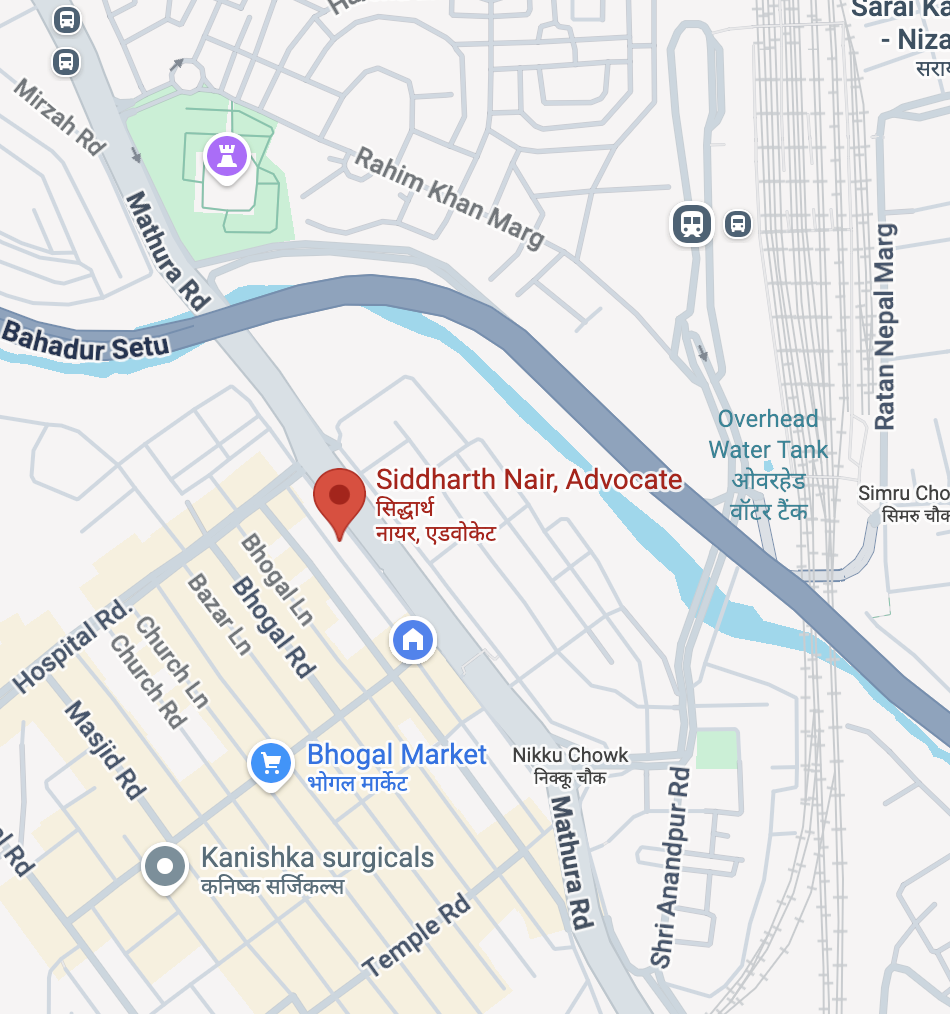
4 thoughts on “Best Excise Duty Lawyers In New Delhi & NCR”
Comments are closed.